

By: Dennis Kane www.winterizeguys.com
Good property management isn’t just about collecting rent—it’s about creating trust, connection, and mutual respect between landlords and tenants. When renters feel listened to and appreciated, they stay longer, take better care of their homes, and become advocates for the property. Below, we explore practical strategies for fostering that sense of belonging and satisfaction.
Key Takeaways at a Glance
- Communicate often and listen with intent—small gestures matter.
- Handle maintenance requests promptly and transparently.
- Use clear, fair lease agreements and accessible digital tools.
- Recognize good tenants through appreciation and responsiveness.
- Balance professional boundaries with genuine empathy.
Clear Agreements Build Confidence
Trust begins with transparency. A well-crafted lease is the foundation of mutual respect, setting expectations for both sides while protecting everyone’s interests.
Using digital documentation formats—especially PDFs—helps ensure clarity and security. Modern tools let you encrypt a PDF file so only authorized parties can view it, adding an extra layer of protection for sensitive information. Such files are easy to update, sign, and share, eliminating confusion that can arise from misplaced paperwork.
Listening Is a Landlord’s Superpower
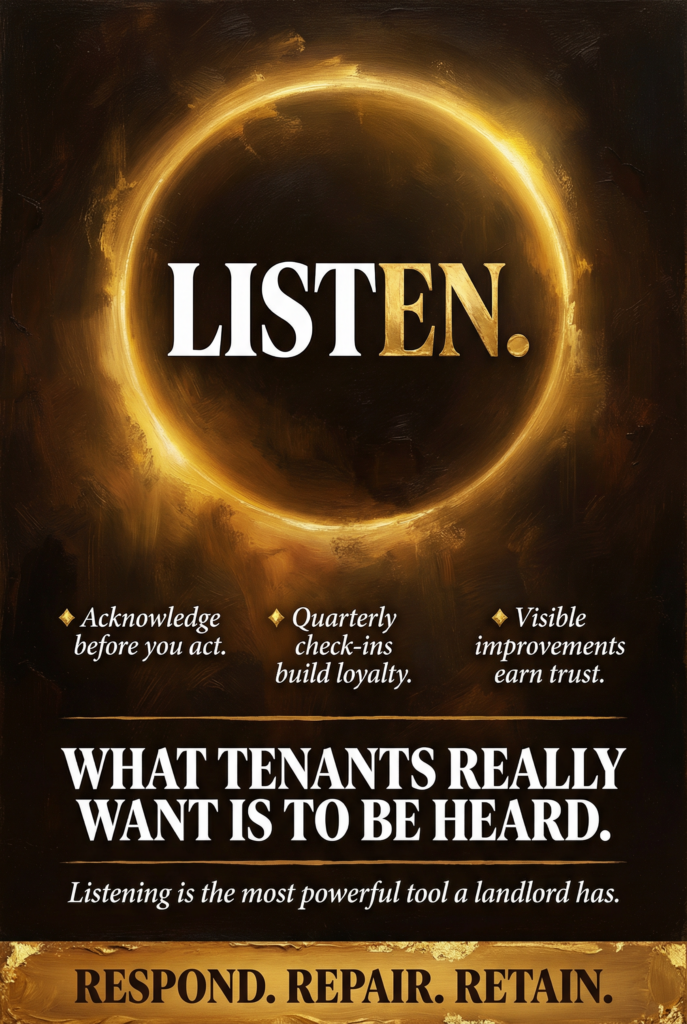
When tenants report a concern, what they’re really asking for is acknowledgment. Listening (and acting) can transform a minor inconvenience into proof that management cares. One effective approach involves a regular feedback rhythm, quarterly surveys or casual check-ins, to keep communication channels open. When people know their opinions lead to visible improvements, their trust deepens.
Respond Fast to Repairs and Requests
A broken faucet or flickering light might seem trivial, but delayed maintenance signals neglect. By contrast, consistency in repairs signals respect. Landlords who stay on top of maintenance issues not only protect the property’s value but also create a living experience that feels cared for.
Quick fixes reduce tenant turnover and foster long-term loyalty, while deferred maintenance does the opposite. Consider an online portal where tenants can log requests, track progress, and receive automatic updates—it’s efficient, transparent, and reassuring.
Recognizing Renters Beyond the Rent
Appreciation doesn’t always mean a discount. A simple thank-you note, a holiday card, or small improvements like upgraded lighting in common areas can reinforce the idea that tenants matter. Before applying rewards, think about what tenants value most: responsiveness, community spaces, or stable rent. Appreciation anchored in listening—not assumptions—builds credibility.
Here’s one way to frame appreciation effectively:
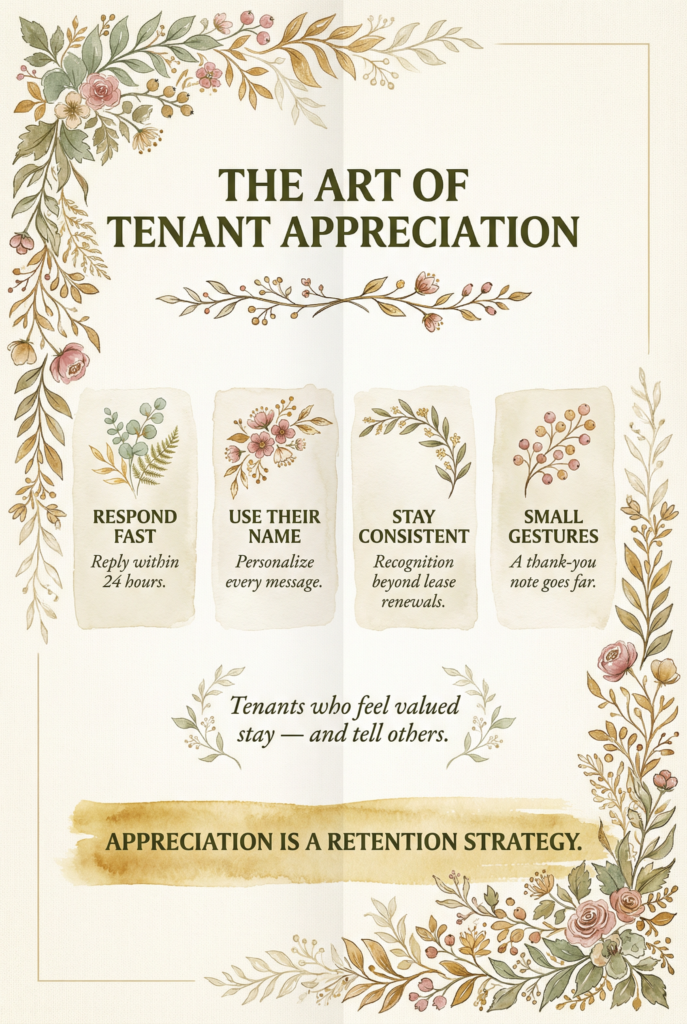
- Timely responses: Address messages within 24 hours.
- Personalization: Use tenants’ names in communication and acknowledge specific contributions.
- Consistency: Recognition should be ongoing, not tied only to lease renewals.
Building a Foundation of Respect
Respect is reciprocal. Renters who feel respected are more likely to treat the property responsibly and communicate openly. This principle applies to every interaction—from move-in orientation to end-of-lease notices.
Quick-Reference How-To Checklist
Use this checklist to align your daily operations with tenant-centered practices:
- Reply to all tenant communications within 24 hours.
- Offer multiple contact channels (email, portal, phone).
- Document all repairs with timelines and outcomes.
- Provide transparent lease updates and policy reminders.
- Host at least one community or appreciation event per year.
Comparing Engagement Approaches
There’s no one-size-fits-all model. The table below summarizes three styles of landlord-tenant interaction and their outcomes.
| Approach Type | Description | Typical Result |
| Reactive | Waits for complaints before responding. | High turnover, strained communication. |
| Procedural | Follows rules but lacks personal connection. | Adequate satisfaction, low emotional loyalty. |
| Proactive | Anticipates needs, encourages dialogue, values input. | Strong retention, mutual respect, and reputation growth. |
Encouraging Tenant Voices
Sometimes, satisfaction stems from participation. Invite renters to co-create solutions—like suggesting eco-friendly upgrades or community amenities. Empowerment through choice gives tenants ownership of their space and builds goodwill that no marketing campaign can replicate.
The Real Estate Relationship FAQ
Before concluding, here are answers to questions landlords and tenants often ask about creating a better rental experience.
Q1. How can I communicate effectively with tenants?
Consistency matters more than frequency. Use a preferred platform—email, text, or app—and ensure every message is clear, polite, and actionable. Avoid long silences; even a “We’re working on it” update counts as communication.
Q2. What if I can’t fix a maintenance issue immediately?
Explain the delay and provide an estimated timeline. Transparency maintains trust. Offering a temporary workaround or partial rent adjustment can prevent frustration from escalating.
Q3. How should I handle disagreements or complaints?
Listen first. Then document the concern, reference the lease, and propose a fair solution. When both parties feel heard, compromise becomes possible.
Q4. Is tenant appreciation really necessary?
Absolutely. Recognition—public or private—signals that tenants are more than revenue sources. It’s one of the simplest ways to increase renewals and positive word-of-mouth.
Q5. Can technology improve the landlord-tenant relationship?
Yes. Digital portals, secure messaging, and automated reminders simplify routine interactions, reduce misunderstandings, and demonstrate professionalism.
Q6. What’s the best way to balance friendliness and professionalism?
Set boundaries early—friendly, not familiar. Approach every interaction with empathy but remain guided by policy. Consistency builds both warmth and respect.
Final Thoughts
Tenant satisfaction isn’t a single act—it’s an ecosystem of trust built over time. Listening actively, keeping promises, and communicating clearly turn a business relationship into a partnership. When renters feel valued, they don’t just pay rent—they invest emotionally in the property’s well-being. In the end, a landlord’s greatest achievement isn’t full occupancy—it’s lasting goodwill that makes every unit feel like home.


