

This Content Is Only For Subscribers
In our main column, we explored the big picture of using digital platforms to manage your seasonal maintenance schedule. Now, let’s zoom in on a specific, high-stress scenario that every landlord knows all too well: the tenant repair request. If you’re still managing these requests through a chaotic mix of text messages, emails, and phone calls, you’re operating with a massive, self-inflicted handicap. A text about a leaky faucet can get buried in a dozen other conversations, a voicemail can be misheard, and an email chain can become an unmanageable mess. There is a better way.
The Chaos of Disconnected Communication
The fundamental problem with using general communication tools for maintenance requests is the lack of a single source of truth. When a tenant texts you about a running toilet, and you email your plumber, and the plumber texts you back, you’ve created three separate, disconnected communication threads for a single issue. There’s no easy way to track the status, no central place to store photos of the problem, and no definitive record of when the request was made and when it was resolved. This isn’t just inefficient; it’s a breeding ground for disputes and tenant dissatisfaction.
The Solution: A Dedicated Maintenance Portal
The modern solution to this chaos is a dedicated maintenance request portal, a core feature of most modern property management software. This isn’t just another app; it’s a purpose-built workflow that streamlines the entire repair process from initial request to final resolution. It provides a single, central hub for you, your tenant, and your vendor, ensuring everyone is on the same page.
Here are the mission-critical features that these apps provide:
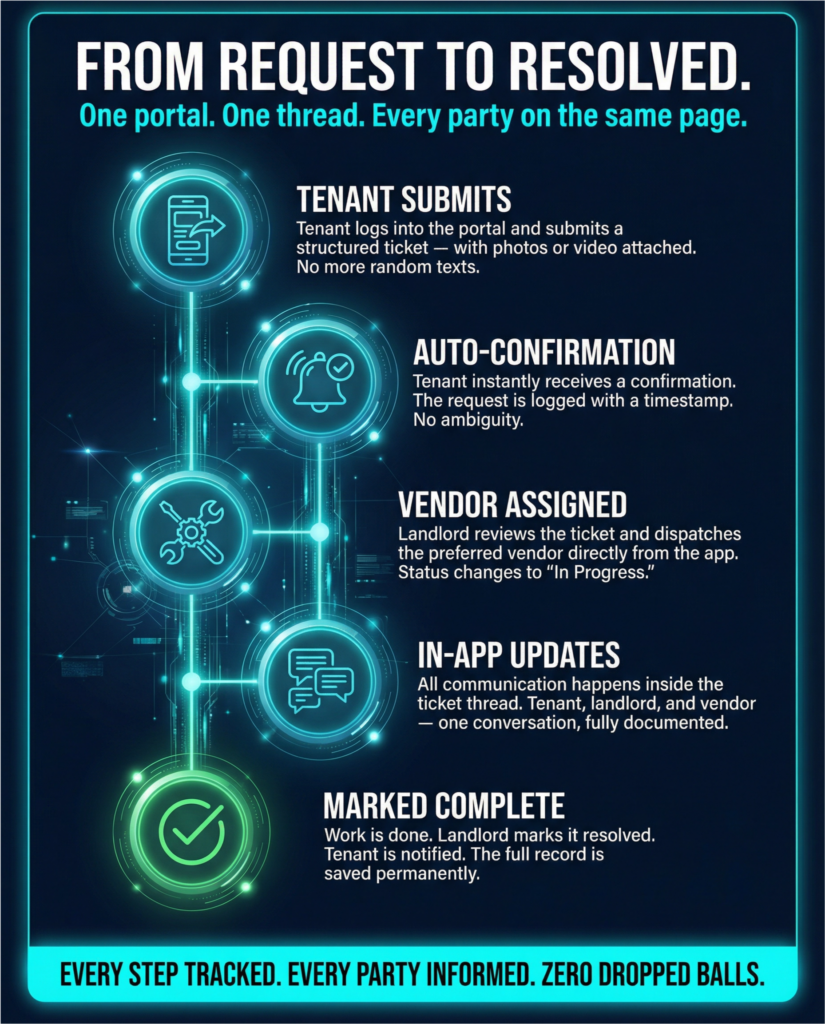
•A Tenant-Facing Portal: Your tenants get access to a simple web portal or mobile app where they can formally submit a maintenance request. This replaces the random text message with a structured, trackable ticket.
•Photo and Video Uploads: This is a game-changer. A tenant can submit a request for a “leaky pipe” and attach a short video showing you exactly where the water is coming from and how fast it’s dripping. You can assess the urgency and nature of the problem before you even dispatch a vendor.
•Automated Status Updates: When a request is submitted, the tenant receives an automatic confirmation. When you assign the job to a plumber, the status changes to “In Progress.” When the work is done, you mark it as “Complete.” The tenant can see the status of their request at any time, which dramatically reduces the “what’s happening with my faucet?” follow-up calls.
•In-App Communication: All communication about a specific repair happens within the ticket. The tenant’s initial description, your questions, and any updates are all stored in one chronological thread. This creates an unassailable record of the entire interaction.
•Vendor Assignment and Tracking: The best platforms allow you to forward the work order directly to your preferred vendor from within the app. The vendor gets all the information, including the tenant’s description and photos. You have a clear record of when you dispatched them.
Where Do You Get This Power?
As we touched on in the main column, this functionality is a cornerstone of the major all-in-one property management platforms like AppFolio, Buildium, and TenantCloud. For landlords who are serious about scaling their business and professionalizing their operations, adopting one of these platforms is the most direct path to this workflow. The maintenance portal is deeply integrated with the rest of the system, linking repair costs to your property accounting and keeping a detailed maintenance history for each unit.
For those not yet ready for a full-blown property management suite, some smaller, standalone apps are emerging that focus solely on maintenance ticketing. However, the real power comes from the integration that the larger platforms provide.
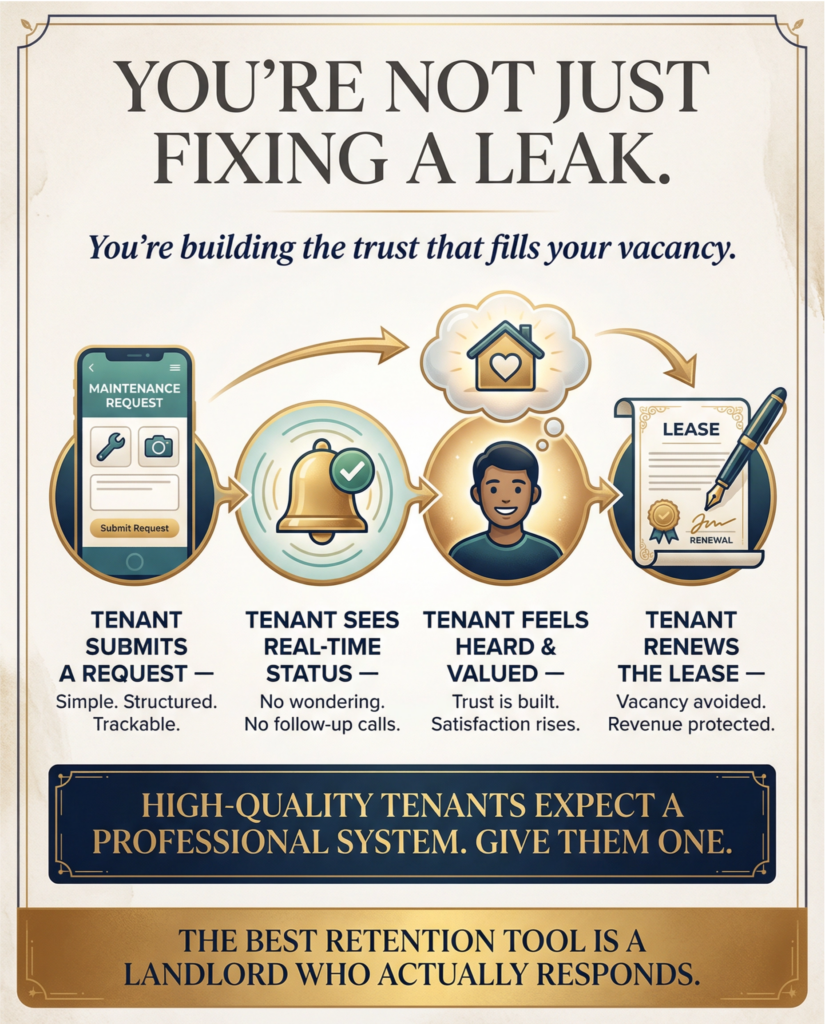
Upgrading your system for handling repair requests is one of the highest-impact tech decisions you can make. It replaces chaos with order, eliminates ambiguity, and provides a level of professionalism that high-quality tenants have come to expect. By giving your tenants a clear and simple way to report issues and see that they are being addressed, you’re not just fixing a leak; you’re building trust and increasing the likelihood that they will renew their lease. You’re moving from a landlord who just reacts to problems to a tech-savvy manager who solves them with a system.


