

This Content Is Only For Subscribers
If you own rental property in Texas in 2026, you’re not just a landlord—you’re effectively the CEO of a small business. And like any good business owner, you need more than vague hopes like “I want better tenants” or “I’d like to make more money this year.” You need clear goals and a realistic plan to reach them.
2026 is a natural reset point: insurance and property taxes remain high in much of Texas, interest rates are still a key factor in refinancing decisions, and tenant expectations around responsiveness, amenities, and online services continue to rise in markets from Dallas–Fort Worth to Austin, Houston, San Antonio, and smaller Texas cities. Use this guide to set goals that actually move the needle for your rentals over the next 12 months.
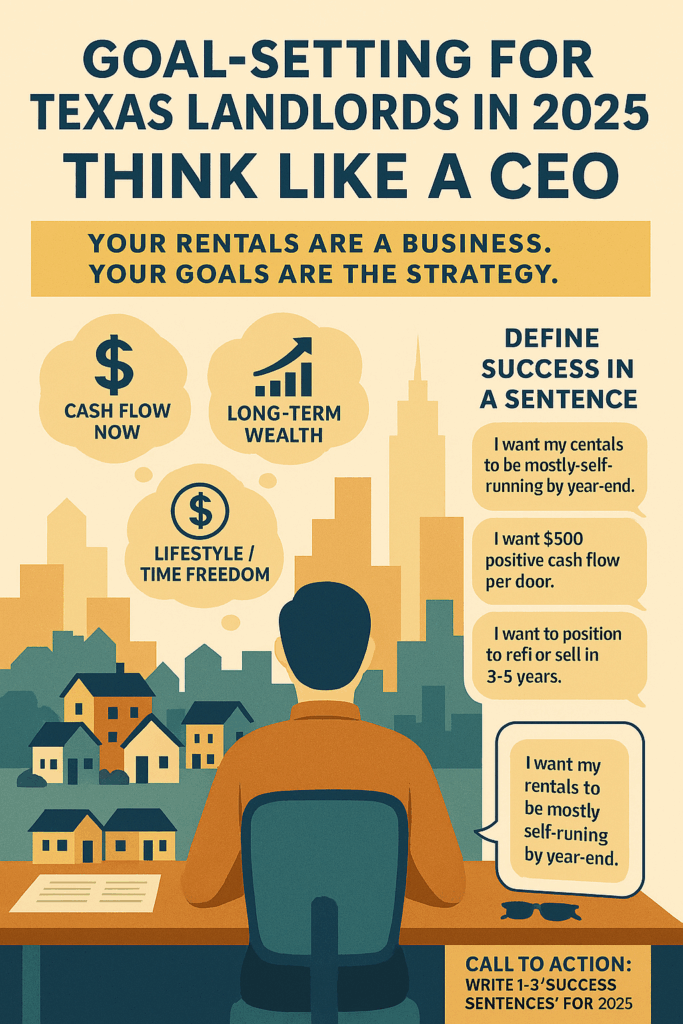
Step 1: Decide What “Success” Really Means for You in 2026
Before you open a spreadsheet or calculate a single number, step back and define success in plain English. Ask yourself:
- Why am I holding this property (or this portfolio)?
Long-term wealth? Monthly cash flow? A future retirement home? A hedge against inflation? - What would make 2026 feel like a “win” for me as a landlord?
Less stress? Higher net income? Fewer turnovers? Paying down more principal? Positioning to refinance or sell?
Your answers matter. A landlord who cares most about cash flow today will set very different goals than one who is playing the long game for appreciation or debt paydown.
Some examples of personal definitions of success:
- “By the end of 2026, I want my rentals to be largely self-running so I can spend less than 5 hours per month on management.”
- “I want my rental income to cover my mortgage, taxes, insurance, and still give me $500 positive cash flow per door, on average.”
- “I want to increase my property value and position myself to refinance or sell in 3–5 years.”
Write down your 1–3 “success sentences” first. They’ll act like a filter for every goal that follows.
Step 2: Review Your 2025 Numbers (Don’t Skip This)
You can’t set smart goals for 2026 without understanding what actually happened in 2025.
Pull together, property by property:
- Total rent billed vs. collected
- Vacancy time (number of days each unit was empty)
- Turnover costs (repairs, cleaning, marketing, leasing fees)
- Maintenance and capital expenses (repairs vs. upgrades)
- Property taxes, insurance, HOA fees
- Any penalties or late fees paid (utilities, HOA, city notices, etc.)
Then ask:
- Where did I lose the most money?
– Long vacancies between tenants?
– Frequent small repairs that added up?
– One major surprise (roof, AC, foundation, plumbing, etc.)? - Where did I lose the most time?
– Chasing late rent?
– Repeated showings to unqualified applicants?
– Handling “emergency” calls that weren’t really emergencies? - What went better than I expected?
– A great long-term tenant you’d love to clone?
– A simple upgrade (like smart locks, better lighting, or security features) that paid off quickly?
The places where you lost the most money and time are exactly where your 2026 goals should focus. The wins show you what to double down on.
Step 3: Turn Vague Intentions into Concrete, Measurable Goals
Most landlords say things like, “I want fewer headaches” or “I’d like more profit.” That’s a start—but it’s not enough.
A strong 2026 landlord goal is:
- Specific – You know exactly what you’re aiming at.
- Measurable – You can track it with numbers.
- Time-bound – There’s a deadline or a timeframe.
Here are examples tailored to Texas landlords:
Vacancy Goal
- Weak: “I want lower vacancy.”
- Strong: “In 2026, I will keep vacancy under 5% per property by lining up new tenants at least 30 days before current leases end.”
Rent Collection Goal
- Weak: “I want tenants to pay on time.”
- Strong: “By March 31, 2026, I’ll move all tenants to online rent payment and reduce late payments to less than 3% of total rents collected.”
Maintenance Goal
- Weak: “Keep up with repairs better.”
- Strong: “I will schedule two preventative inspections per unit (spring and fall) and proactively service HVAC before peak summer heat.”
Portfolio Growth Goal
- Weak: “I might buy another property.”
- Strong: “By December 31, 2026, I’ll identify, underwrite, and either close on or formally pass on at least three new deals that meet my cash-on-cash return criteria.”
Limit yourself to 3–5 key goals for the year. More than that, and you’ll spread your attention too thin.
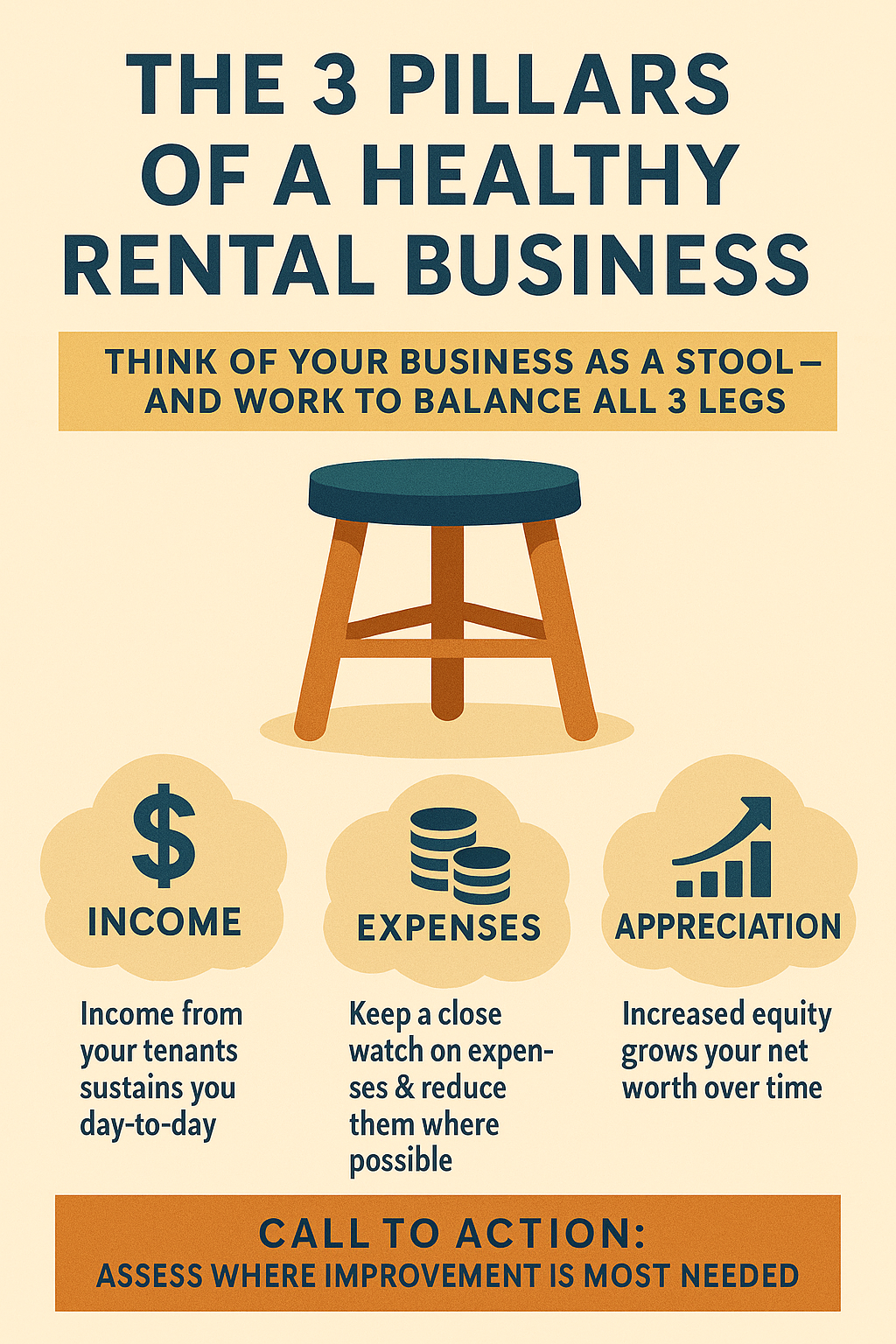
Step 4: Build Goals Around Three Core Pillars
Think of your rental business as supported by three main pillars. Strong goals touch all three.
Pillar 1: Financial Performance
This is your income, expenses, and overall return. For 2026, consider goals like:
- Cash flow targets per door
Decide your minimum monthly positive cash flow per unit after mortgage, taxes, insurance, HOA, and an allowance for maintenance and vacancy. - Reserve targets
Aim to keep a certain number of months of expenses in reserves (for example, 3–6 months’ worth of mortgage + taxes + insurance + typical repairs). - Debt strategy
Maybe 2026 is the year you:- Pay extra principal on high-interest loans,
- Explore refinancing if rates align with your goals, or
- Consolidate or restructure debt to improve cash flow.
Be realistic about Texas-specific factors: property taxes can jump after appraisal, insurance costs have increased in many regions, and HOA dues may rise. Building these realities into your goals keeps them grounded instead of wishful.
Pillar 2: Property Condition & Risk Management
Well-maintained homes attract better tenants and reduce ugly surprises.
For 2026, you might:
- Schedule regular inspections
- Once in the spring to prep for Texas heat (check HVAC, irrigation, weatherstripping, smoke detectors).
- Once in the fall for roof, gutters, exterior, and any issues from summer storms or extreme weather.
- Create a capital improvements plan
List big-ticket items like roofs, HVAC systems, water heaters, windows, and exterior paint. Estimate their remaining life and start budgeting now instead of waiting for the “oh no” moment. - Standardize your vendors
Decide your go-to plumber, HVAC tech, handyman, and electrician. Having them lined up reduces response time and keeps you out of crisis mode.
Your 2026 goals here might be:
- “By June 30, 2026, I will complete preventative inspections on all units and address all safety-related issues.”
- “By year-end, I will have a written 3-year capital plan with estimated costs and a reserve target.”
Pillar 3: Tenant Quality & Stability
One of the biggest success levers for Texas landlords is tenant retention. Every time a tenant moves out, you pay in vacancy, make-ready costs, and your own time.
For 2026, consider goals such as:
- Improve tenant screening consistency
- Use the same written criteria for every applicant: income, credit, rental history, and background checks.
- Document your criteria to protect yourself and keep your process fair and consistent.
- Reduce turnover
- Track your average tenancy length and set a goal to improve it.
- Aim for proactive communication near lease-end to gauge whether tenants plan to renew.
- Professionalize communication
- Choose one main communication channel (online portal, email, or a texting platform).
- Set clear response-time expectations—for yourself and your tenants.
Example 2026 goals:
- “I will reduce annual turnover from 40% to 25% by focusing on renewal conversations 60 days before lease expiration.”
- “By April 30, 2026, I’ll formalize written screening criteria and use them for 100% of applicants.”
Step 5: Break Annual Goals into Quarterly Action Plans
An annual goal is helpful, but it won’t happen if it just lives in a notebook. Break your 2026 targets into quarterly mini-plans.
Q1 (January–March 2026)
- Review your 2025 performance and finalize your 2026 goals.
- Tighten screening criteria and lease templates.
- Move tenants to online payment and centralized communication where possible.
- Plan spring inspections and basic maintenance.
Q2 (April–June 2026)
- Complete spring inspections and HVAC servicing before high temperatures hit.
- Address issues found during inspections—especially safety and water-related items.
- Start evaluating rent levels against the market and your own cash flow goals.
Q3 (July–September 2026)
- Focus on renewals for leases ending late in the year.
- Evaluate your progress toward cash flow, vacancy, and reserve goals.
- Consider small upgrades that can justify rent increases or improve tenant satisfaction (ceiling fans, better lighting, outdoor spaces, smart thermostats).
Q4 (October–December 2026)
- Do fall inspections (roof, exterior, weatherproofing, gutters).
- Review your 2026 results: where you hit your targets, where you didn’t, and why.
- Adjust strategy and draft your preliminary goals for 2027.
Treat each quarter as a short “season” with 2–3 priorities. This keeps your goals from feeling overwhelming and gives you regular checkpoints.
Step 6: Systematize What Used to Be “Wing It”
Many Texas landlords start out managing properties “by feel.” That works with one unit—maybe two—but it breaks down as you grow or as life gets busier.
In 2026, aim to turn recurring tasks into simple systems:
- Standard move-in/move-out checklists
Include photos, meter readings, keys and remotes, parking info, and clear expectations for cleaning and condition. - Communication templates
Save versions of:- Late rent reminders
- Lease renewal offers
- Maintenance acknowledgements and follow-ups
- “House rules” reminders before holidays or severe weather events
- Document storage
Keep leases, addenda, inspection reports, and important correspondence organized (ideally in a cloud-based system). When there’s a dispute or a question, you’ll be glad you did.
A simple 2026 goal here could be:
“By August 31, 2026, I will document and standardize my top 10 recurring property management tasks into checklists and templates.”
Systems reduce stress, save time, and make your business more scalable—whether you self-manage or work with a professional property manager.
Step 7: Protect Your Time Like a Real Business Owner
Your time is one of your most valuable assets, and it’s easy to underestimate how much of it your rentals use.
For 2026, track:
- How many hours you spend each month on:
- Leasing and showings
- Maintenance coordination
- Bookkeeping and paperwork
- Tenant communication
Then decide:
- Which tasks you must handle personally (final approvals, major decisions).
- Which tasks you can delegate or outsource (bookkeeping, showings, maintenance coordination, routine tenant emails).
Some Texas landlords find it makes sense to hire a property manager once they hit a certain number of units—or sooner if they have demanding day jobs or live far from their properties. Others keep managing themselves but lean more on virtual assistants, leasing agents, or strong vendor relationships.
Either way, a smart 2026 goal might be:
“I will reduce my average time spent managing rentals to 5–8 hours per month by delegating noncritical tasks and simplifying my processes.”
Step 8: Make Your Goals Visible and Review Them Monthly
Goals that live in your head don’t get done. Put them where you’ll see them:
- At the top of a spreadsheet or accounting dashboard
- On a one-page “Rental Business Plan 2026”
- Printed and kept with your property binder or pinned above your desk
Then, once a month:
- Compare your actual numbers (vacancy, collected rent, expenses, reserves) to your 2026 targets.
- Note any issues that delayed you or cost you money.
- Decide one or two small actions for the coming month to stay on track.
Your monthly review doesn’t have to be complicated. Even 15 minutes of honest reflection and simple adjustments can make a huge difference by year-end.

Final Thoughts: Think Like an Investor, Act Like a Manager
Being a successful Texas landlord in 2026 means wearing two hats:
- Investor: You set the vision, run the numbers, and decide what success looks like.
- Manager: You execute the plan with systems, schedules, and consistent standards.
Goal-setting is where those two roles meet. When you define what you want, measure where you are, and commit to a handful of clear, realistic targets, you give your rental business direction instead of just reacting to the latest tenant email or repair request.
Set aside a couple of hours this month to walk through these steps, write down your goals, and sketch out your quarterly plan for 2026. Twelve months from now, you’ll be able to see whether your properties are truly moving you toward the financial and personal life you envision—and you’ll have the numbers to prove it.


