

This Content Is Only For Subscribers
Being a landlord in 2025 isn’t what it was twenty—or even ten—years ago. The job has always been equal parts rewarding and stressful, but today’s rental market adds new layers of complexity. Rising costs, shifting tenant expectations, and tighter tax rules mean landlords have more numbers to crunch than ever before.
If you’re like many independent property owners, you’ve probably juggled spreadsheets, stuffed file folders, and maybe even a shoebox full of receipts. That system may have worked when you had one or two properties. But as your portfolio grows—or even if you’re managing just a single rental in today’s fast-paced market—keeping accurate records of income, expenses, and maintenance isn’t optional. It’s survival.
Enter landlord accounting software. These tools can transform the way you manage your rentals, making it easier to track rent, organize repairs, and—most importantly—get through tax season without pulling your hair out. But with so many platforms out there, which ones are really worth your time?
In this article, we’ll compare four of the most popular landlord-friendly accounting options: QuickBooks, Buildium, Stessa, and Go4Rent. Each one has unique strengths and quirks, and which is best for you depends on your portfolio size, your comfort with technology, and how much hands-on detail you want.
Let’s dive in.
Why Software Matters for Landlords
Before we get into the comparison, let’s talk about why software matters.
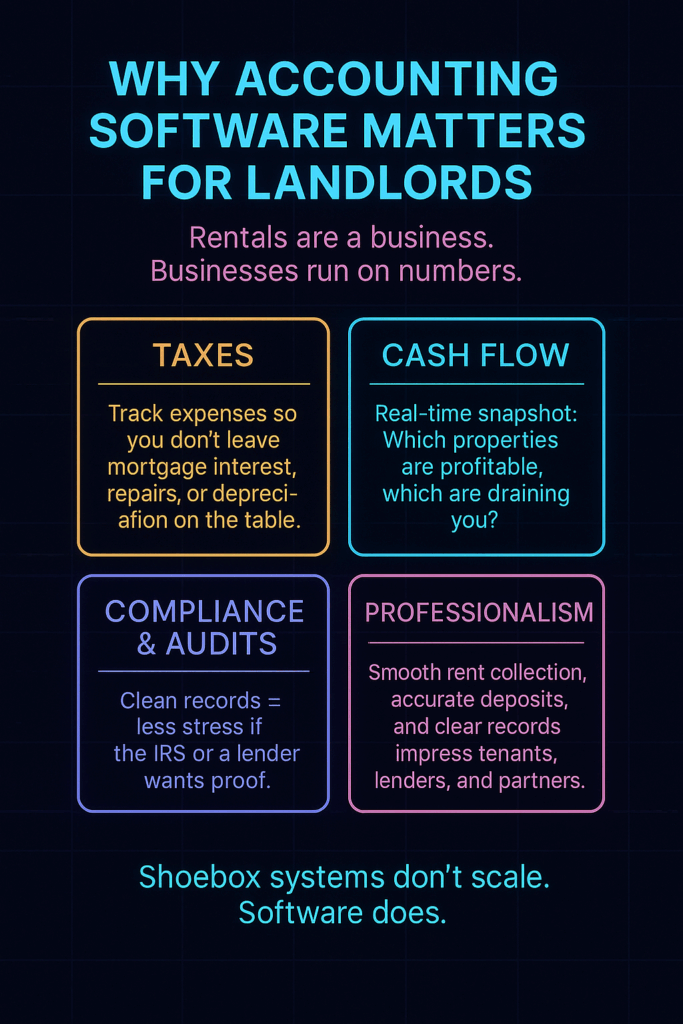
At its core, rental property ownership is a business. Businesses run on numbers. Every rent payment collected, every HVAC repair, every trip to Home Depot—all of it has to be tracked. Why?
- Taxes. Landlords can deduct mortgage interest, property taxes, insurance, repairs, and depreciation. But if you don’t track these expenses, you’re leaving money on the table.
- Cash Flow. Software gives you a real-time snapshot of how your rentals are performing. You can see instantly whether a property is making or losing money.
- Compliance. If you’re ever audited, organized records mean less stress and fewer penalties.
- Professionalism. Organized books aren’t just for you—they make a difference if you’re trying to refinance, sell, or bring on a partner.
And here’s the kicker: tenants notice. Inconsistent rent collection, delayed repairs, and mismanaged deposits can make you look unprofessional. Solid software helps you avoid awkward conversations and keeps operations running smoothly.
QuickBooks: The Business Standard
If you’ve ever run a small business—or even done freelance work—you’ve probably heard of QuickBooks. It’s one of the most widely used accounting tools in the world, and it offers serious firepower.
Pros for Landlords:
- Full Accounting Power. QuickBooks lets you track income and expenses down to the penny, generate balance sheets, and create profit-and-loss statements.
- Bank Integrations. You can link your business bank accounts and credit cards to automatically import transactions.
- Custom Categories. Landlords can set up categories like “repairs,” “mortgage interest,” and “HOA fees” to match IRS forms.
- Tax Prep Ready. Many accountants already use QuickBooks, so handing off your records at tax time is seamless.
Cons for Landlords:
- Not Rental-Specific. QuickBooks wasn’t designed just for landlords, so it lacks built-in features like tenant screening or lease tracking.
- Learning Curve. If you’re not familiar with bookkeeping, QuickBooks can feel intimidating.
- Cost. Plans start around $30/month and can get pricier depending on features.
Real-World Example:
A landlord in Houston with a couple of duplexes uses QuickBooks to separate expenses for each unit. By tagging repairs and utilities to specific addresses, she can see instantly which unit is most profitable and which one eats into margins. Her CPA can pull year-end reports directly from QuickBooks, cutting her tax prep time in half.
Best For:
Landlords who treat their rentals like a small business and want a powerful, customizable accounting system.
Buildium: The Property Manager’s Toolbox
Buildium is designed specifically for property managers and landlords. It’s more than just accounting software—it’s a full property management platform.
Pros for Landlords:
- Rental-Focused. Unlike QuickBooks, Buildium was made for property management. You can track rent, late fees, maintenance requests, and lease details all in one place.
- Tenant Portals. Tenants can pay rent online and submit maintenance requests, which automatically update in your system.
- Expense Tracking. Record and categorize expenses tied to specific properties.
- Tax Prep Features. Buildium can generate IRS-compliant 1099 forms for contractors and vendors.
Cons for Landlords:
- Overkill for Small Portfolios. If you only own one or two rentals, you may not need the full suite of tools.
- Price. Plans start around $55/month and scale based on the number of units.
- Learning Curve. With so many features, there’s a lot to learn at first.
Real-World Example:
A San Antonio landlord managing 25 single-family homes switched to Buildium after years of juggling spreadsheets. Now, tenants submit repair requests through the portal, which automatically pings his preferred handyman. Rent payments hit his account faster, and at tax time he generates clean 1099s for every contractor with just a few clicks.
Best For:
Landlords with mid-size to large portfolios who want an all-in-one platform.
Stessa: Free and Landlord-Friendly
If you’ve been looking for software built specifically for landlords, Stessa is a popular option—and here’s the kicker: it’s free.
Pros for Landlords:
- Designed for Real Estate Investors. You can track rental income, expenses, and property values all in one dashboard.
- Bank and Credit Card Syncing. Automatically import and categorize transactions.
- Tax Prep. Stessa generates tax-ready financial reports and integrates with TurboTax.
- Free. Hard to beat that price.
Cons for Landlords:
- Limited Features. While great for accounting, Stessa doesn’t have tenant portals or maintenance request systems like Buildium.
- Occasional Sync Issues. Some users report that bank feeds can be glitchy.
- Revenue Model. Since Stessa is free, it makes money by offering optional financial products.
Real-World Example:
An Austin investor with three rental condos uses Stessa to track cash flow and upload receipts on the go. At tax time, he exports a Schedule E–ready report that makes filing fast. He doesn’t need full property management software, so the free tool is a perfect fit.
Best For:
Small to mid-size landlords who want an easy, cost-effective way to track income and expenses.
Go4Rent: Streamlined for Screening and Rent Collection
Go4Rent is a newer player but increasingly popular, especially in Texas. It’s a hybrid platform that combines tenant screening, lease management, and rent collection with accounting features.
Pros for Landlords:
- Tenant Screening. Built-in credit, criminal, and rental history checks.
- Online Applications. Streamlines the leasing process.
- Rent Collection. Tenants can pay online, and funds are deposited directly into your account.
- Expense Tracking. Lets you monitor property-related expenses alongside income.
- Local Focus. Particularly strong in Texas, where landlord-tenant laws can be unique.
Cons for Landlords:
- Less Known Nationally. Not as widely adopted as QuickBooks or Buildium.
- Limited Custom Reports. While it tracks income/expenses, it doesn’t offer the same depth of financial analysis as QuickBooks.
- Pricing. Costs vary, and while competitive, it’s not free like Stessa.
Real-World Example:
A Dallas landlord renting out two single-family homes uses Go4Rent to screen tenants and collect rent. She loves that applications, screening, and payments are all in one place, and she can still download expense reports for her accountant.
Best For:
Independent landlords who want a streamlined system for applications, screening, rent collection, and simple bookkeeping—all in one.
Side-by-Side Comparison
Feature QuickBooks Buildium Stessa Go4Rent
Focus General business accounting Property management & accounting Landlord accounting Screening + rent collection + accounting
Income Tracking Yes Yes Yes Yes
Expense Tracking Yes Yes Yes Yes
Tenant Screening No Yes No Yes
Rent Collection Indirect Yes No Yes
Tax Prep Tools Excellent 1099s + reports Tax-ready reports Basic reports
Cost From $30/month From $55/month Free Varies
Best For Business-minded landlords Multi-unit portfolios Budget-conscious landlords Independent landlords
Common Mistakes Landlords Make With Software
- Not Linking Bank Accounts. Manually entering every expense defeats the purpose.
- Mixing Personal and Business Finances. Always keep rental property finances separate.
- Ignoring Reports. Software isn’t just for storage—it’s for analysis.
- Failing to Update Regularly. If you only log in at tax time, you’ll be overwhelmed.
- Not Training Yourself. A tool is only as good as the person using it.
How Software Eases Tax Season
Every landlord knows the dread of tax season. But the right software changes the game:
- Automatic Categorization. Expenses get filed under IRS-friendly categories.
- Mileage Tracking. Some tools let you log trips to your property for deductions.
- Depreciation Reports. Stessa and Buildium both make it easier to track depreciation schedules.
- Contractor 1099s. Buildium generates them automatically, saving hours of paperwork.
- Audit Protection. Detailed reports mean you can hand over clean records if the IRS comes knocking.
With software, tax prep stops being a mad scramble and becomes a matter of clicking “export.”
Choosing the Right Tool for You
So, which one should you try? Here’s a simple framework:
- If you already use QuickBooks for other business income → Stick with QuickBooks.
- If you manage multiple properties with lots of tenants and maintenance requests → Buildium will pay for itself.
- If you want free, simple, and effective tracking → Stessa is hard to beat.
- If you want screening, applications, rent collection, and bookkeeping in one place → Go4Rent may be your winner.
At the end of the day, the best software is the one you’ll actually use.

Final Word
Being a landlord is about more than collecting rent—it’s about running a business. And in today’s tech-driven world, running a business without the right tools puts you at a disadvantage. Whether you want the robust power of QuickBooks, the all-in-one management of Buildium, the simplicity of Stessa, or the streamlined focus of Go4Rent, there’s a solution that fits your style.
Accounting software isn’t just about numbers—it’s about peace of mind. With the right system in place, you can spend less time chasing receipts and more time growing your rental business, serving tenants, and enjoying the reason you became a landlord in the first place.
So, ditch the shoebox of receipts. Your future self at tax time will thank you.


