

This Content Is Only For Subscribers
If you’ve ever wondered whether fixing that leaky faucet or upgrading the kitchen countertops counts as a repair or an improvement, you’re not alone. It’s one of the most common questions Texas landlords ask, and for good reason—the IRS treats these expenses very differently at tax time.
In our earlier article, Landlord Legal Lowdown: Understanding Depreciation Rules for Texas Rentals, we broke down how property owners can use depreciation to offset the cost of their investment over time. Now, let’s dig into a closely related topic: how to tell the difference between a repair you can deduct right away and an improvement that must be depreciated.
Repairs: The Quick Deduction
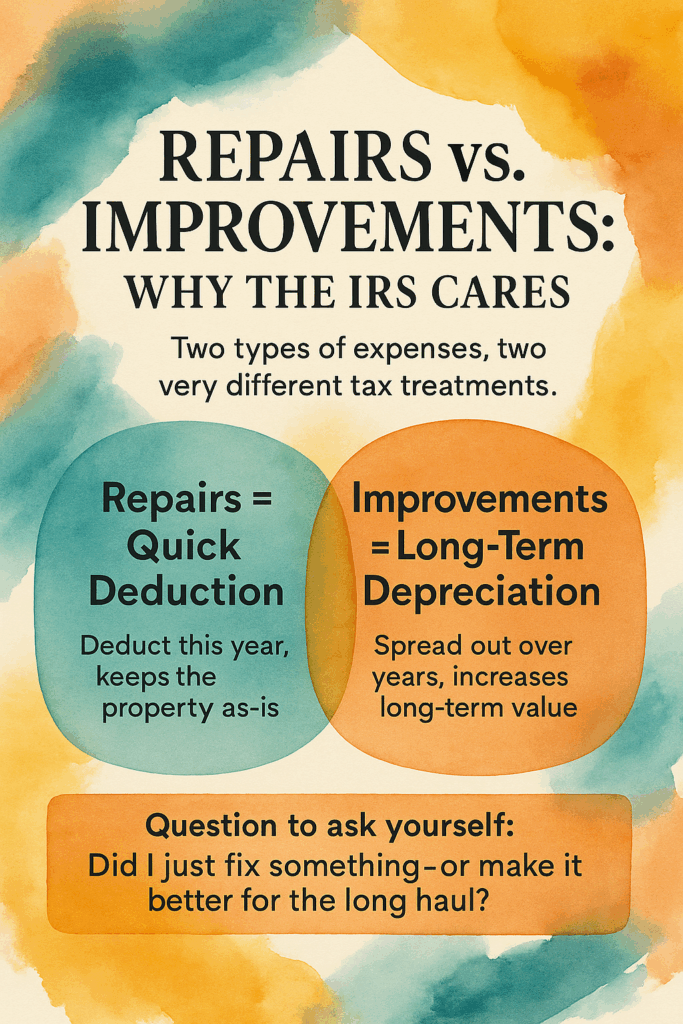
Repairs are all about keeping your rental in its current condition. These are expenses you incur to maintain the property’s functionality or fix something that’s broken. Think of them as “band-aid” fixes that don’t add long-term value but are necessary for everyday operations.
Examples include:
- Fixing a leaky pipe under the kitchen sink
- Replacing a broken window pane
- Patching a hole in the drywall
- Servicing the HVAC when it stops blowing cold air
For tax purposes, repairs are deductible in the year you pay for them. That means you get to lower your taxable rental income immediately, which is especially handy if you’re trying to balance out other profits from the property.
Improvements: A Long-Term Investment
Improvements, on the other hand, are expenses that enhance the property, extend its useful life, or adapt it to a new use. These aren’t quick fixes—they make your property better or more valuable in a lasting way.
Common improvements include:
- Installing a brand-new roof
- Remodeling the bathroom or kitchen
- Adding a new HVAC system
- Building a deck or patio
Instead of deducting the entire cost in one year, the IRS requires you to spread out the deduction through depreciation. For residential rental property, that typically means writing it off over 27.5 years.
Why the Distinction Matters
Misclassifying repairs and improvements is a mistake that can raise red flags with the IRS. Calling a kitchen remodel a “repair” might save you money this year, but it could trigger an audit later. On the flip side, treating every small fix as an improvement means you’re leaving money on the table by delaying deductions you could have taken right away.
The key is documentation. Keep detailed records, save receipts, and when in doubt, add notes about the nature of the work. If you replace a few shingles after a storm, that’s a repair. If you replace the entire roof, that’s an improvement.
The Texas Landlord’s Takeaway
For landlords in Texas, where weather and wear can lead to frequent repairs, understanding this distinction is vital. Pair it with what we covered in Understanding Depreciation Rules for Texas Rentals, and you’ll have a clearer picture of how to manage both short-term write-offs and long-term tax strategy.
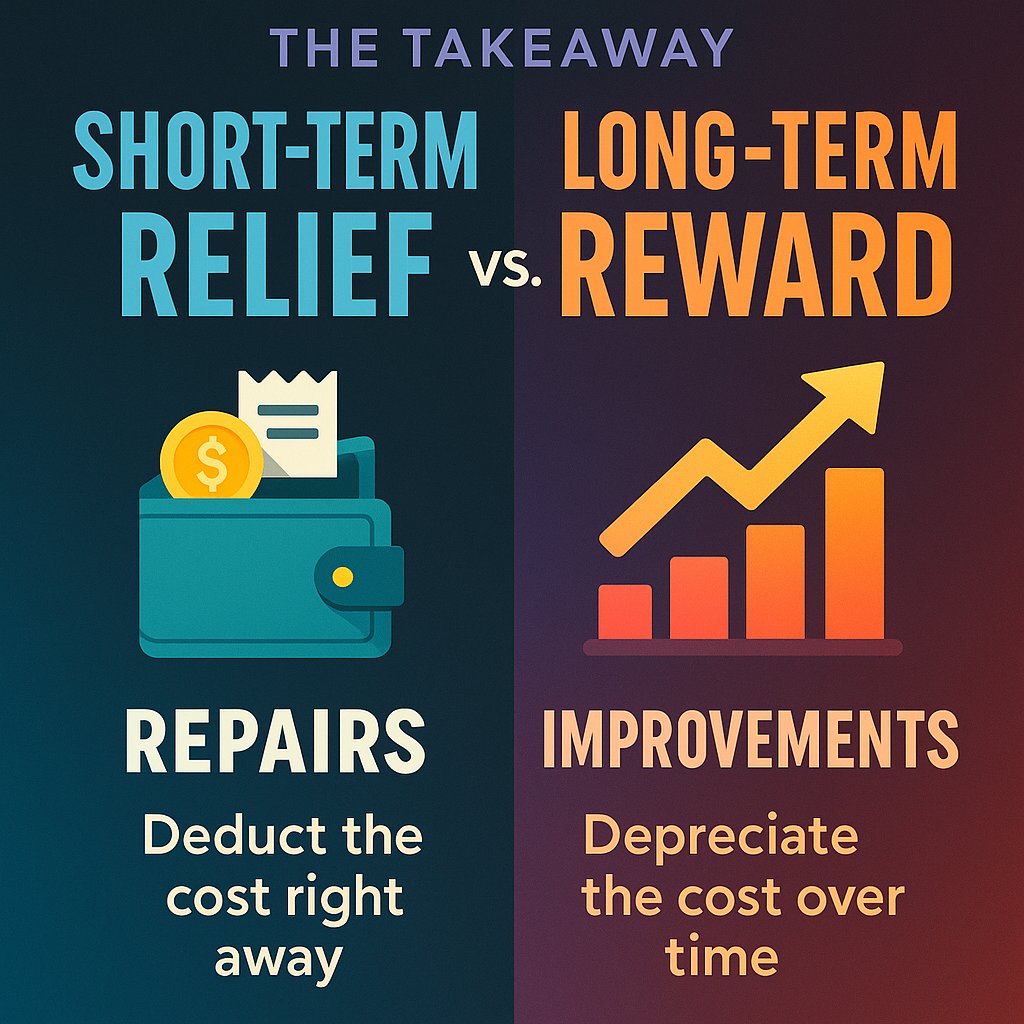
Bottom line: Repairs give you relief right away, while improvements reward you over time. Knowing the difference helps you protect your cash flow now and build wealth in the long run.


