

This Content Is Only For Subscribers
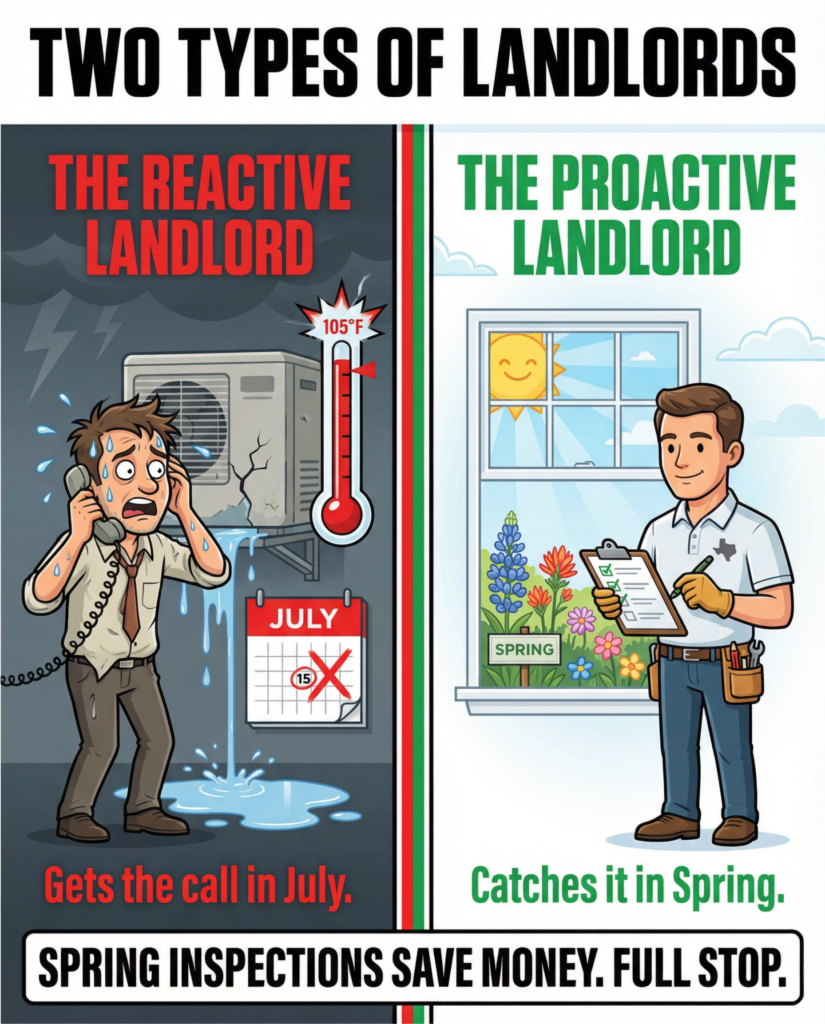
In property management, there are two ways to operate: reactively or proactively. The reactive landlord waits for the tenant’s call about a broken air conditioner in July. The proactive landlord, however, spends a few hours in the spring methodically inspecting their property, identifying potential failures before they happen. This isn’t just good practice; it’s fundamental asset protection. The spring walkthrough is the single most important preventative maintenance task you will perform all year.
Welcome to Maintenance Matters, your new resource for practical, actionable guidance on keeping your rental properties in prime condition. We’re not here to talk about theory; we’re here to talk about process. This column is about providing you with the checklists and know-how to get the job done right. So, grab a clipboard and a flashlight. It’s time to walk your property.
The Proactive Mindset and Toolkit
A successful walkthrough is systematic. It’s not a casual stroll; it’s a forensic examination of your asset. Before you begin, assemble your toolkit. You’ll need:
•A detailed checklist: Use this article as your guide.
•A clipboard and pen: For taking detailed notes.
•A camera (your smartphone is perfect): Document everything with photos. A picture of a small crack now is invaluable if it becomes a large one later.
•A powerful flashlight: For looking into dark corners, attics, and under sinks.
•A GFCI outlet tester: A small, inexpensive tool that can identify life-safety issues.
Your mindset should be one of a detective. You are looking for clues—small signs of wear, water intrusion, or pest activity—that can point to larger, hidden problems. Document everything, no matter how minor it seems.
The Exterior Inspection: The First Line of Defense
Your inspection should always begin with the exterior. The building envelope is your property’s first line of defense against the Texas weather, and curb appeal is what attracts your next high-quality tenant. Start at the street and work your way in.
Roof, Gutters, and Siding
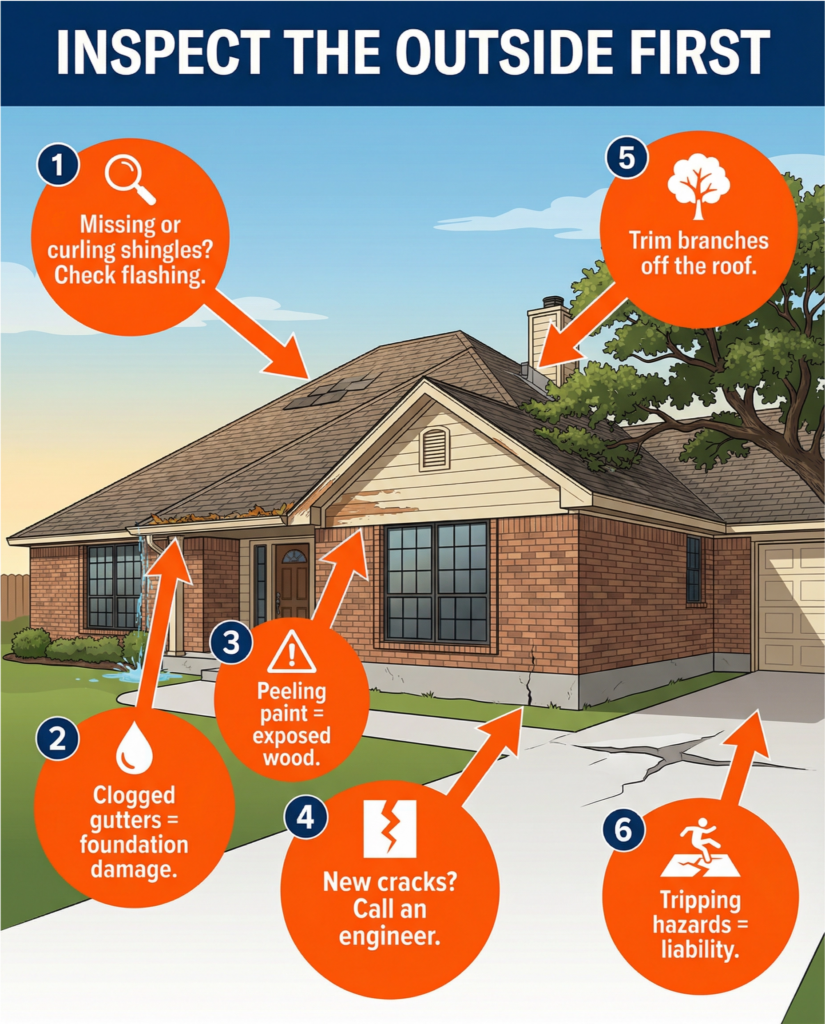
•Visual Roof Inspection: From the ground, scan the entire roof. Are there any missing, cracked, or curling shingles? Look for signs of hail damage, which can be subtle. Pay close attention to the flashing around chimneys, vents, and skylights, as these are common failure points.
•Gutters and Downspouts: Are the gutters sagging or pulling away from the fascia? Are they full of leaves and debris from the winter? Clogged gutters are a primary cause of water damage to the foundation and siding. Ensure downspouts are clear and are directing water several feet away from the foundation.
•Siding and Trim: Walk the entire perimeter. Look for cracked mortar on brick, warped or rotted wood siding, and damaged vinyl. Pay special attention to the areas around windows and doors. Note any peeling paint, as this is more than a cosmetic issue—it’s a sign that the wood beneath is exposed to the elements.
We will dive deeper into the specifics of these critical systems in our upcoming companion article, Exterior Spring Prep: Gutters, Roof, and Yard.
Foundation, Landscaping, and Pavement
•Foundation: Look for any new cracks in the foundation slab or piers. While small hairline cracks can be normal, larger or expanding cracks warrant a call to a structural engineer.
•Landscaping and Irrigation: Check for any trees with branches overhanging or touching the roof; these must be trimmed back. Are there any dead or dying shrubs that need to be replaced? Turn on the irrigation system and run through every zone. Look for broken sprinkler heads, leaks, and areas that are not getting proper coverage.
•Pavement: Inspect driveways and walkways for significant cracks or tripping hazards. A little bit of settling is normal, but large, uneven sections should be addressed.
The Interior Inspection: Health, Safety, and Systems
Once you have a complete picture of the exterior, move inside. The interior inspection is focused on the core systems that ensure your tenant’s comfort and safety.
HVAC, Plumbing, and Electrical
•HVAC System: This is arguably the most critical system to check before a Texas summer. Start by replacing the air filter. Visually inspect the indoor air handler for any signs of leaks. Then, go outside to the condenser unit. Is it clear of debris and vegetation? We will cover the full professional check-up process in Interior Spring Prep: HVAC & Plumbing Checks, but for your walkthrough, you need to test the system. Turn the thermostat to cool and make sure cold air is coming out of the vents. Let it run for at least 15 minutes.
•Plumbing: Go to every sink, shower, and toilet in the property. Look for any signs of active leaks under the sinks and around the toilet bases. Check the water pressure. Flush every toilet. Note any slow drains, which may indicate a larger blockage down the line. Don’t forget to inspect the water heater for any signs of corrosion or leaks.
•Electrical: Test every light switch and outlet. Use your GFCI tester on all outlets in the kitchen, bathrooms, and exterior. These are life-saving devices, and you must ensure they are functional.
Appliances and Safety Devices
•Major Appliances: Run a short cycle on the dishwasher. Turn on the stove and oven. Check that the refrigerator and freezer are cooling properly. If the property includes a washer and dryer, run a small test load. An appliance failure is a major inconvenience for a tenant, and many can be caught early.
•Safety Devices: This is a non-negotiable part of your inspection. Press the test button on every single smoke detector and carbon monoxide detector. Ensure there is a fire extinguisher present (typically under the kitchen sink) and that it is fully charged. We will cover these and other safety items in more detail in our upcoming piece, Spring Cleaning & Safety Inspections.
Creating Your Action Plan
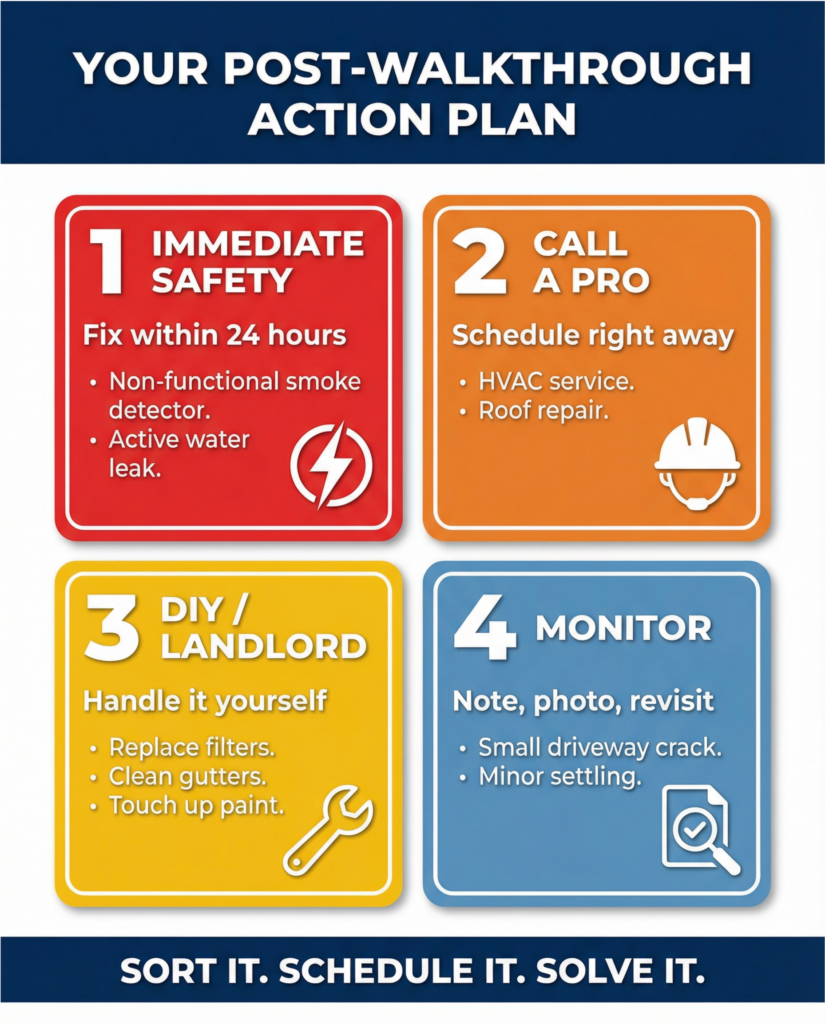
The walkthrough is only half the battle. The notes and photos you took are useless without a clear action plan. Once your inspection is complete, categorize your findings:
1.Immediate/Safety: Anything that poses an immediate risk (e.g., a non-functional smoke detector, an active water leak) must be addressed within 24 hours.
2.Schedule Professional: Items that require a licensed professional (e.g., the full HVAC service, a roof repair) should be scheduled immediately.
3.Landlord/DIY Tasks: This category includes tasks like replacing filters, cleaning gutters, or touching up paint.
4.Monitor: For minor issues like a small crack in the driveway, note it, photograph it, and plan to re-evaluate it during your next inspection.
By conducting a thorough, systematic walkthrough each spring, you are moving from a reactive to a proactive management style. You are protecting your physical asset, ensuring the safety of your tenants, and preventing small, inexpensive problems from becoming large, costly disasters. This process is the very essence of maintenance that matters. And once it’s done, you’ll be in a perfect position for the Final Exterior Prep for Summer Move-Ins.


