

This Content Is Only For Subscribers
In our main column, we covered the broad strokes of a full-property walkthrough. Now, it’s time to zoom in on the two interior systems that cause the most headaches and generate the most emergency calls: HVAC and plumbing. These are the mechanical heart and circulatory system of your rental property. A failure in either one is not a minor inconvenience; it’s a crisis for your tenant and a significant expense for you. A methodical spring inspection of these systems is the highest-value preventative maintenance you can perform.
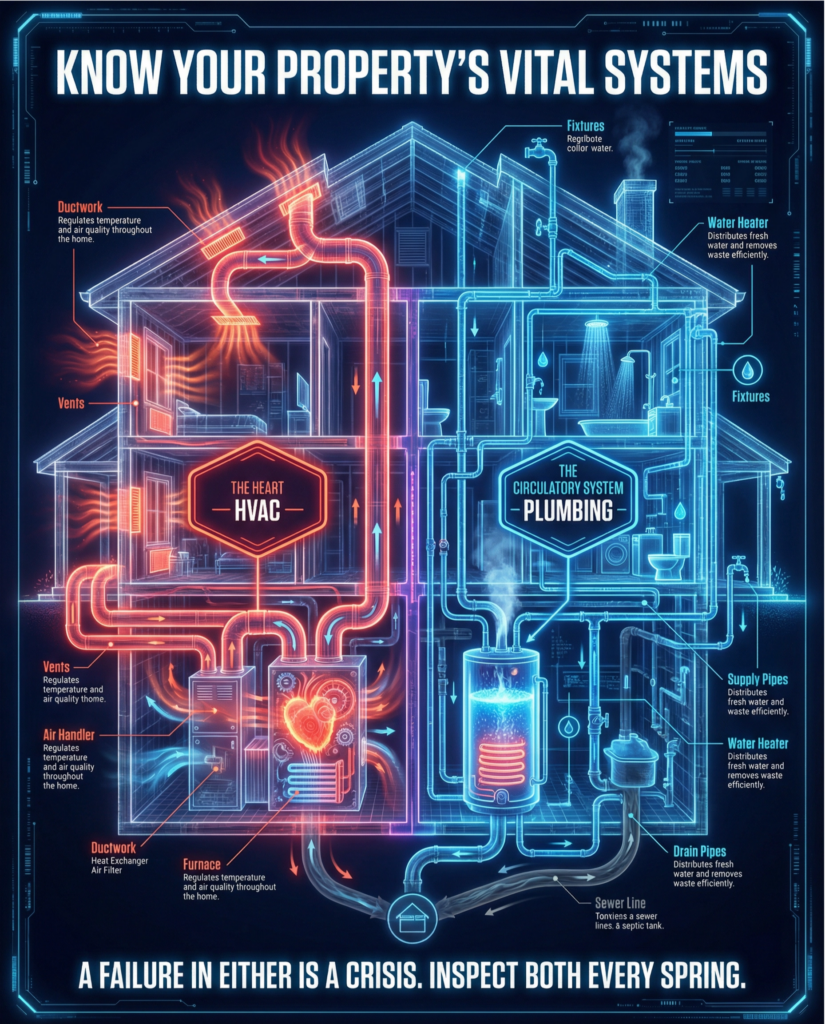
The HVAC System: Prepping for the Texas Heat
An air conditioner failing in the Texas summer is a landlord’s worst nightmare. It’s a guaranteed emergency call, a miserable experience for your tenant, and often results in a costly, rushed repair. The goal of your spring HVAC prep is to ensure the system is clean, tested, and ready for the workload ahead. This process involves both DIY tasks and a crucial professional check-up.
Your DIY Checklist:
•Change the Air Filter: This is the simplest and most effective maintenance task. A clogged filter restricts airflow, forcing the system to work harder, which increases energy costs and can lead to premature failure. Make it a policy to change the filter every 1-3 months, and always start the spring with a fresh one.
•Clear the Condenser Unit: The exterior unit (the condenser) needs to breathe. Over the winter, leaves, grass clippings, and dirt can accumulate around it. Trim back any encroaching shrubs or vegetation, providing at least two feet of clear space around the entire unit. Use a garden hose (not a pressure washer) to gently rinse off the condenser fins, washing away the accumulated grime.
•Inspect the Condensate Drain Line: The condensate line is a PVC pipe that drains condensation away from the indoor air handler. This line can become clogged with algae and sludge, causing water to back up and potentially flood the surrounding area. Pouring a cup of distilled vinegar down the line can help clear out any buildup. If you see standing water in the drain pan, it’s a sign of a clog that needs to be addressed immediately.
The Essential Professional Tune-Up
While the DIY steps are important, they are not a substitute for a professional tune-up. A licensed HVAC technician has the tools and expertise to perform a much deeper system analysis. This is a non-negotiable annual expense. During a tune-up, a technician will:
•Check refrigerant levels (a system low on refrigerant is a system with a leak).
•Clean and inspect the evaporator and condenser coils.
•Test electrical components and tighten connections.
•Lubricate moving parts.
•Verify thermostat calibration.
Scheduling this service in the spring, before the summer rush, is not only easier but often more affordable. The report you get from the technician is a vital piece of documentation for your property’s maintenance history.
The Plumbing System: A Hunt for Hidden Leaks
Water is the most destructive force your property will face. A small, undetected leak can lead to thousands of dollars in mold remediation and structural repairs. Your spring plumbing inspection is a systematic hunt for these hidden problems.
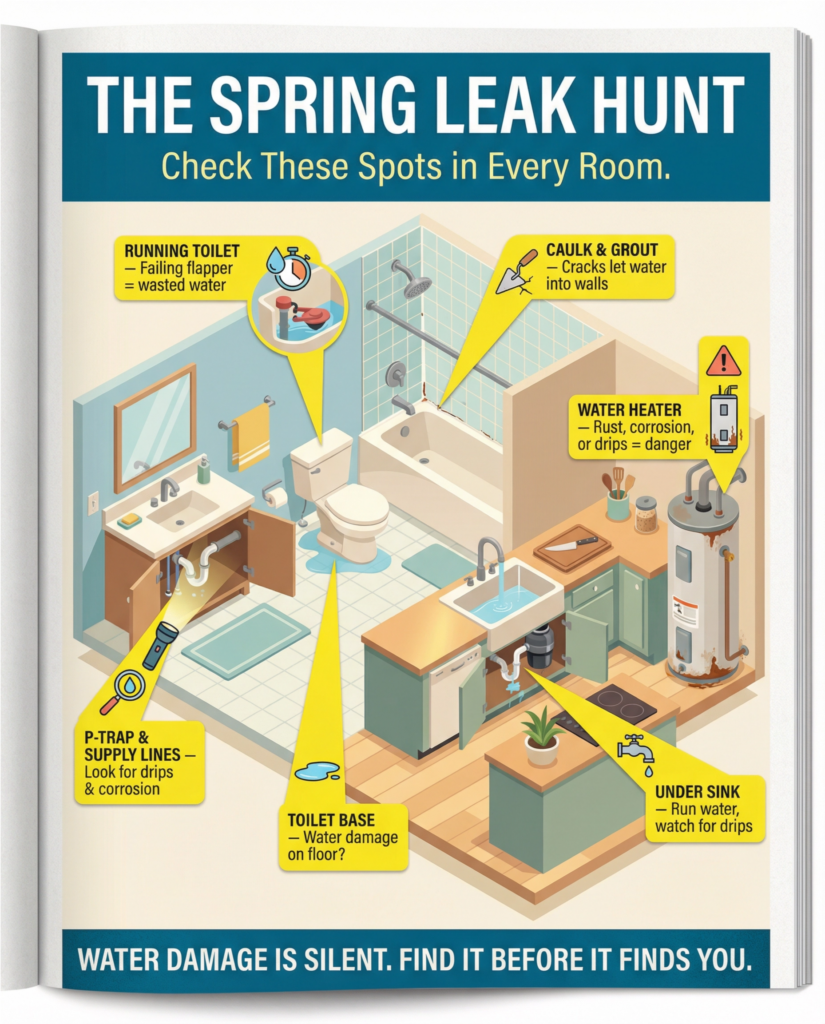
Your Inspection Checklist:
•Under Every Sink: Using a flashlight, inspect the P-trap and both the hot and cold water supply lines under every kitchen and bathroom sink. Look for any signs of moisture, active drips, or corrosion. Run the water while you’re looking.
•Around Every Toilet: Check the base of every toilet for any signs of water damage on the floor. Look at the supply line and the shut-off valve for any drips. A toilet that constantly runs (you’ll hear it) is not just wasting water; it’s a sign of a failing flapper or fill valve, which is an easy and inexpensive fix.
•Tubs and Showers: Inspect the caulk and grout around all tubs and showers. Cracks or gaps can allow water to seep into the walls. This is a common and easily preventable cause of major water damage.
•Water Heater: Visually inspect your water heater. Look for any signs of rust or corrosion on the tank itself and check for any drips from the pressure relief valve or the supply lines. A leaking water heater is a ticking time bomb.
By methodically working through this checklist, you are moving beyond simple reaction. You are actively managing the core systems of your property, preventing costly emergencies, and fulfilling your duty to provide a safe and habitable home for your tenants. This is the essence of maintenance that matters.


