

This Content Is Only For Subscribers
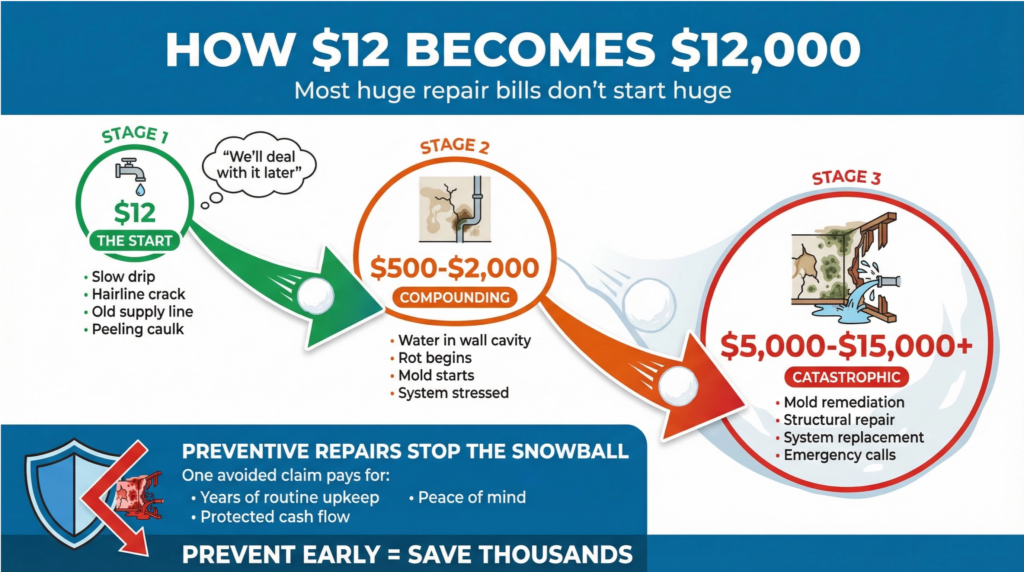
Most huge repair bills don’t start huge. They start as a $12 part, a slow drip, a hairline crack, or a “we’ll deal with it later” item that quietly compounds. For small landlords with single-family rentals, preventive repairs are how you protect cash flow. One avoided water loss claim or HVAC failure can pay for years of routine upkeep.
This checklist focuses on the preventive repairs with the best return: the ones that reduce the likelihood of catastrophic damage, emergency calls, and expensive replacements.
1) Stop water early: leaks, drains, and shutoffs
Replace aging supply lines
Toilet and sink supply lines are cheap and fail catastrophically. If you see braided lines that are old, kinked, or corroded, replace them proactively—especially in houses with older plumbing.
Re-caulk and re-grout where it’s failing
Failed caulk around tubs and showers lets water into wall cavities. That turns into rot and mold remediation, not a simple bathroom refresh.
If caulk is peeling, cracked, or blackened, remove and replace it. Treat mildew at the source, improve ventilation, and don’t seal over wet surfaces.
Clear or protect condensate drains
HVAC condensate overflow is one of the most common “surprise” water events, especially with attic air handlers. A basic spring service that clears the drain and checks the pan can prevent ceiling damage and soaked insulation.
Know where the main shutoff is (and label it)
In an emergency, minutes matter. Make sure you (and ideally your tenant) know where the main water shutoff is. Label it clearly. If the valve is stiff or corroded, have a plumber replace it—because a shutoff that won’t turn is worse than none at all.
2) Keep water away from the house: gutters and grading
Extend downspouts
Downspouts dumping next to the foundation can cause settlement, cracks, and interior moisture issues. Extensions and splash blocks are low-cost fixes that prevent high-cost structural problems.
Repair sagging gutters before fascia rots
A gutter pulling away isn’t just a gutter problem. It allows water behind fascia boards and into roof edges. Fixing the attachment now is far cheaper than replacing wood later.
Fix negative grading
If soil slopes toward the home, spring rains will test it. Regrading is often a shovel-and-soil job when caught early. Left alone, it becomes foundation and drainage contractor territory.
3) Reduce HVAC failures: the cheap habits that keep systems alive
Seal obvious duct leaks and reconnect loose runs
Loose ducts in attics and crawlspaces waste energy and stress the system. If you can safely access and identify disconnected sections, have them professionally reconnected and sealed. The ROI shows up in fewer complaints and longer equipment life.
Replace filters and protect coils
Dirty filters and clogged coils force HVAC to work harder. A simple filter schedule and occasional coil cleaning can add years to the system.
Add a float switch (where appropriate)
In many setups, a condensate float switch can shut the system off before overflow causes damage. It’s a small upgrade that can prevent big ceiling repairs.
4) Prevent electrical and fire issues before they start
Tighten and replace loose outlets/switches
Loose outlets can arc over time. If outlets wobble or faceplates are cracked, fix them. It’s inexpensive and improves safety and tenant confidence.
Test GFCIs and life-safety devices
GFCIs protect kitchens, baths, garages, and exterior outlets. Test and replace as needed. Also verify smoke and CO detectors are present, working, and appropriately located.
Address “hot” symptoms quickly
If a tenant reports a burning smell, warm outlets, flickering lights, or frequent breaker trips, treat it as urgent. Electrical problems don’t age gracefully.
5) Keep pests out by fixing the structure, not just spraying
Seal penetrations and add door sweeps
Most pests enter through gaps: around pipes, under doors, torn screens, and unsealed vents. Seal those points and you reduce infestations dramatically.
Trim vegetation off the house
Branches touching the roof and shrubs pressed against walls are pest bridges. Trimming is preventive pest control—and it helps roofs and gutters last longer too.
If the property has termite risk, a professional inspection and ongoing prevention plan can be one of the highest-ROI “repairs” you never see.
6) Protect high-cost finishes with small hardware fixes
Doorstops, cabinet bumpers, and slow-close fixes
Wall damage from doors, dented trim, and slamming cabinet doors add up. A handful of small hardware upgrades can prevent repeated patch-and-paint cycles.
Secure loose transitions and stair treads
Trip hazards are liability risks. They also lead to accelerated flooring damage. Tightening transitions and stabilizing stairs is cheap prevention.
The spring takeaway
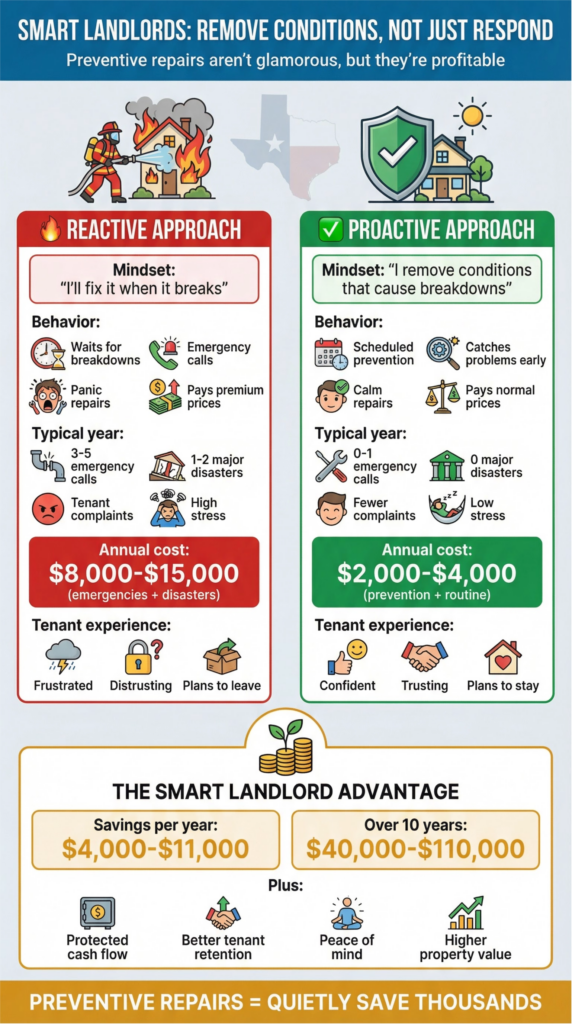
Preventive repairs aren’t glamorous, but they’re profitable. The smartest landlords don’t just respond to breakdowns—they remove the conditions that cause breakdowns.
Focus first on water control, drainage, HVAC protection, electrical safety, pest exclusion, and small hardware fixes. These are the repairs that quietly save thousands—because you never have to pay for the disaster that didn’t happen.


