

This Content Is Only For Subscribers
It’s that time of year again. The bluebonnets are blooming, the sun is shining a little brighter, and our rental properties are crying out for a little TLC after a long winter. Spring is the perfect season to tackle those nagging repairs and get your properties in tip-top shape for the year ahead. But let’s be honest, wrangling a team of contractors can feel like herding cats. Wait, that was last month! This month, we’re talking about something even more chaotic: the spring and summer leasing rush.
Welcome back to “Ask a Property Manager,” your monthly dose of hard-won wisdom from the front lines of property management. This month, we’re diving deep into a question I get all the time: “How in the world do I get new tenants moved in quickly without letting my standards slip and losing my mind?”
It’s a great question. Getting your background checks cleared, your leases signed, your property cleaned, and your new residents settled in happily is no small feat. But with a little planning and a whole lot of communication, you can pull it off like a seasoned pro. So, grab a sweet tea, and let’s talk strategy.
The Need for Speed (and Standards)
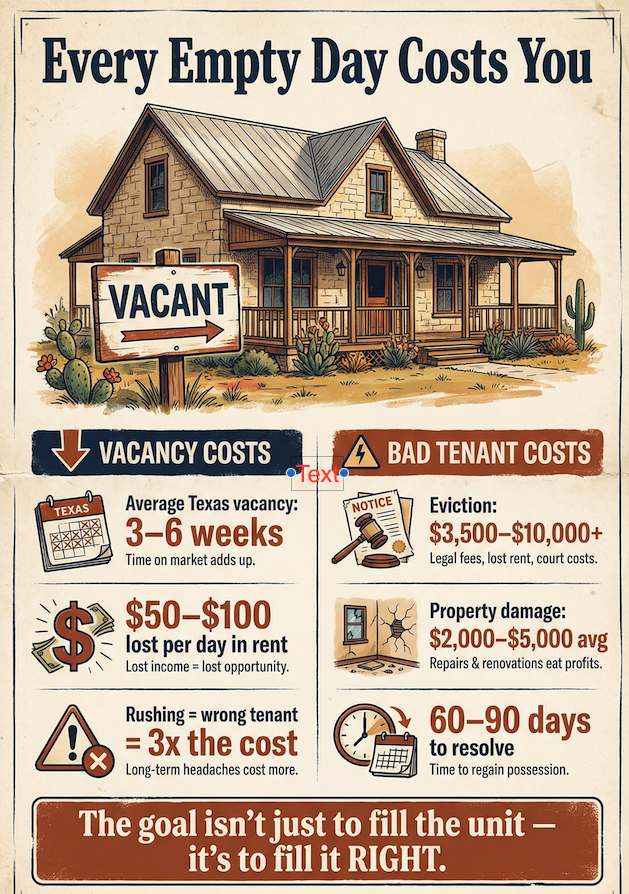
First things first, let’s talk about why this balance is so crucial. In Texas, especially in our fast-growing metro areas from Dallas to Austin, the rental market moves at a breakneck pace. A vacant property is a liability, costing you money every single day it sits empty. The pressure to get someone—anyone—into the unit is immense. However, rushing the process and compromising on your tenant quality is a recipe for disaster. A bad tenant will cost you exponentially more in unpaid rent, property damage, and eviction legal fees than a few extra days of vacancy ever could.
The goal isn’t just to fill the unit; it’s to fill the unit with the right person, as efficiently as possible. This requires a streamlined, well-oiled onboarding machine. You want a process that feels fast and frictionless to the applicant but remains rigorous and thorough on your end.
Streamlining the Application Process
The first bottleneck in onboarding is usually the application phase. If your application process requires prospective tenants to print out a PDF, fill it out by hand, and mail it in with a physical check for the application fee, you are losing good people to landlords who have joined the 21st century.
Go Fully Digital
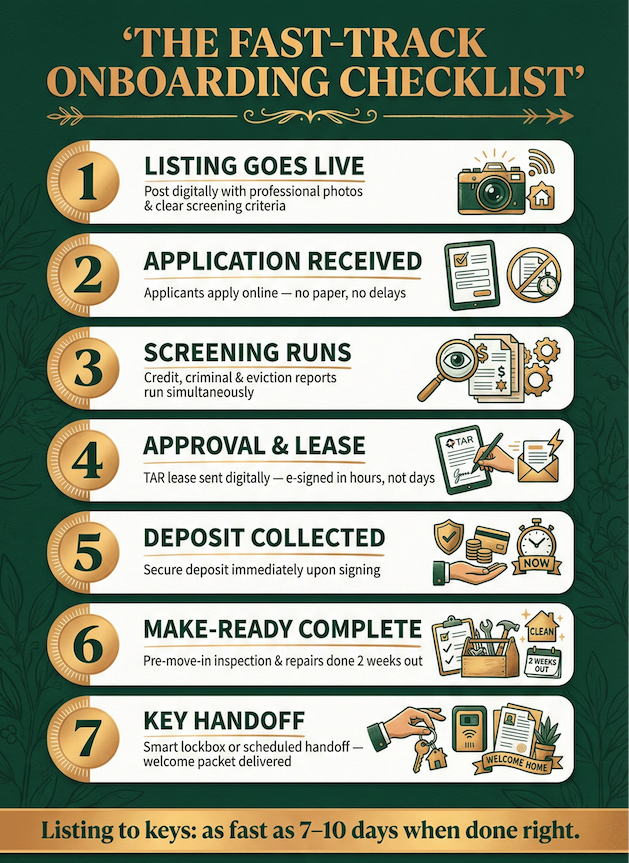
In today’s market, your entire application process must be online. Utilize property management software that allows applicants to apply directly from their smartphones. They should be able to upload photos of their IDs, link their bank accounts for income verification, and pay the application fee via credit card or ACH transfer in a matter of minutes.
This not only speeds up the applicant’s side of things but also automates the data entry on your end. You aren’t squinting at bad handwriting or waiting for a check to clear. The information flows directly into your system, ready for the next step.
Set Clear Expectations Upfront
One of the biggest time-wasters is processing applications from people who fundamentally don’t meet your criteria. Before they even click “apply,” your minimum requirements should be crystal clear. List your required credit score, income-to-rent ratio (typically 3x the monthly rent), pet policies, and background check parameters prominently in the listing and on the application landing page.
If someone knows they have an eviction on their record from last year and your policy clearly states no recent evictions, they likely won’t apply, saving both of you time and hassle.
Automating the Vetting Process
Now that you have a digital application, it’s time to vet the candidate. This is where you absolutely cannot sacrifice quality for speed. You must verify identity, income, credit history, and rental history.
Integrated Screening Tools
Do not try to piece this together yourself by calling previous landlords and asking for pay stubs. Use a comprehensive, integrated screening tool that runs credit, criminal, and eviction reports simultaneously. Many modern platforms can return these results in minutes, not days.
Automated Income Verification
Verifying income used to mean calling employers (who often wouldn’t call back) or trying to decipher forged pay stubs. Now, services allow applicants to securely link their bank accounts or payroll providers, giving you instant, verified proof of income. This is faster, more secure, and significantly more reliable than the old methods.
The Human Element of Vetting
While automation is fantastic for credit and criminal checks, the human element is still vital for rental history. You still need to speak with previous landlords. However, you can streamline this by using automated email or text surveys sent directly from your software to the previous landlord. If they don’t respond within 24 hours, then you pick up the phone. When you do call, keep it brief and focused: Did they pay on time? Did they cause damage? Would you rent to them again?
The Lease Agreement: Fast and Bulletproof
Once you’ve found the right tenant, you need to lock them in quickly. If you take three days to draft a lease, they might find another place.
Standardized, Digital Leases
Your lease should be a standardized template reviewed by a Texas real estate attorney—the Texas Association of Realtors (TAR) lease is a great starting point if you’re a member. You should only need to plug in the variables: names, dates, rent amount, and specific addendums (like pet agreements or parking assignments).
Send the lease digitally using an e-signature platform. This allows the tenant to review and sign the document on their phone during their lunch break. No printing, no scanning, no driving across town to your office.
Require Immediate Action
When you send the lease, set a deadline. Give them 24 to 48 hours to sign and pay the security deposit. If they drag their feet, it’s a red flag. The unit remains on the market until the lease is signed and the deposit is in your account. Make sure they understand this urgency.
Pre-Move-In Preparation: The “Make-Ready” Hustle
While the paperwork is flying back and forth, the physical property needs to be prepped. The “make-ready” process is often where timelines fall apart.
The Pre-Move-Out Inspection
The secret to a fast turnaround actually starts before the old tenant leaves. Conduct a pre-move-out inspection two weeks before their lease ends. This allows you to identify major issues—like a damaged floor or a broken appliance—and schedule contractors in advance. If you wait until the day they move out to realize you need a painter, a plumber, and a carpet cleaner, your property will sit empty for weeks.
Build a Reliable Vendor Network
As we discussed last month, having a reliable team of contractors is essential. You need a handyman, a cleaner, and a carpet professional who can mobilize quickly. When you know a unit is opening up, get them on the schedule tentatively. It’s much easier to cancel a cleaner if the outgoing tenant left the place spotless than it is to find one at the last minute.
Standardize Your Finishes
If you manage multiple properties, standardize your paint colors, flooring, and fixtures. If you use the same “Agreeable Gray” paint in every unit, your painter doesn’t have to waste time color-matching, and you can keep touch-up paint on hand. If a blind breaks, you already know exactly which size and brand to buy at the local hardware store. Standardization equals speed.
The Move-In Day Experience
The day the tenant moves in sets the tone for the entire lease. You want it to be seamless, welcoming, and efficient.
The Digital Welcome Packet
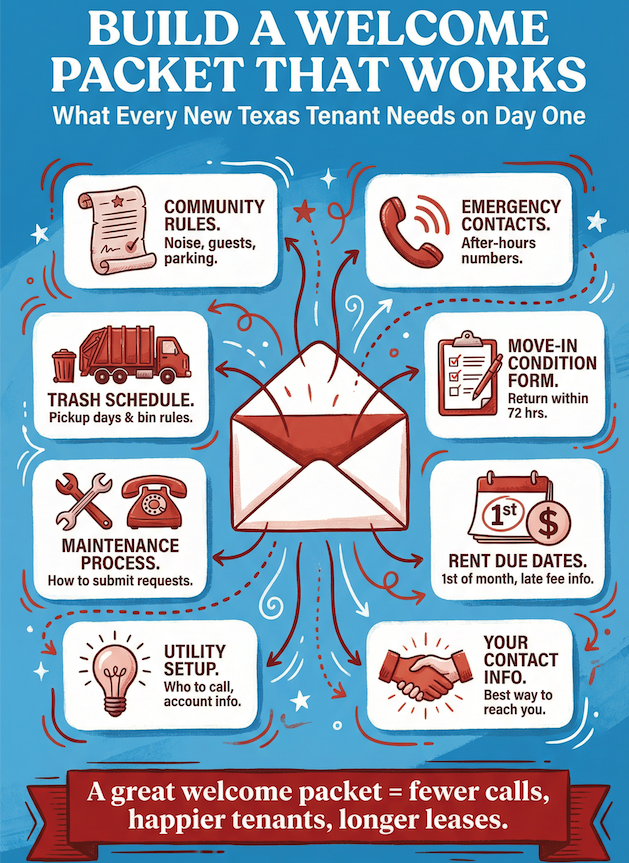
Instead of handing them a massive binder of rules, send a digital welcome packet a few days before move-in. This should include:
•Utility transfer instructions (with local Texas provider contact info)
•Trash and recycling schedules
•Community rules (parking, pool access, etc.)
•Instructions on how to use the tenant portal for paying rent and submitting maintenance requests
•Emergency contact numbers
Getting this information to them early allows them to set up utilities in advance and reduces the number of questions they have on move-in day.
The Move-In Condition Form
In Texas, it is critical to document the condition of the property upon move-in to protect yourself when it’s time to process the security deposit at move-out. Provide a detailed move-in condition form and require the tenant to complete it and return it within 48 hours.
Better yet, use an app that allows them to take photos of any existing damage and upload them directly to their file. This provides indisputable photographic evidence and eliminates arguments later.
Key Handoff Alternatives
Coordinating a time to meet and hand over keys can be frustrating for both parties. Consider installing smart locks or using secure lockboxes. Once the lease is signed, the deposit is paid, and utilities are transferred, you can simply text them the entry code. This allows them to move in on their schedule, and it saves you a trip to the property.
The Bottom Line
Balancing speed and quality in tenant onboarding is the ultimate Texas two-step of property management. It requires rhythm, practice, and a good partner—in this case, the right technology and processes.
By digitizing your applications, automating your vetting, standardizing your make-ready process, and utilizing smart technology for move-ins, you can drastically reduce your vacancy days. More importantly, by maintaining strict criteria and thorough background checks, you ensure that the people moving in quickly are the high-quality tenants you want staying for the long haul.
It takes some upfront work to build these systems, but once they are in place, you’ll find that onboarding new tenants is less like herding cats and more like conducting a well-rehearsed symphony. So, get your systems in order, keep your standards high, and get ready for a successful leasing season. Happy renting, Texas!
Disclaimer: The information provided in this column is for educational purposes only and does not constitute legal advice. Always consult with a qualified Texas real estate attorney regarding your specific leasing practices and local regulations.


