

This Content Is Only For Subscribers
If your current system for managing the summer leasing rush involves a cluttered spreadsheet, a collection of sticky notes, and a nagging feeling that you’ve forgotten something, you’re not alone. For decades, this was the default “system” for the independent landlord. But we’re living in an age of unprecedented technological leverage, and it’s time to bring your property management workflow into the 21st century. The era of reactive, paper-based management is over. The future is digital, automated, and accessible from the palm of your hand.
Welcome to Tech for Landlords, your new monthly download on the software, gadgets, and digital strategies that can transform your real estate business. We’re here to cut through the noise and show you the tech that actually moves the needle, saving you time, money, and sanity. This month, we’re tackling a universal landlord headache: surviving the chaotic Texas summer turnover season without losing your mind. The solution isn’t working harder; it’s working smarter through the strategic application of apps and platforms designed to streamline your operations.
The Problem with Analog Systems in Peak Season
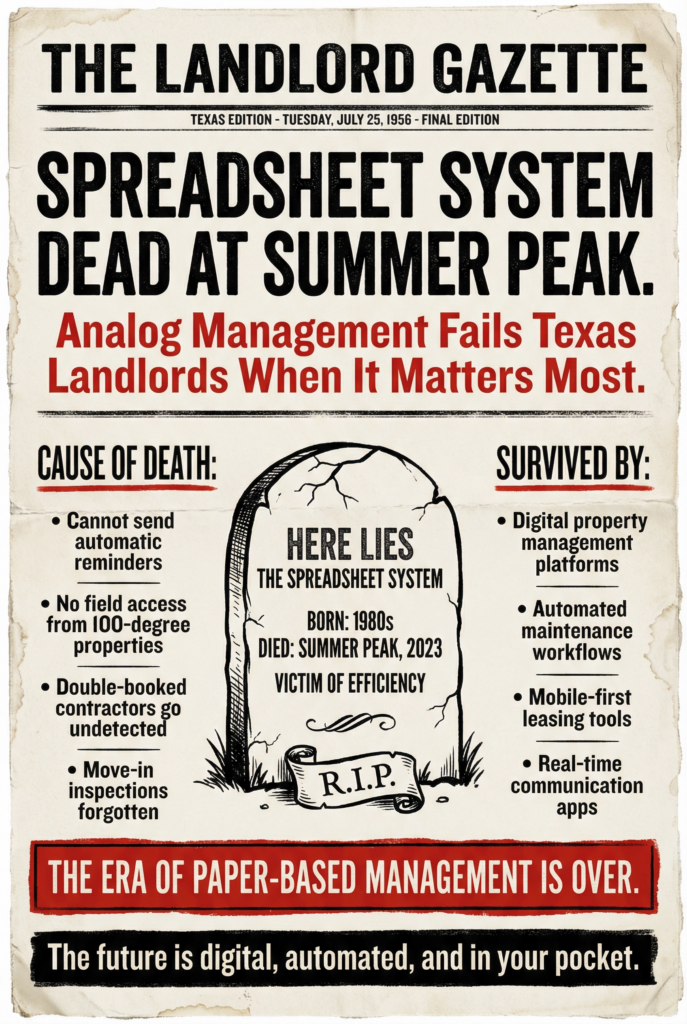
The trusty spreadsheet has its place, but as a primary tool for managing a dynamic process like summer turnovers, it has critical failures. It’s not proactive, it’s not collaborative, and it’s not easily accessible from the field. A spreadsheet can’t automatically remind you that an applicant’s background check is complete; you have to remember to look at the spreadsheet. It can’t easily track communication with your HVAC technician when you are standing on a property in 100-degree heat, phone in hand.
During the slow winter months, you might be able to get away with an analog system. But when June arrives and you have three units turning over simultaneously, the analog system breaks down. Emails get lost, contractor appointments are double-booked, and critical move-in inspections are rushed or forgotten.
To truly get ahead of the summer rush, you need a system that works for you, not the other way around. You need a digital platform designed for action. This is more than just a digital to-do list; it’s a command center for your entire maintenance and leasing operation.
Core Features of a Modern Property Management Platform
When you start exploring the world of digital platforms, the options can be overwhelming. There are hundreds of apps targeting real estate investors, ranging from simple rent-collection tools to enterprise-level software suites. To simplify the process, let’s focus on the core features that provide the most value for a landlord managing the summer rush.
A Centralized Dashboard
This is your mission control. At a glance, you should be able to see what’s due this week, what’s in progress, and what’s overdue. A good dashboard replaces the need to hunt through emails, text messages, and calendars to figure out the status of a unit turn. When you open the app on Monday morning, it should tell you exactly which properties need your attention.
Automated Workflows and Recurring Tasks
This is the automation game-changer. You shouldn’t have to manually create a to-do list every time a tenant gives notice. A modern platform allows you to create a “Move-Out Template.” The moment a tenant submits their 30-day notice, you trigger the template, and the software automatically populates a timeline of tasks: schedule pre-move-out inspection, list the property, dispatch the cleaning crew, and schedule the re-key.
Similarly, recurring tasks ensure preventative maintenance isn’t forgotten. You can set a task to “Schedule HVAC Spring Tune-Up” to recur annually in April. The platform remembers for you, forever.
Vendor and Contact Integration
During the summer, you are constantly coordinating with contractors. A great platform allows you to store contact information for your go-to plumber, electrician, and landscaper directly within the app. When you create a maintenance task, you can assign it directly to the vendor through the platform. They receive an email or text notification, and their contact info is right there if you need to follow up.
File and Photo Attachments
When you do your move-in or move-out walkthroughs, you should be taking photos of any issues. The ability to attach those photos directly to a specific task or property profile provides essential visual context. If you create a task for “Repair drywall hole in master bedroom,” attaching a photo allows your handyman to know exactly what materials to bring before they even arrive at the property.
Mobile-First Design
As a landlord during the summer, you rarely sit at a desk. You are in your truck, at the hardware store, or walking properties. Therefore, any platform you choose must have a powerful, easy-to-use mobile app. If you can’t update a task, view a lease, or message a tenant from your phone while standing in the driveway, the platform is failing you.
Dedicated Property Management Software vs. General Task Managers
When selecting your tech stack, you generally have two paths: dedicated property management software or general-purpose task management apps.
The All-in-One Property Management Platforms
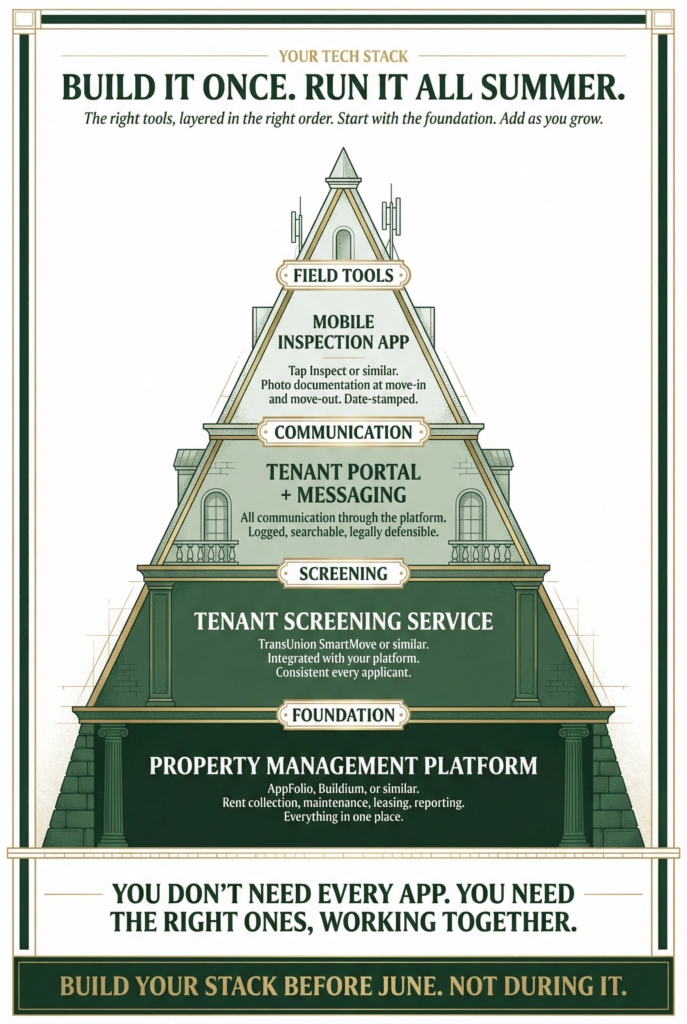
Platforms like Buildium, AppFolio, and TenantCloud are the heavyweights of the industry. These are comprehensive, end-to-end solutions designed specifically for real estate.
The massive advantage of these platforms is integration. They handle everything: online rent collection, background checks, digital lease signing, maintenance requests, and accounting. When a tenant submits a maintenance request through their portal, it automatically creates a work order in your dashboard. You can then assign that work order to a vendor, track the progress, and pay the vendor’s invoice, all within the same ecosystem.
The downside is cost and complexity. These platforms are incredibly powerful, but they come with a steeper learning curve and a monthly subscription fee that may be hard to justify if you only manage a handful of doors. However, if your portfolio is growing and the summer rush feels unmanageable, upgrading to an all-in-one platform is often the most effective way to scale your operations. We will dive deeper into specific features of these platforms in our companion articles, such as Digital Lease Signing for Fast Move-Ins and Apps for Tracking Maintenance Requests.
General Task Management Apps
If you are a smaller landlord looking for a lightweight, cost-effective solution, general task management apps like Asana, Trello, or Monday.com are fantastic alternatives. While they don’t offer rent collection or background checks, they are incredibly powerful tools for organizing your workflows.
These apps use a visual, board-based system (often called Kanban). You can create a board for “Summer Turnovers,” with columns for “Notice Given,” “Make-Ready in Progress,” “Ready to Show,” and “Lease Signed.” As a property moves through the turnover process, you simply drag its card from one column to the next.
The advantage of these apps is their flexibility and ease of use. They are highly customizable, and most offer robust free tiers that are more than sufficient for a small portfolio. You can attach photos, set due dates, and even invite your contractors to view specific boards. They require more manual input than an all-in-one platform, but they are a massive upgrade over a spreadsheet.
Streamlining Tenant Communication
Beyond task management, the summer rush brings a tidal wave of tenant communication. Between answering leasing inquiries, coordinating move-ins, and handling maintenance requests, your phone can quickly become a source of profound stress.
To survive the summer, you must digitize and centralize your communication. Do not rely on your personal cell phone number for text messages. Instead, utilize platforms like Google Voice or specialized property management communication tools that provide a dedicated business number.
These tools allow you to set business hours, automatically route calls to voicemail after hours (unless it’s an emergency line), and manage all text messages from a desktop interface. More importantly, they keep a permanent, searchable archive of all communication. When a dispute arises over whether a tenant reported a broken AC unit, you have a definitive digital record. We will explore these strategies further in Automating Communication During Busy Months.
The Digital Leasing Process
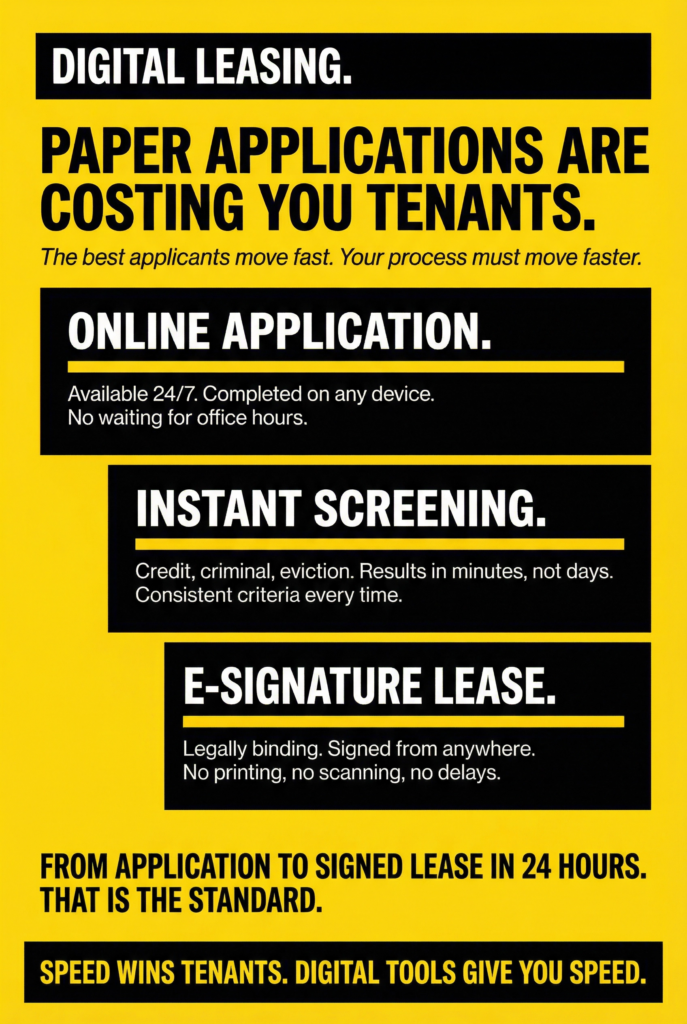
Finally, the most significant bottleneck in the summer turnover process is the physical execution of the lease. Printing a 20-page document, coordinating a time to meet the tenant, waiting for them to sign, and then scanning the document back into your files is an archaic and inefficient process.
Digital lease signing is no longer a luxury; it is an industry standard. Platforms like DocuSign, HelloSign, or the integrated e-signature tools within property management software allow you to execute a lease in minutes, entirely remotely.
When you approve an applicant, you simply generate the digital lease, send the link, and the tenant signs from their smartphone. The platform automatically tracks the signatures, provides a legally binding audit trail, and emails a finalized copy to all parties. This eliminates the logistical friction of move-in day and allows you to secure a tenant the moment they are approved, minimizing your vacancy time.
The Technological Shift
Transitioning from analog habits to digital platforms requires an initial investment of time and energy. Setting up your templates, importing your properties, and learning a new interface can feel daunting, especially when you are already busy.
However, this is a necessary paradigm shift. The Texas summer will always be hot, and the rental market will always be demanding. You cannot control the seasonal surge, but you can control how you manage it. By embracing modern task management platforms, centralizing your communication, and digitizing your leasing process, you transform the summer rush from a chaotic scramble into a streamlined, scalable operation. The tech is available; it’s time to use it.
Tracking Occupancy and Market Trends
Beyond managing the day-to-day tasks of turnovers and maintenance, technology offers a macro-level advantage: data visibility. When you manage your properties on a digital platform, you are inherently building a database of your own business performance.
During the summer, understanding your occupancy rates, average days on market, and turnover costs is critical for pricing your units correctly. A robust property management platform will automatically generate reports on these metrics. If you notice that your three-bedroom units are sitting vacant for an average of 14 days in July, while your one-bedroom units lease in 48 hours, you have actionable data to adjust your marketing strategy or your pricing model in real-time.
Furthermore, integrating your platform with market analysis tools can provide neighborhood-specific rent comps. This ensures you are not leaving money on the table during the peak leasing season, nor are you pricing yourself out of a competitive market. We will explore how to leverage this data in our upcoming piece, Tracking Summer Occupancy Digitally.
By moving away from the analog spreadsheet, you are not just organizing your to-do list; you are upgrading your ability to make informed, data-driven decisions that directly impact your bottom line.


