

This Content Is Only For Subscribers
When a Texas cold snap rolls in, it doesn’t give landlords much time to react. One day the forecast looks mild, and the next, freezing temperatures are threatening pipes, roofs, and heating systems across the state. While not every repair can be anticipated, knowing which emergency winter issues can’t be ignored helps landlords protect their investment and keep tenants safe.
In Maintenance Matters: Fall Roof & Gutter Checklist Before Winter Hits, we covered proactive steps to prepare your property for seasonal weather. But what about the problems that sneak up mid-winter? Here are the emergency repairs you should be ready to tackle without delay.
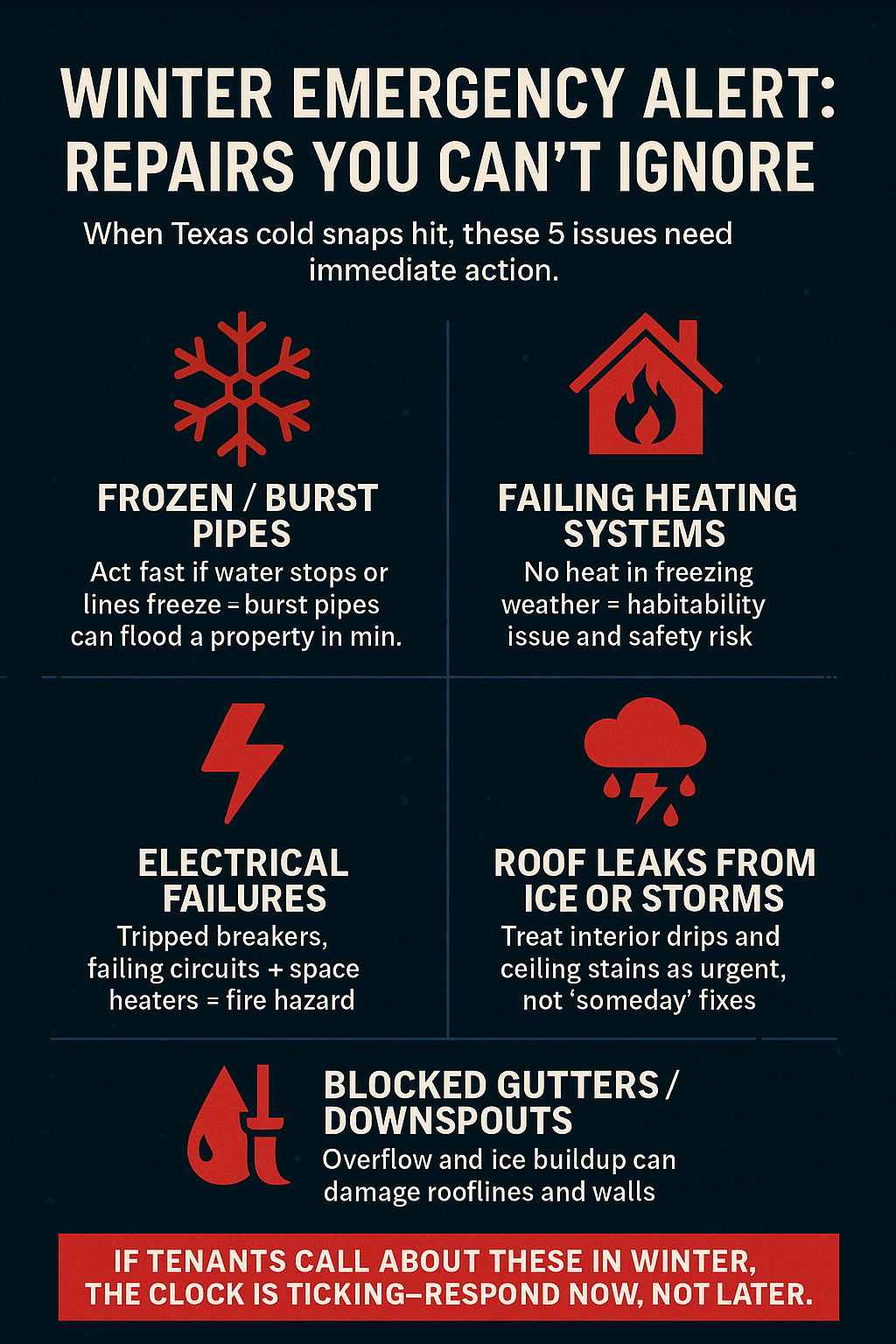
1. Frozen or Burst Pipes
Few things cause more damage faster than a burst pipe. When water freezes, it expands, and the pressure can rupture plumbing lines. If tenants report frozen faucets or water flow issues, landlords need to act immediately. Emergency plumbers can thaw lines safely, and if a pipe bursts, quick repairs minimize water damage. Having insulation around exposed pipes and encouraging tenants to drip faucets during cold nights can reduce risks—but when trouble strikes, waiting is never an option.
2. Failing Heating Systems
A broken heater in winter isn’t just inconvenient—it can quickly become a legal and safety concern. Texas landlords are required to provide habitable housing, and no heat during freezing weather qualifies as an emergency repair. Keep an HVAC technician on speed dial and consider service contracts that prioritize emergency calls. Remind tenants to report issues at the first sign of trouble, like uneven heating, strange noises, or frequent cycling.
3. Roof Leaks from Ice or Storms
While Texas doesn’t see blizzards often, ice, sleet, and heavy winter rains can expose roof weaknesses. Water infiltration can damage insulation, drywall, and electrical systems. Landlords should treat reported leaks as urgent, placing tarps or temporary patches until full repairs can be made. A proactive roof inspection in the fall helps, but emergencies can still happen when winter storms roll in.
4. Electrical Failures
During cold snaps, tenants often use extra space heaters, which can strain electrical systems. If breakers trip repeatedly or circuits fail, landlords must move fast to prevent fire hazards. Licensed electricians should handle these repairs immediately—DIY fixes can cause more harm than good.
5. Blocked Gutters or Downspouts
Even after fall cleaning, gutters can clog from late leaves, ice, or debris, causing water to back up and freeze against the roofline. Left unchecked, this can lead to structural damage. Landlords who get a call about water spilling over gutters during winter rains should send someone out quickly before it worsens.
The Takeaway
Being a landlord in Texas means dealing with unpredictable winters. The key isn’t just preparing properties in advance—it’s responding quickly when emergencies arise. By treating frozen pipes, heating failures, roof leaks, electrical problems, and blocked gutters as urgent, landlords can avoid costly damage and maintain good tenant relationships.
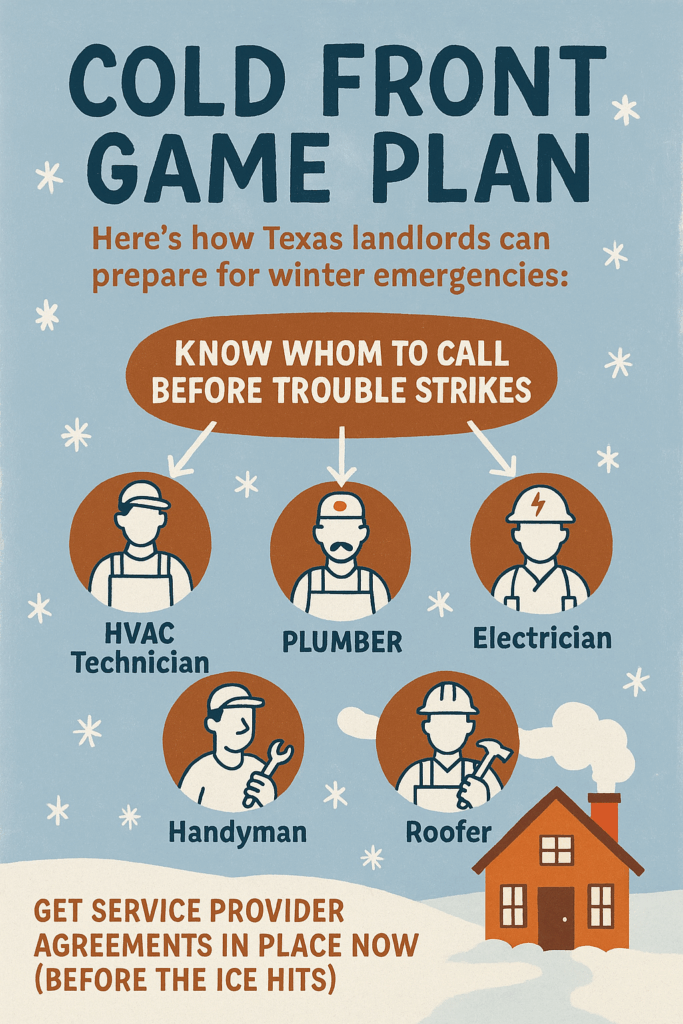
A little foresight, combined with a plan for emergency service calls, ensures you’re not scrambling when the next cold front arrives. Because in Texas, winter may be brief, but it’s always better to be ready.


