

This Content Is Only For Subscribers
For landlords in Texas, the last few months of the year are always a time for reflection and planning. Rent checks may still be flowing in, but savvy investors know that the fourth quarter is when the best opportunities—and the hardest decisions—often emerge. Should you hold tight to your current portfolio and ride the wave into the new year, or is now the time to scoop up another rental before market dynamics shift?
The Texas rental landscape has been shifting rapidly. With property values fluctuating, interest rates still above historic lows, and a wave of new residents moving to the Lone Star State, the question of whether to “hold or buy” is on every landlord’s mind. The answer depends on a mix of local rental trends, statewide property values, and broader economic conditions. Let’s break it down so you can head into the new year with confidence.
The Big Picture: Texas Housing and Rental Trends
Texas has been a magnet for growth for more than a decade, but recent years have been especially dramatic. According to U.S. Census data, Texas added more new residents than any other state for the last several years running. Cities like Austin, Dallas-Fort Worth, Houston, and San Antonio continue to expand at a rapid pace, while mid-sized markets such as Georgetown, Round Rock, and Frisco are seeing record growth.
This population surge translates directly into demand for housing. Whether renters are young professionals moving for jobs, families priced out of homeownership, or retirees seeking sunshine and affordability, Texas remains one of the most desirable rental markets in the country.
Rent Growth
Rent growth has moderated compared to the post-pandemic boom, but landlords are still in a strong position. After years of double-digit jumps, most Texas cities have shifted into steady, single-digit growth.
- Austin: After seeing explosive rent growth in 2021–22, the market has cooled slightly, with rents leveling out in many neighborhoods. Still, strong tech employment and university-driven demand keep the market competitive.
- Dallas-Fort Worth: Steady growth continues, particularly in suburban areas where families seek larger homes. Vacancy rates remain low.
- Houston: Energy-sector stability has fueled continued rental demand, with moderate increases year over year.
- San Antonio: Affordable compared to other major metros, San Antonio continues to attract renters and investors alike.
For landlords, this means rents are not skyrocketing like they once were—but they’re not dropping either. Instead, Texas landlords can expect modest but sustainable increases, the kind that build long-term portfolio stability.
Vacancy Rates
Vacancy rates are holding relatively steady, though they can vary by market and property type. Single-family rentals in family-friendly suburbs are in especially high demand. Meanwhile, luxury downtown apartments in Austin or Dallas may see slightly higher vacancies as supply catches up with demand.
For landlords, this means quality tenants are still out there—you may just need to market smartly and price competitively to keep your properties full.
Property Values: Still Rising, But More Slowly
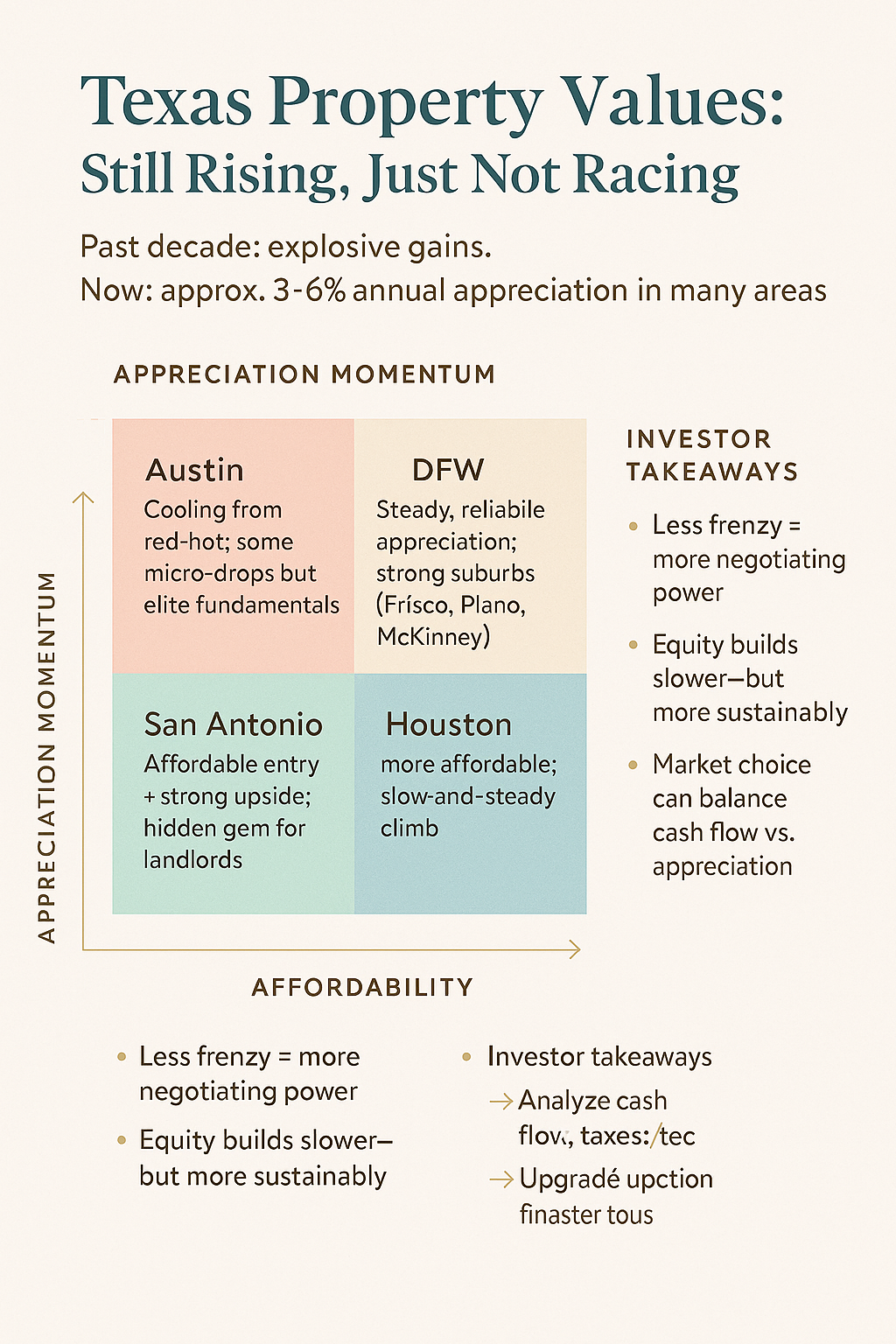
Property values across Texas have risen dramatically over the last decade, and while the pace has slowed, appreciation remains positive. Many landlords saw their property values climb 20% or more in just a few years. Now, annual appreciation is closer to 3–6%, depending on location.
For investors, this slower pace is both a challenge and an opportunity. You may not see the same rapid equity gains as in the past, but you also won’t face the extreme bidding wars that characterized 2021 and 2022. Sellers are more willing to negotiate, and buyers with cash or strong financing are in a favorable position.
Regional Variations
- Austin: After a red-hot market, Austin has cooled, with some neighborhoods even seeing small price drops. But long-term fundamentals—jobs, lifestyle, and education—remain strong.
- Dallas-Fort Worth: The metroplex continues to show steady appreciation, particularly in suburban markets like Plano, Frisco, and McKinney.
- Houston: More affordable than Austin or Dallas, Houston’s property values continue a steady climb, supported by a strong job market.
- San Antonio: Consistently one of the most affordable large metros in Texas, San Antonio offers strong appreciation potential and lower barriers to entry for landlords.
The Interest Rate Factor
Interest rates remain one of the biggest deciding factors for whether landlords should buy or hold. After years of historically low rates, investors now face a more expensive borrowing environment.
Rates for investment properties typically run higher than for primary residences, often by 0.5–1 percentage point. While rates aren’t expected to return to the record lows of the pandemic anytime soon, there’s speculation they could ease slightly in the coming year if inflation continues to cool.
For landlords, this creates a dilemma:
- Buying now means locking in higher rates, which reduces cash flow.
- Waiting could mean slightly lower rates—but also higher property prices if appreciation continues.
This is why many investors are turning to creative financing strategies, such as adjustable-rate mortgages, portfolio loans, or even seller financing, to make deals pencil out. Some landlords are also considering partnerships or syndications, pooling resources with other investors to share risk and secure larger properties than they could manage alone.
Timing Your Acquisitions: The Case for Buying Before the New Year
Conventional wisdom says that spring and summer are peak seasons for home buying and renting, while fall and winter are slower. But for landlords, the “off-season” can actually be one of the best times to acquire new properties.
Why Buy Before Year-End?
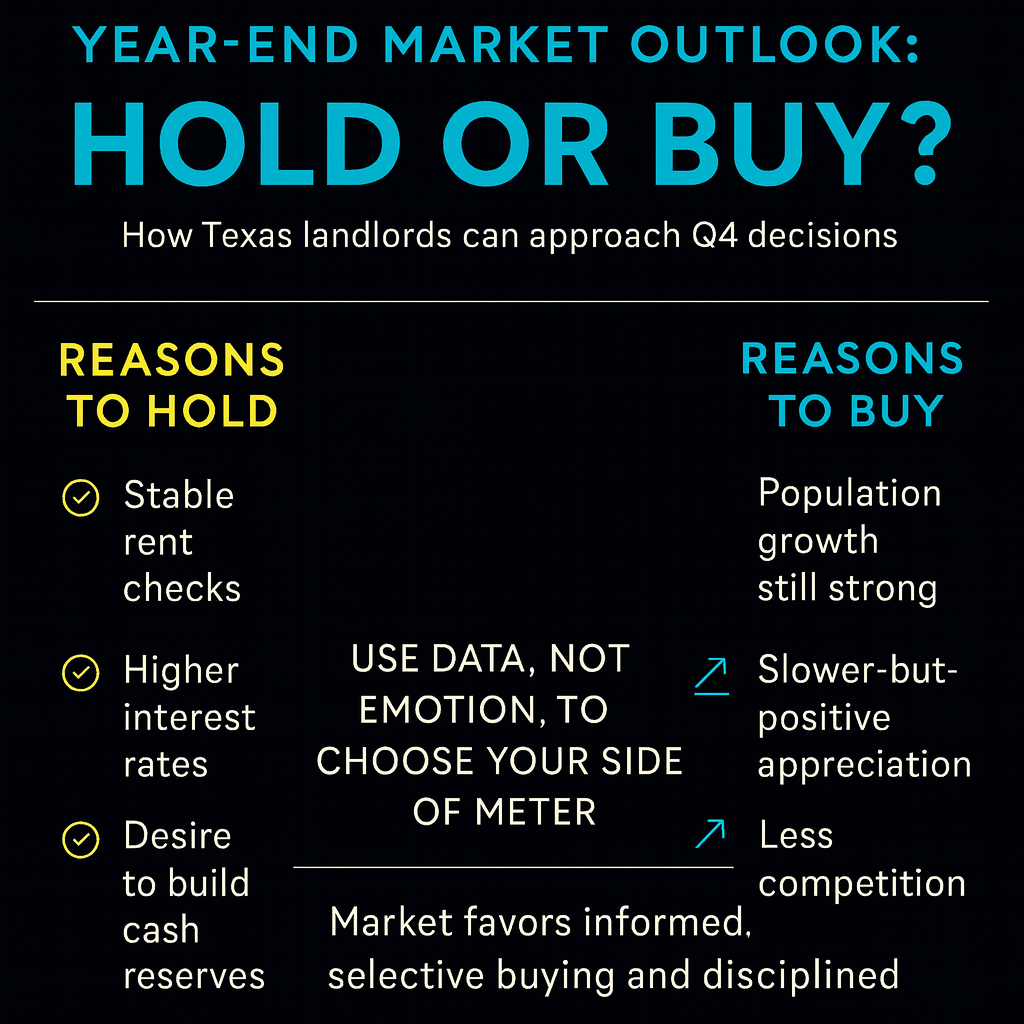
- Less Competition: Many traditional buyers step back during the holidays, leaving more room for investors to negotiate.
- Motivated Sellers: Homeowners eager to sell before year-end—whether for tax reasons or personal timelines—may be more flexible on price.
- Tax Advantages: Buying before December 31 may allow you to claim certain deductions right away, such as mortgage interest, property taxes, and depreciation.
- Early Positioning for Spring: Acquiring a property now means you’ll be ready to list it for rent when demand typically spikes in the spring.
Of course, not every deal will make sense, and it’s important to analyze each property carefully. But for those with the financing and cash reserves to act, the end of the year can be a prime time to expand your portfolio.
The Case for Holding
Not every landlord needs to rush out and buy before the ball drops. There are strong reasons to hold steady with your current portfolio.
- Stability: If your properties are fully occupied and generating reliable income, holding may make the most sense.
- Debt Costs: With higher interest rates, it may be better to wait and refinance existing loans rather than take on new ones.
- Market Cooling: In some overheated neighborhoods, prices may still have room to adjust downward, creating better opportunities in the future.
- Cash Reserves: Landlords who built up savings during strong rent growth years may prefer to hold cash for a strategic purchase later.
Holding doesn’t mean sitting idle—it can also be a time to focus on improving existing properties. Upgrades like energy-efficient appliances, smart home technology, or fresh landscaping can improve tenant retention and justify modest rent increases. Some landlords are even experimenting with mid-term rentals—furnished leases aimed at traveling nurses, consultants, or digital nomads—as a way to diversify income streams without turning to short-term rentals full time.
Suburban vs. Urban: Where the Smart Money Is Going
A major question for Texas landlords is where to focus their investment: the heart of the city or the growing suburbs.
- Urban rentals often command higher rents, but competition is stiff and vacancy rates can be more volatile. In Austin, luxury high-rises have faced an influx of new supply, putting pressure on landlords to offer concessions.
- Suburban rentals tend to offer more stability, especially single-family homes in good school districts. Families are willing to sign longer leases, and tenant turnover is lower.
For many landlords, the sweet spot lies in emerging suburban markets on the edges of major metros. These areas often offer lower purchase prices, steady demand, and strong appreciation potential as cities sprawl outward.
Common Mistakes Landlords Make at Year-End
Whether you decide to hold or buy, avoid these pitfalls as you plan your year-end strategy:
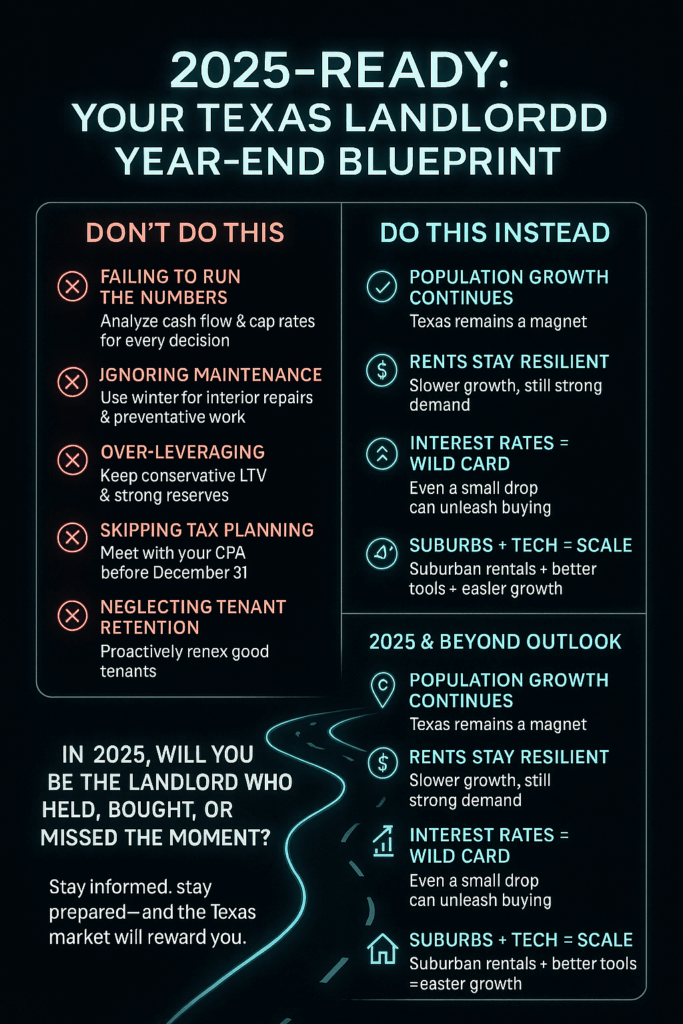
- Failing to Run the Numbers: Don’t rely on gut feeling—analyze cash flow, cap rates, and long-term projections before making a move.
- Ignoring Maintenance: Delaying repairs until spring can backfire. Winter is the perfect time to tackle indoor projects and preventative work.
- Over-leveraging: Don’t stretch too thin on financing. A conservative approach will help you weather economic uncertainty.
- Skipping Tax Planning: Consult with a CPA before the year ends to maximize deductions and depreciation schedules.
- Overlooking Tenant Retention: Don’t get so focused on buying that you forget to keep your current renters happy. Renewals save money compared to turnover.
Looking Ahead: 2025 and Beyond
So, what does the future hold for Texas landlords? Most analysts agree on a few key points:
- Population Growth Will Continue: Texas’ job opportunities, business-friendly environment, and affordability will keep attracting new residents.
- Rents Will Remain Strong: While growth may be slower, demand for rentals will stay healthy.
- Interest Rates Are the Wild Card: Even a small drop in rates could unleash new waves of buying.
- Suburbs Are the Sweet Spot: Family-friendly neighborhoods outside major cities remain the most in-demand rental markets.
- Technology Will Keep Shaping Management: From AI-driven tenant screening to accounting software tailored to landlords, tech tools will increasingly help landlords scale efficiently.
Final Thoughts
Year-end is the perfect time for landlords to take stock of their portfolios. In Texas, the fundamentals—population growth, job strength, and demand for rentals—remain robust. But every landlord’s situation is unique. Some will find golden opportunities to buy before the new year, while others will be better served by holding steady and strengthening their existing investments.
The good news? Texas landlords don’t need to gamble. By staying informed about rental trends, property values, and financing options, you can make clear-eyed decisions that position you for success in 2025 and beyond.
So, should you hold or buy? The answer depends on your goals, your financing, and your tolerance for risk. But one thing’s for certain: in the Texas rental market, opportunities will always favor those who stay prepared.


