

This Content Is Only For Subscribers
Howdy, landlords. We’ve spent a lot of time talking about contractors, schedules, and the nitty-gritty of getting spring repairs done. But we’ve left out the most important piece of the puzzle: your tenants. All the scheduling prowess in the world won’t matter if the people living in your properties feel like they’re living in a chaotic construction zone. Clear, consistent, and respectful communication isn’t just a nice thing to do; it’s the secret to keeping your tenants happy and your life easier.
Think of it from their perspective. Their home is their sanctuary. Unexpected knocks on the door, strange vans in the driveway, and the sound of a circular saw at 8 a.m. can be stressful. But if they know what’s happening, why it’s happening, and for how long, that stress melts away. It’s all about managing expectations and showing respect. Let’s break down how to do it right.
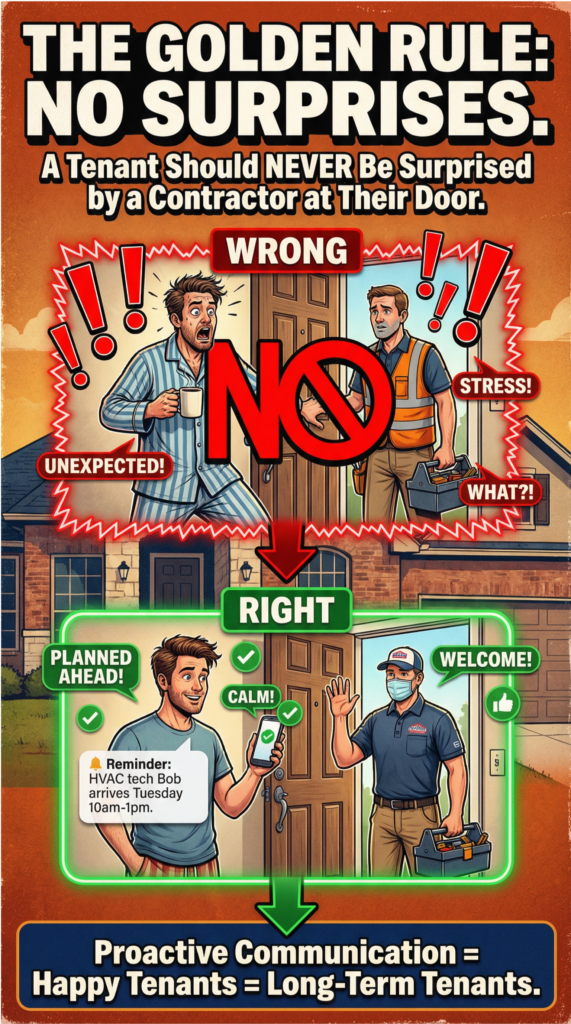
The Golden Rule: No Surprises
If you take only one thing away from this article, let it be this: the worst kind of notice is no notice at all. A tenant should never be surprised by a contractor showing up at their door. Proactive communication is the name of the game. As soon as you have a job scheduled, your very next step should be to inform the tenant.
The What, Who, When, and How Long
Your communication should be clear, concise, and contain all the essential information. Don’t just say, “A guy is coming to fix the thing on Tuesday.” That’s not helpful. Your tenants need specifics. I call it the “What, Who, When, and How Long.”
•What: Be specific about the work being done. Instead of “maintenance,” say “annual preventative maintenance on the HVAC system” or “inspecting the roof for storm damage.”
•Who: Name the company and, if possible, the technician. “Bob from Cool Breeze HVAC will be there.” This adds a huge layer of security and comfort for your tenants.
•When: Provide a specific date and a reasonable time window. “Tuesday, April 5th, between 10 a.m. and 1 p.m.” is infinitely better than “sometime next week.”
•How Long: Give them an honest estimate of how long the work will take. “The HVAC check-up should take about an hour.”
Set Expectations for Disruptions
This is a big one. Be upfront about how the work might impact their day. A little honesty goes a long way.
•Noise: “Just a heads-up, the roof work can be a bit noisy. We apologize in advance for the disruption.”
•Access: “The technician will need access to the utility closet in the hallway.”
•Utilities: “We’ll need to shut off the water for approximately 30 minutes while the plumber makes the repair. We’re aiming to do this around 11 a.m.”
•Parking: “We’ll have a work truck in the driveway, so you may want to park on the street that day.”
Giving them this information allows them to plan their day. Maybe they’ll schedule their conference call for a different time or take the dog for a walk during the noisy part of the work.
Use Multiple Channels
Don’t rely on a single method of communication. People have different preferences. A multi-channel approach ensures your message gets through.
•Email: This is your best friend for official notices. It creates a written record that you can refer back to.
•Text Message: For quick reminders or updates on delays, a text message is perfect. “Quick reminder that our landscapers will be on the property tomorrow morning.”
•Physical Notice: For property-wide work, a simple, professionally printed notice on each tenant’s door is a great touch. It’s impossible to miss.

When Things Go Wrong, Communicate Faster
Delays are inevitable. A contractor gets sick, a part is back-ordered, or a Texas thunderstorm rolls in. The moment you know a job is delayed, your tenants should be the next to know. A quick, apologetic message—“Folks, it looks like the rain has forced us to push the gutter cleaning to Friday. So sorry for the change of plans!”—shows you’re on top of the situation and that you respect their time.
Ultimately, communicating with your tenants about repairs is about treating them like partners. They understand that things need to be maintained and fixed. By keeping them in the loop, you’re not just avoiding complaints; you’re actively building trust and fostering a positive relationship. And a happy tenant is a long-term tenant. That’s just good business.


