

This Content Is Only For Subscribers
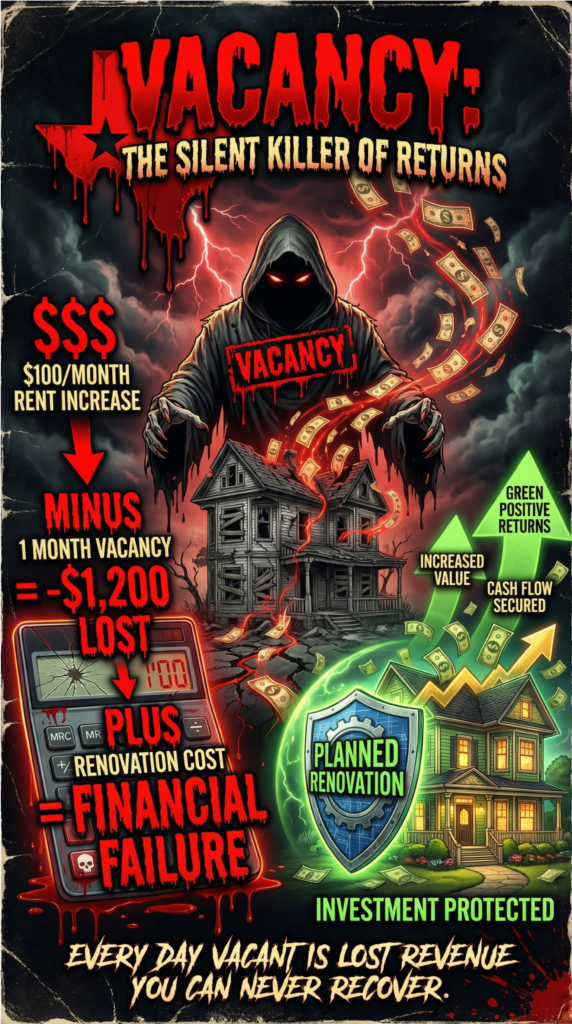
In the world of real estate investment, your most valuable asset is not brick and mortar; it’s time. More specifically, it’s income-generating time. Every single day that a property sits vacant is a day of lost revenue that you can never recover. This is why vacancy is the silent killer of returns. A renovation that promises a $100 monthly rent increase is a financial failure if it causes an extra month of vacancy. The $1,200 of projected annual gain is instantly wiped out by the loss of one month’s rent, and you are still out the capital for the renovation itself. The math is brutal and unforgiving.
This is why the logistical planning of a renovation is just as important as the renovation itself. A successful investor does not simply decide to upgrade a property between tenants; they execute a meticulously planned, military-style operation designed to compress the renovation timeline into the shortest possible window. The goal is to minimize vacancy and maximize revenue-generating days.
The Pre-Move-Out Game Plan
The single biggest mistake landlords make is waiting for the tenant to move out before they start planning. The clock is already ticking. The planning phase must begin the moment your current tenant gives their notice to vacate.
•The 30-Day Countdown: Your tenant’s 30-day notice is not a waiting period; it is your project management runway. This is the time to finalize your scope of work, get bids from contractors, and, most importantly, select and schedule your team.
•Line Up Your Contractors: Good contractors are always busy, especially during peak season. If you wait until the property is vacant to start calling them, you could be waiting weeks for an opening. You should have your painter, flooring installer, and any other trades lined up and scheduled to start the day after the tenant moves out.
•Order Your Materials in Advance: Do not let your renovation be held hostage by a supply chain delay. All of your materials—the paint, the new faucet, the light fixtures, the flooring—should be purchased and either delivered or waiting for pickup before the project begins. The property should be vacant for work, not for waiting.
The Art of the Turnkey Schedule
A turnkey renovation is a tightly choreographed dance of contractors. It requires a clear understanding of the logical order of operations to avoid tradespeople tripping over each other or having to redo work.
1.Day 1: Demo and Prep. The day after the tenant moves out is for demolition. This includes tearing out old carpet, removing old fixtures, and prepping surfaces for paint.
2.Day 2-3: Painting. The painters should be the first major trade in. It is always more efficient to paint an empty unit with no new flooring or fixtures to worry about.
3.Day 4-5: Flooring. Once the painting is complete, the flooring installers can come in. They have a clean, prepped space to work in.
4.Day 6: The Finish Trades. This is the day for the electrician to install new light fixtures and the plumber to install the new faucet. They are working in a space with finished walls and floors.
5.Day 7: Final Clean and Photography. The final day is for a professional deep clean, followed immediately by the real estate photographer. Your new listing should be live within 24 hours.
This is an aggressive schedule, and it requires a reliable team. But this is the mindset of a professional investor. A seven-day turn is possible, and it should be your goal.

Communication and Buffers
To facilitate this tight schedule, clear communication is key. Communicate with your outgoing tenant and ask for the opportunity to have your contractors do a quick walkthrough for measurements a week or two before they move out. Most tenants will be accommodating if you are respectful of their time.
Finally, while you should plan for an aggressive timeline, you must also build in a small buffer. If you believe the turn can be done in seven days, list the property as available in ten. This gives you a cushion for the inevitable small delays without impacting your new tenant’s move-in date. A well-planned renovation that minimizes vacancy is a masterclass in operational efficiency. It is the tangible proof of an investor who understands that in the rental business, time is, quite literally, money.


