

This Content Is Only For Subscribers
Well, howdy again, Texas landlords. We’ve been talking a lot about the big dance of spring repairs, but now it’s time to focus on a very specific dance partnership: your landscaper and your pest control technician. On their own, they’re essential for maintaining your property’s value and your tenants’ happiness. But if they’re not dancing in sync, they can end up stepping on each other’s toes, wasting your money and causing you a Texas-sized headache.
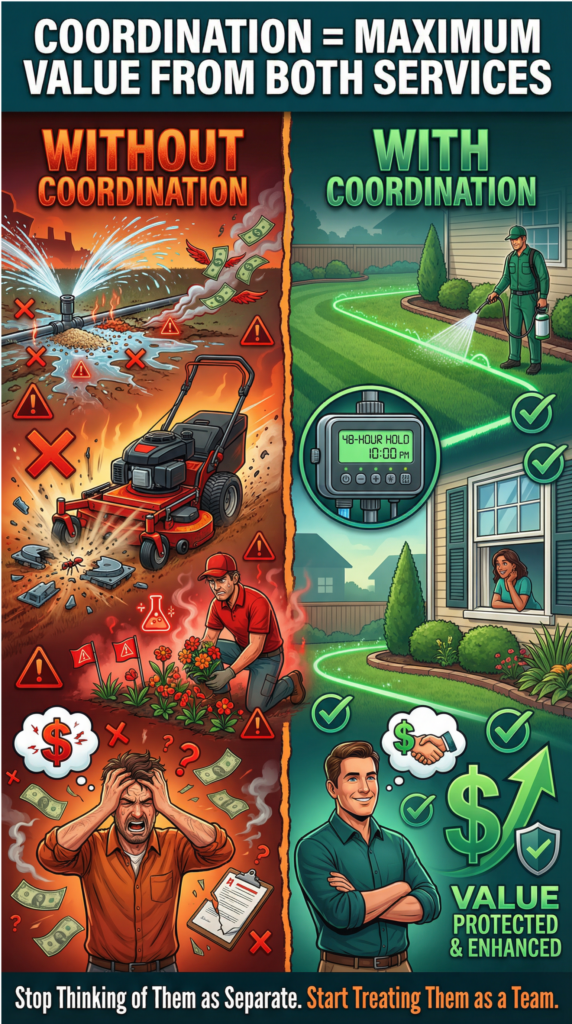
Think about it. What happens when your irrigation system kicks on an hour after the pest control guy just sprayed the foundation? Or when the lawn crew mows right over the freshly placed ant bait stations? It’s not just frustrating; it’s inefficient. The key is to stop thinking of them as two separate services and start treating them as a coordinated team. Here’s how to do it.
The Inherent Conflict
The core of the problem is that the work of one can directly undermine the work of the other. Landscaping activities like mowing, watering, and mulching can wash away, cover up, or otherwise ruin a perfectly good pest control application. Conversely, a poorly timed pest treatment could potentially affect new plantings or be less effective if the landscaping isn’t prepped.
This is a classic case where a little bit of planning goes a very long way. Your goal is to create a schedule where each service enhances, or at least doesn’t interfere with, the other.
The Golden Rule: Communicate and Connect
Before you even think about scheduling, you need to open the lines of communication. Your landscaper and your pest control provider should be on a first-name basis. Here’s a simple but incredibly effective strategy:
•Facilitate an Introduction: The first time you hire a new landscaper or pest control company, connect them. A simple group email or a three-way call is all it takes. “Hi, Bill the Bug Guy, meet Larry the Landscaper. You’ll both be working on my properties, and I want to make sure you can coordinate effectively. Here is each other’s contact info.”
•Share the Schedules: Make sure both parties know the general service schedule. If pest control comes on the first Tuesday of the month, the landscaping crew needs to know that. This allows them to plan their own work accordingly.
This simple act of connection turns them from two independent contractors into a team with a shared goal: keeping your property in top shape.
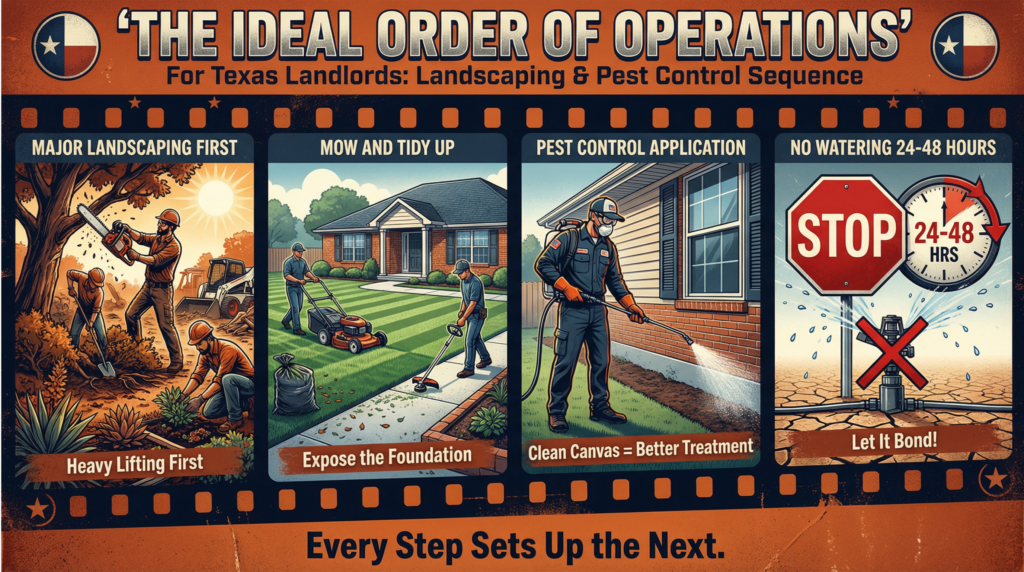
The Ideal Order of Operations
Just like with larger renovation projects, there is a logical sequence to scheduling these two services. While it can vary based on the specific work being done, a great rule of thumb is to work from the ground up and from disruptive to passive.
1.Major Landscaping First: If you’re doing any big projects like trimming trees, removing bushes, or putting in new flower beds, get that done first. This “heavy lifting” can be disruptive, and you want the landscape to be relatively stable before applying any pest treatments.
2.Mow and Tidy Up: For routine maintenance, always schedule the lawn mowing and edging before the pest control visit. This does two things: it exposes more of the soil and foundation for a more effective treatment, and it prevents the mower from immediately disturbing the application.
3.Pest Control Application: With the yard prepped and tidy, the pest control technician can come in and do their work. They’ll have clear access to the foundation, lawn, and any problem areas.
4.Watering—But Wait!: This is the most critical timing element. Most liquid pest control applications need time to dry and bond to the surface. Watering the lawn or running the sprinklers too soon will simply wash the product away. Enforce a strict “No Watering for 24-48 Hours” rule after a treatment. Make sure your irrigation system is timed to respect this window.
A Quick Word on Product Types
Not all pest control products are created equal. Some are liquid sprays, while others are granular. It’s worth having a quick chat with your pest control pro to ask what they’re using. Granular products often need to be watered in to be activated. If that’s the case, you’d need to flip the script and schedule watering after the application, based on their specific instructions. This is a perfect example of why that open line of communication is so important.
By orchestrating the efforts of your landscaping and pest control teams, you ensure that you’re getting the maximum value out of both services. It’s a simple, proactive approach that protects your investment, keeps your properties looking great and pest-free, and makes your life as a landlord just a little bit easier. And in this business, we’ll take “easy” wherever we can get it.


