

This Content Is Only For Subscribers
Howdy, folks, and welcome back. In our main “Ask a Property Manager” column this month, we talked about the big picture of coordinating spring repairs. Now, we’re going to zoom in on what might be the most stressful part of the whole process: the scheduling. Getting all your contractors lined up and working in harmony can feel like a game of Tetris where the pieces keep changing shape. But trust me, it can be done.
Efficient scheduling isn’t just about finding open slots in a calendar; it’s about creating a logical workflow that minimizes downtime and prevents contractors from tripping over each other. A well-oiled schedule saves you money, keeps your tenants happy, and, most importantly, preserves your sanity. Let’s get into the nitty-gritty.
Create a Master Schedule
First things first: you need a central hub for all scheduling information. This is your command center. Don’t try to keep it all in your head or on a bunch of sticky notes. A simple digital tool is your best bet.
•Spreadsheets: A Google Sheet or Excel file is perfect for this. You can create a timeline, list your properties, and plug in the contractors for each job. You can color-code it, add notes, and easily share it.
•Digital Calendars: A shared Google Calendar can also work well. Create a separate calendar for your rental properties and schedule each contractor as an “event.” You can invite the contractors to the event so it’s on their calendar too.
The tool you use is less important than the act of using it. The goal is to have one single source of truth that you and your team can rely on.
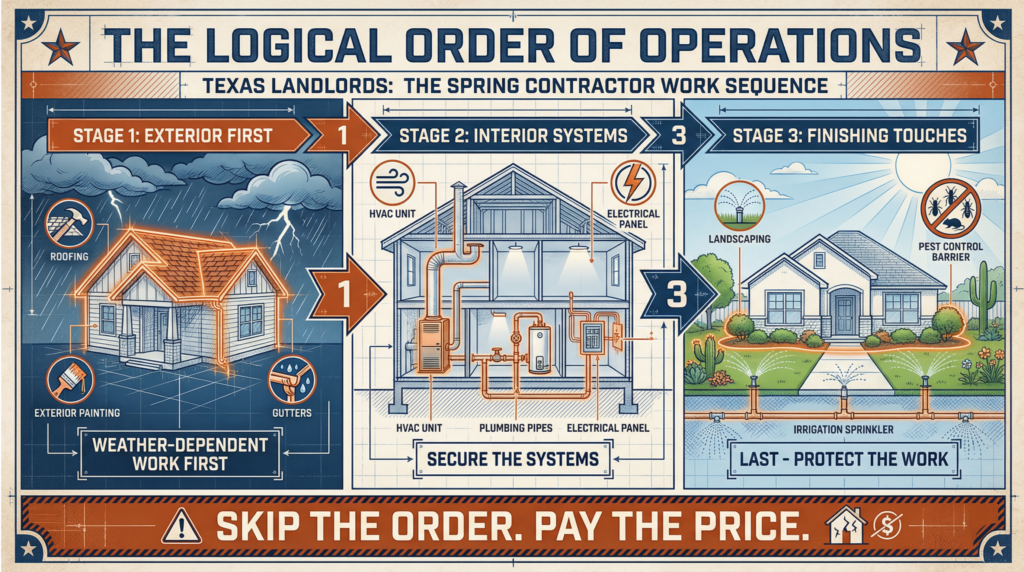
The Logical Order of Operations
This is where so many landlords go wrong. They just book contractors whenever they’re available, with no thought to the logical sequence of the work. This leads to rework and frustration. Think about your spring maintenance as a multi-stage project and tackle it in the right order.
Here’s a general sequence that works well for most properties:
1.Exterior First (Weather Permitting): Start with the big stuff on the outside. Get your roof inspection and any necessary repairs done first. Why? Because you don’t want a team of roofers walking all over a freshly landscaped yard. The same goes for gutter cleaning and exterior painting.
2.Move to Interior Systems: Once the building’s exterior is secure, move inside. This is the perfect time for that all-important HVAC check-up. It’s an indoor job, so it’s less dependent on the weather. If you have any plumbing or electrical work, now is the time for that as well.
3.The Finishing Touches: Save the cosmetic and ground-level work for last. This includes landscaping, irrigation system checks, and pest control. As we mentioned in the main article, you don’t want to plant new flowers just to have them trampled. Pest control should also be one of the final steps, as other work can disrupt the chemical barrier they create.
The Art of Stacking and Padding
To really maximize your efficiency, you need to master two key concepts: stacking and padding.
Stacking is the art of scheduling multiple, non-conflicting services on the same day or in close succession. For example, you could have your pest control technician treat the exterior in the morning and have your landscaper arrive in the afternoon to mulch the flower beds. The key is to make sure the jobs won’t interfere with each other.
Padding is just as crucial, especially here in Texas where the weather is a fickle beast. Don’t schedule your contractors back-to-back with no wiggle room. Build buffer days into your master schedule. If a thunderstorm delays your roofing project by a day, a padded schedule means it won’t derail your entire plan. A little breathing room can be the difference between a minor inconvenience and a full-blown scheduling crisis.

Constant Communication
Your master schedule is a living document. It needs to be shared and updated constantly. Send a copy to all your contractors at the beginning of the project. If anything changes, let everyone know immediately. A group email thread or even a group text can work for quick updates.
Confirm every appointment 24 to 48 hours in advance. A quick “Hey, just confirming you’re still good for 10 a.m. tomorrow at 123 Main Street” can prevent no-shows and miscommunications.
By thinking logically and communicating clearly, you can turn a scheduling headache into a smooth, efficient process. It takes a little extra effort up front, but the payoff is a stress-free spring repair season. And what landlord doesn’t want that?


