

This Content Is Only For Subscribers
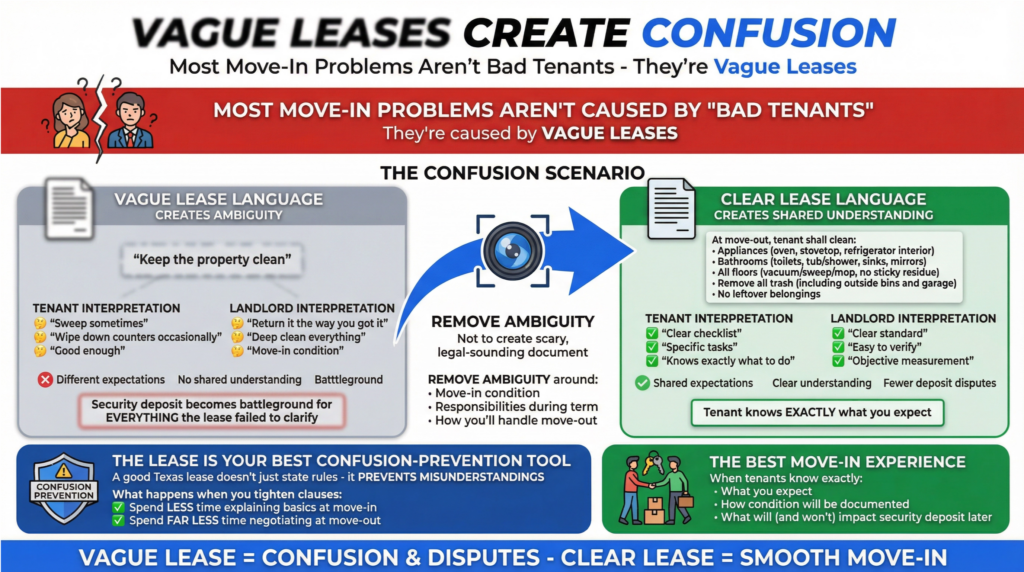
Most move-in problems aren’t caused by “bad tenants.” They’re caused by vague leases. A tenant reads “keep the property clean” and thinks that means “sweep sometimes.” You read it and think it means “return it the way you got it.” Then the security deposit becomes the battleground for everything the lease failed to clarify.
For small landlords renting single-family homes in Texas, the lease is your best confusion-prevention tool. The goal isn’t to create a scary, legal-sounding document. The goal is to remove ambiguity—especially around move-in condition, responsibilities during the term, and how you’ll handle move-out.
Here are the most important clauses to tighten up so move-in goes smoothly and deposit disputes are less likely later.
1) Condition at move-in and the inspection process
Include a clause that:
- Requires a written move-in condition form
- Gives the tenant a short window (often 48–72 hours) to report undiscovered issues in writing
- States that unreported issues are presumed to be tenant-caused unless shown otherwise
Why it matters: it turns “I never noticed that” into a clear, documented process.
What to avoid: vague language like “tenant accepts property as-is” with no inspection documentation. That’s an argument waiting to happen.
2) Security deposit use and “normal wear and tear”
Your lease should clearly state:
- The deposit is refundable minus lawful deductions
- Deductions may include unpaid rent, damage beyond normal wear and tear, and other lease-authorized charges
- A plain-English definition of normal wear and tear vs. damage
Tenants don’t always understand this distinction. Spell it out with examples (scuffs vs. holes, faded paint vs. unauthorized painting, light carpet wear vs. pet urine stains).
3) Cleaning standards: define “clean”
A move-out cleaning clause should be specific enough that a reasonable person knows what to do.
Include expectations like:
- Appliances (oven, stovetop, refrigerator interior, dishwasher filter if applicable)
- Bathrooms (toilets, tub/shower, sinks, mirrors)
- Floors (vacuum/sweep/mop; no sticky residue)
- Trash removal (including outside bins and garage)
- No leftover belongings
If you intend to charge cleaning costs for excessive mess, make sure the lease authorizes it and ties it to condition beyond normal use.
What to avoid: “Tenant shall clean the premises” with no detail. That becomes subjective fast.
4) Yard and exterior responsibilities (house-specific)
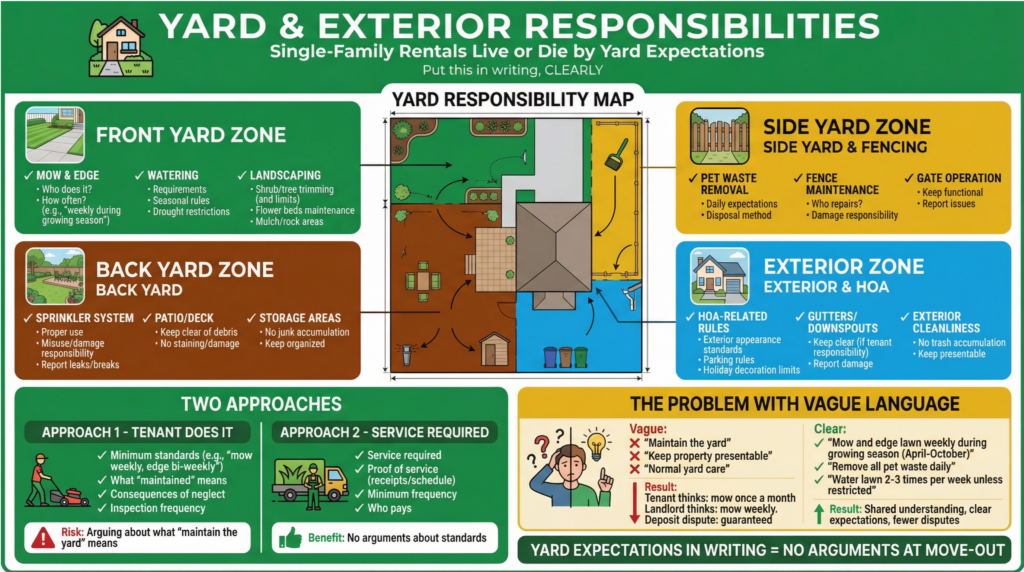
Single-family rentals live and die by yard expectations. Put this in writing, clearly:
- Who mows/edges, and how often
- Watering requirements and any seasonal rules
- Pet waste removal expectations
- Shrub/tree trimming responsibility (and limits—tenants shouldn’t be hacking trees)
- Sprinkler system misuse or damage responsibility
- HOA-related exterior rules (if applicable)
If you want tenants to use a lawn service, say so and require proof. If you don’t, clarify minimum standards so you’re not arguing about what “maintain the yard” means.
5) Repairs, reporting, and preventing damage
Confusion often starts when tenants don’t report small issues early.
Include:
- A requirement to report leaks, HVAC problems, and safety issues promptly
- How they must report (email/portal/phone)
- A clause that tenant may be responsible for damage caused by failure to report (e.g., minor leak becomes major water damage)
Also clarify:
- No unauthorized repairs or alterations
- What counts as an emergency and what to do after hours
6) Alterations: nails, anchors, TV mounts, and painting
Tenants will hang things. The problem is when “hanging” turns into wall damage.
Spell out:
- Whether nails/picture hooks are allowed and in what quantity/size
- Whether wall anchors are allowed (and patching expectations)
- TV mounts: require permission and professional installation (or clear guidelines)
- Painting: require written approval, approved colors, and whether tenant must repaint before move-out
What to avoid: silence. If you don’t address it, the tenant will assume it’s fine.
7) Keys, remotes, and surrender of the property
Include:
- Exactly how many keys/remotes are provided
- Replacement cost for missing keys/remotes
- What constitutes “surrender” at move-out (all belongings removed, keys returned, property secured)
This reduces the “we’re mostly out” gray zone that can mess with timelines.
The bottom line
A good Texas lease doesn’t just state rules—it prevents misunderstandings. The best move-in experience happens when tenants know exactly what you expect, how condition will be documented, and what will (and won’t) impact the security deposit later.
If you tighten these clauses now, you’ll spend less time explaining the basics at move-in and far less time negotiating at move-out.


