

This Content Is Only For Subscribers
Spring is when the rental market feels most “alive.” Listings move faster, prices seem more flexible, and every investor conversation includes some version of: “This is the season to buy.” Sometimes that’s true. Sometimes it’s marketing hype wrapped around a hot calendar.
For small landlords focused on single-family rentals, spring market data can be genuinely useful—but only if you use it to answer investor questions, not just admire trend charts. The goal isn’t to predict the market perfectly. The goal is to make decisions with better odds: buy the right house, at the right price, with a rent and repair plan grounded in reality.
Here’s how to use spring data to inform smarter investment choices.
Start with the three numbers that matter most
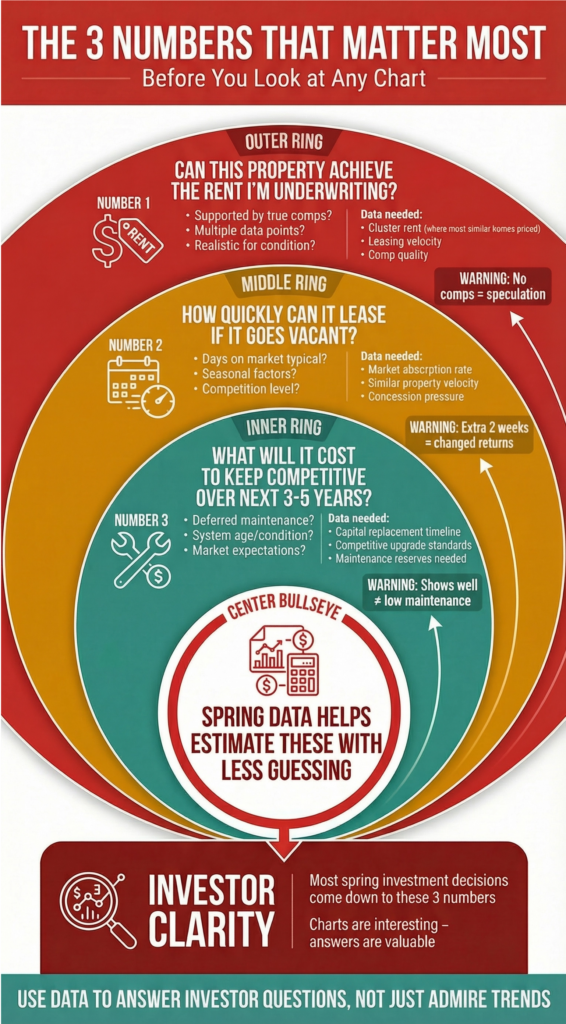
Before you look at any chart, clarify what you’re trying to decide. Most spring investment decisions come down to:
- Can this property achieve the rent I’m underwriting?
- How quickly can it lease if it goes vacant?
- What will it cost to keep it competitive over the next 3–5 years?
Spring data is most valuable when it helps you estimate those three numbers with less guessing.
Use rental comps like an underwriter, not a shopper
Spring brings more listings, which means more comp data—if you filter it correctly.
When analyzing rent comps, match:
- House to house (ignore apartments)
- Similar beds/baths and square footage band
- Similar school zone and neighborhood feel
- Similar yard/garage setup
- Similar condition (updated vs dated)
- Similar pet policy and included services (lawn care included can support a higher rent)
Then look for patterns:
- Cluster rent: where most similar homes are priced
- Velocity: how fast they disappear (quick leasing supports your rent assumptions)
- Stale listings: homes sitting 2–3+ weeks often signal overpriced rent or a property drawback you should identify
Investor takeaway: if you can’t support your projected rent with multiple true comps, you’re speculating—especially in spring when optimism is high.
Read demand through “market friction,” not just headlines
Spring demand is real, but investor value comes from measuring friction: how hard it is for a tenant to choose a home like yours.
Helpful friction indicators:
- How many similar listings are available at any time
- How frequently new listings appear (supply pressure)
- Whether landlords are offering concessions (a sign tenants have leverage)
- How quickly “good” listings go pending
If your submarket has lots of similar homes and concessions are common, your pricing power is weaker—even in spring. That doesn’t mean don’t buy. It means your underwriting should assume:
- More vacancy risk
- More rent sensitivity
- Higher importance of property condition and curb appeal
Use spring leasing behavior to shape your renovation plan
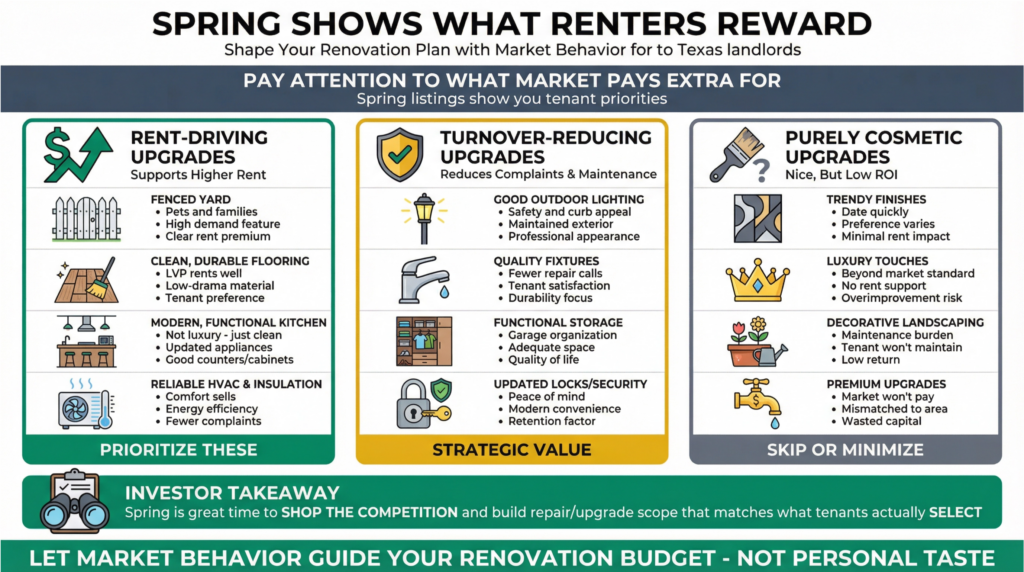
Spring shows you what renters reward. Pay attention to what the market “pays extra for” in your area, especially for houses:
- Fenced yard (pets and families)
- Clean, durable flooring (LVP often rents well because it’s low-drama)
- Modern, functional kitchen (not luxury—just clean and updated)
- Good outdoor lighting and a maintained exterior
- Reliable HVAC and good insulation (comfort sells)
Then compare that to your property’s current state. Spring listings and showing feedback can help you decide whether a rehab item is:
- Rent-driving (supports a higher rent)
- Turnover-reducing (reduces complaints and maintenance calls)
- Purely cosmetic (nice, but low ROI)
Investor takeaway: spring is a great time to “shop the competition” and build a repair/upgrade scope that matches what tenants actually select.
Let spring data stress-test your purchase price
A common investor mistake is buying based on a best-case rent number and a vague repair budget. Use spring data to tighten both.
Rent stress test:
Underwrite rent slightly below your optimistic spring target. Ask: “If I had to rent this in a slower season, would the deal still work?”
Vacancy stress test:
Assume a longer lease-up than spring’s fastest outcomes. Even an extra two weeks can meaningfully change returns.
Maintenance stress test:
Use spring inspection findings (roof, HVAC, drainage, exterior wood) to estimate near-term capital needs. A house that “shows well” can still be one system failure away from a major hit.
If the deal only works when everything goes perfectly in spring, it’s fragile.
Use spring trends to decide “buy now vs wait” realistically
Spring often brings more inventory and more competition. You may see better selection, but also higher pressure.
A practical approach:
- If your criteria is tight (school zone, yard, layout), spring can be worth it because supply is broader.
- If you’re flexible and budget-sensitive, off-peak seasons may offer better negotiation—if you’re prepared to lease in a slower period.
Investor takeaway: don’t time the market emotionally. Time your strategy: selection vs pricing leverage vs leasing season.
The bottom line
Spring market data is useful when it helps you underwrite like a business:
- Support rent with true comps and leasing velocity
- Read demand through competition and concessions, not vibes
- Let market behavior shape your upgrade plan
- Stress-test rent, vacancy, and repairs before you buy
Do that, and spring stops being “the season everyone says to invest,” and becomes something more valuable: the season where you can see the market clearly—and make investment decisions with higher confidence and lower regret.


