

This Content Is Only For Subscribers
The spring turnover season is characterized by a flurry of activity, but the small landlord must not overlook the most critical component of long-term success: clear communication with the incoming tenant. As established in “How to Manage Increased Tenant Turnover in Spring,” a positive tenant relationship is the most effective retention strategy, and that relationship begins the moment the lease is signed.
For the single-family landlord, your personal touch is your competitive advantage. Unlike large property management firms, you can foster a direct, human connection. This connection, however, must be balanced with professional boundaries and absolute clarity on expectations. The goal of pre-move-in communication is to eliminate ambiguity, prevent future disputes, and ensure the tenant feels respected and prepared to care for your property.
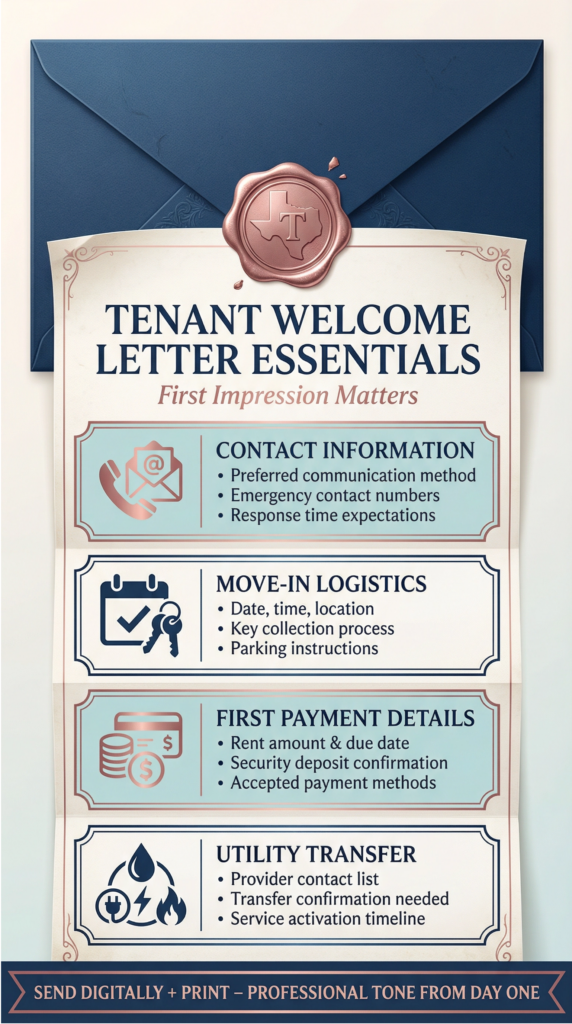
Phase I: Setting the Foundation of Expectation
The best way to handle a problem is to prevent it. Communication should start immediately after the lease is signed, well before move-in day.
1. The Tenant Welcome Letter and Home Guide
The Tenant Welcome Letter is your formal introduction and the first step in setting a professional tone. This letter should be sent digitally and in print, containing all the essential information needed for a smooth transition. Key sections include Contact Information (preferred method, emergency numbers), Move-In Logistics (date, time, key collection), First Payment (rent, deposit, accepted methods), and Utility Transfer (list of providers and transfer confirmation).
For a single-family home, a detailed Home Guide is invaluable. This is a manual for your specific property, not a generic document. It reduces calls about simple operational questions and empowers the tenant to handle minor issues. The guide should include instructions for the HVAC system, location of the main water shut-off valve and the circuit breaker panel, specific instructions for appliances, and details on trash and recycling collection schedules.
Phase II: Clarifying the Rules of Engagement
The move-in day walkthrough, as discussed in “Handling Multiple Move-Ins Smoothly,” is the perfect time to verbally reinforce the written expectations.
1. Maintenance Protocols and Financial Transparency
The most common source of friction is confusion over maintenance responsibilities. Clearly outline the difference between tenant responsibilities (e.g., changing light bulbs, replacing HVAC filters) and landlord responsibilities (structural, plumbing, electrical). Be explicit about the maintenance request process: tenants should know how to submit a routine request (e.g., online portal) and when to use the emergency line (only for issues that threaten health or property).
Be absolutely clear about the rent payment process. State the due date, the accepted payment methods, and the exact policy for late payments. This transparency eliminates the tenant’s ability to claim ignorance of the policy. Finally, review the non-negotiable rules that protect your investment, including policies on Alterations (no painting without permission), Occupancy (rules regarding guests), and Exterior Care (expectations for lawn care and general curb appeal).
Phase III: Building a Long-Term Partnership
Clear communication is not just about rules; it is about building a partnership that encourages retention.
1. The Welcome Touch and Respectful Relationship
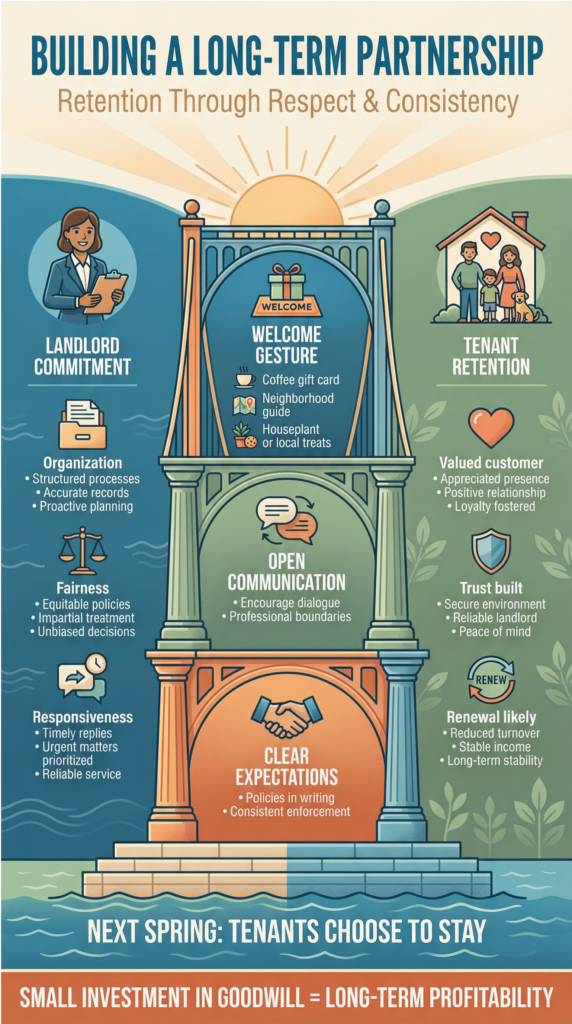
A small, thoughtful welcome package—a gift card to a local coffee shop, a list of neighborhood favorites, or a simple houseplant—is a powerful gesture. It signals to the tenant that they are a valued customer, not just a rent check. This small investment in goodwill is a key component of the retention strategy outlined in the pillar article.
Finally, set the tone for a respectful, professional relationship. Encourage open communication, but be firm and consistent about your policies. By being organized, fair, and responsive, you establish yourself as a professional landlord. This consistency is what builds trust and ensures that when next spring arrives, your tenants will choose to stay, avoiding the need for another costly turnover.


