

This Content Is Only For Subscribers
If you caught our recent feature, Ask a Property Manager: How Property Managers Help with Tax Time, you already know that hiring a professional can make April 15 a whole lot less stressful. But let’s zoom in on one of the most valuable parts of their job—tracking income and expenses.
It sounds simple, right? Money comes in, money goes out. But any landlord who has juggled rent checks, late fees, maintenance invoices, and vendor receipts knows how quickly things can get messy. A good property manager doesn’t just keep the books—they organize them in a way that makes sense for you and for your CPA when tax season rolls around.
Capturing Rental Income
The first thing a property manager does is track every dollar of rental income. This isn’t limited to just the monthly rent check. Property managers log:
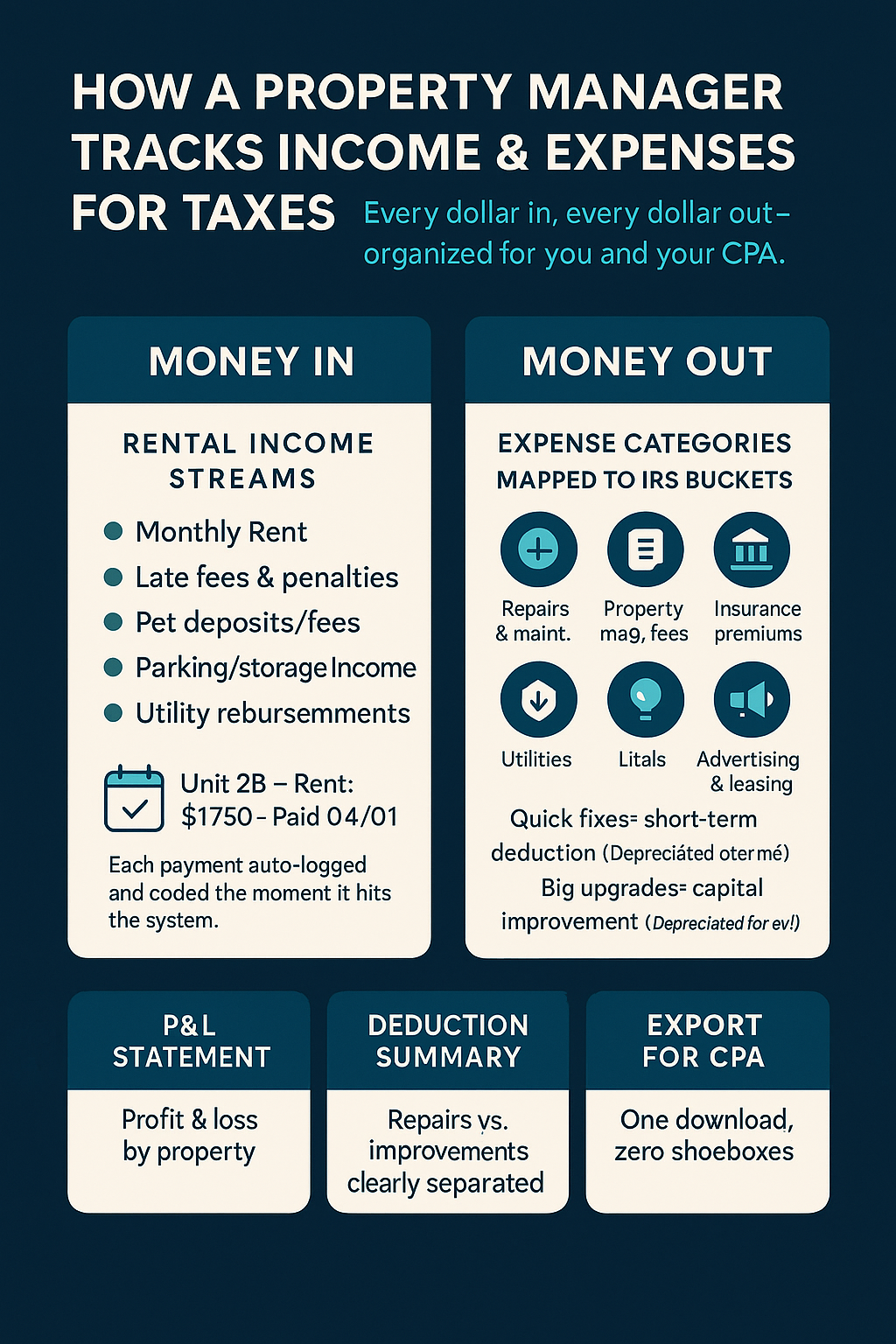
- Late fees and penalties
- Pet deposits or fees
- Parking or storage rental income
- Utility reimbursements from tenants
Each of these income sources gets coded properly so you aren’t scrambling to explain random deposits in your bank account at tax time. Many property managers use software that automatically records payments as tenants make them, creating a clean ledger month by month.
Documenting Expenses the Right Way
Expenses can be even trickier than income. Property managers categorize them into buckets that align with IRS guidelines, such as:
- Repairs and maintenance
- Property management fees
- Insurance premiums
- Property taxes
- Utilities
- Advertising and leasing costs
Why does this matter? Because not all expenses are created equal. For example, replacing a broken faucet is usually deductible right away, while a full kitchen remodel might need to be depreciated over time. A property manager keeps these distinctions clear so you don’t mix up short-term write-offs with long-term capital improvements.
Digital Records Beat Shoeboxes
One of the biggest advantages of working with a property manager is the move away from “shoebox accounting.” Instead of sorting through paper receipts at year-end, you’ll get digital records—often with scanned copies of invoices attached to transactions. That means your CPA can see not just the numbers, but the supporting documentation, all in one place.
Most property management platforms also generate year-end reports. These often include a profit-and-loss statement, a cash flow summary, and a breakdown of deductible expenses. Some even create tax-ready 1099 forms for your contractors.
Why It Matters for Landlords
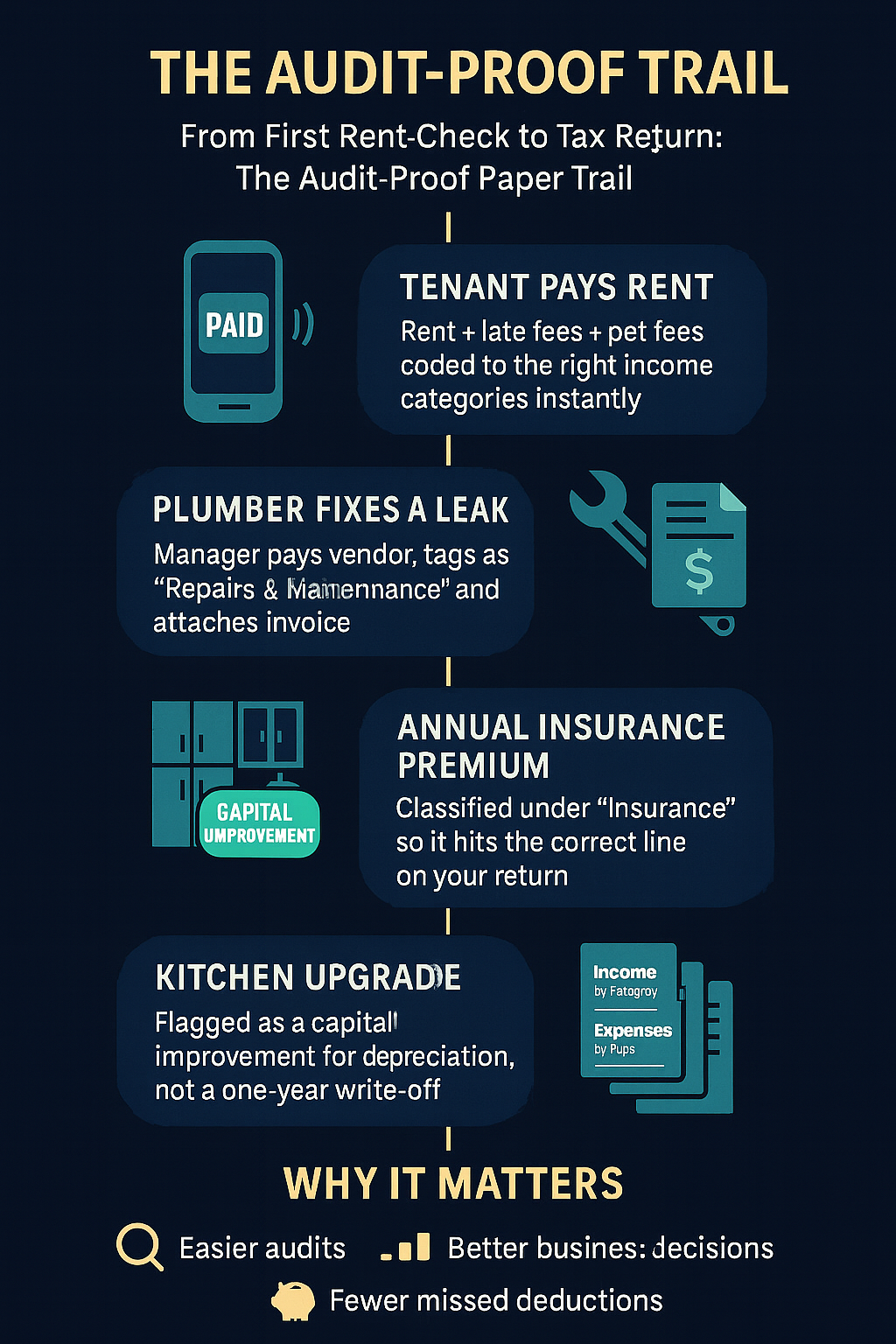
The IRS doesn’t take “I lost the receipt” as an excuse. Clean books protect you if you’re ever audited, but beyond that, they give you a clearer picture of your business. You’ll know which properties are really pulling their weight and where expenses might be eating into profits.
At the end of the day, property managers aren’t just rent collectors—they’re financial organizers. By keeping detailed, IRS-friendly records of your rental income and expenses, they make tax time less of a scramble and more of a formality.
So if you’ve ever spent a Sunday afternoon hunting through emails for an old plumber’s invoice, take it from the pros: a property manager can save you headaches, and maybe even money, when tax season comes knocking.


