

This Content Is Only For Subscribers
If you’ve owned rental property in Texas for more than a season or two, you already know the weather here doesn’t like to play by the rules. Fall can swing from 90-degree afternoons to crisp mornings that hint at winter. And while the Lone Star State isn’t known for harsh, months-long snowstorms like the Midwest, it has its own brand of seasonal threats: pounding fall thunderstorms, sudden cold snaps, and the occasional ice storm that leaves gutters heavy with frozen debris.
That’s why fall is one of the most important times of the year for landlords to focus on roof and gutter maintenance. A small leak or loose shingle that goes unchecked in October can turn into a costly repair by January. As a landlord, your property is both a business investment and a home for your tenants. Protecting it means being proactive, not reactive.
So grab a notepad—or better yet, a ladder and a flashlight—and let’s walk through a fall roof and gutter checklist tailored to Texas properties.

Why Roof and Gutter Maintenance Matters More Than You Think
It’s easy to assume that roofs and gutters can withstand just about anything. After all, they’re built to protect a structure from the elements. But neglecting seasonal upkeep is one of the top reasons Texas landlords find themselves facing repair bills in the thousands.
A clogged gutter doesn’t just mean water spilling over the edge. It can force water under the roofline, soak fascia boards, and eventually seep into walls. A missing shingle doesn’t just expose a patch of plywood—it creates a weak spot where wind-driven rain can sneak in. And a neglected downspout can flood landscaping beds, destabilize foundations, or lead to costly mold remediation inside.
For tenants, these issues aren’t just inconvenient—they can be dangerous. A ceiling leak can create slip hazards, while mold growth can trigger respiratory problems. Tenants who feel neglected are also tenants less likely to renew leases.
The good news is that most roof and gutter problems can be prevented with a detailed fall inspection.
Step 1: Inspect and Clean Gutters
Gutters are your property’s first line of defense against water damage, yet they’re often the most overlooked.
What to Look For:
- Leaves and Debris: Even in Texas, where live oaks and pecans don’t always shed in dramatic bursts, leaves build up fast in the fall. Pine needles are another silent culprit in East Texas.
- Sagging or Pulling Gutters: This can signal that gutters are clogged, too heavy, or not fastened securely.
- Standing Water: A sign the gutter isn’t pitched properly.
- Rust, Cracks, or Holes: These weaken the system and should be addressed before heavy winter rains.
Cleaning Tips:
- Do it safely. If you’re not comfortable on a ladder, hire a professional. Many roofing or handyman services in Texas offer affordable seasonal gutter cleanings.
- Flush with water. After clearing debris, run a hose through the system to check for proper flow and leaks.
- Add gutter guards. In tree-heavy areas like Houston’s suburbs or Austin’s older neighborhoods, guards save time and money long-term.
Step 2: Check Downspouts and Drainage
Gutters only work if the water has somewhere to go. That’s why downspouts and drainage deserve equal attention.
What to Look For:
- Clogs at the Elbow: The bend at the bottom of downspouts is notorious for clogging.
- Splash Blocks or Extensions: Water should be directed at least 4–6 feet away from the foundation.
- Pooling Water: If you see puddles near the base of the home, it’s a red flag.
Texas-Specific Considerations:
Expansive clay soils, especially common in Central and North Texas, swell and shrink dramatically with moisture changes. Poor drainage can accelerate foundation movement, one of the costliest repairs a landlord can face. A simple downspout extension can protect your investment from thousands in foundation repairs.
Step 3: Inspect Shingles
Shingles are the roof’s armor, and fall is the perfect time to check for weaknesses before winter storms arrive.
What to Look For:
- Missing or Loose Shingles: Look for bare spots or shingles that flap in the wind.
- Curling or Cracked Shingles: A sign of aging and vulnerability.
- Granule Loss: Check gutters for a buildup of shingle granules. Excessive loss means the roof is deteriorating.
- Moss or Algae Growth: More common in humid East Texas, this can trap moisture and degrade shingles.
Repair Tips:
- Replace missing shingles immediately to avoid leaks.
- For widespread damage, consider scheduling a professional inspection. Texas storms often qualify for insurance claims if damage is storm-related.
Step 4: Inspect Flashing and Sealants
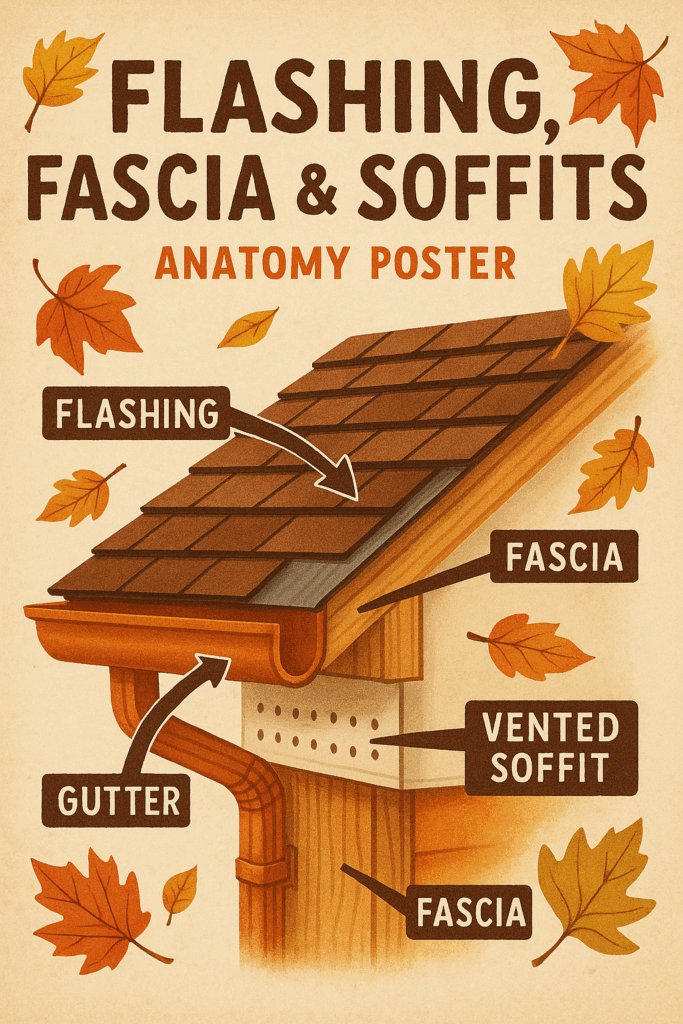
Shingles cover most of the roof, but flashing and sealants protect the most vulnerable points: chimneys, skylights, and roof valleys.
What to Look For:
- Cracked or Loose Flashing: Can let water seep in at seams.
- Worn Caulking Around Vents: A simple re-seal now prevents costly water intrusion later.
Step 5: Check Fascia and Soffits
These trim pieces may seem decorative, but they protect your roof’s structure from pests and water damage.
What to Look For:
- Soft or Rotting Wood: Often a result of clogged gutters backing water up.
- Peeling Paint or Stains: A warning sign that moisture is getting in.
- Pest Intrusion: Squirrels and birds love weak fascia boards as entry points into attics.
Step 6: Schedule Professional Inspections
Even if you’re handy, there’s no substitute for a professional roofer’s trained eye. Most roofing companies in Texas offer free or low-cost inspections, especially in the fall. A professional will:
- Check areas not easily visible from the ground.
- Spot subtle hail damage that may be covered by insurance.
- Provide documentation, which is valuable if you need to file a claim later.
For landlords juggling multiple properties, outsourcing inspections is a smart way to save time while ensuring nothing slips through the cracks.
Step 7: Prepare for Winter Storms
While Texas winters are typically mild, recent years have proven just how unpredictable they can be. The 2021 winter storm left millions without power and caused widespread property damage from burst pipes and ice-laden roofs.
How to Prepare:
- Ensure Gutters Are Clear: Ice buildup is rare but dangerous when it does occur. Clean gutters reduce the risk of ice dams.
- Trim Overhanging Branches: Ice can bring down limbs onto roofs or gutters.
- Communicate with Tenants: Remind them to report leaks immediately and keep an eye on gutters during heavy storms.
Record-keeping: Why Landlords Should Document Maintenance
For landlords, roof and gutter maintenance isn’t just about prevention—it’s about documentation. Keeping detailed records of inspections, cleanings, and repairs serves three purposes:
- Tax Deductions: Maintenance and repair costs are deductible.
- Insurance Claims: Documentation strengthens your case in the event of storm damage.
- Tenant Communication: Showing tenants that you invest in upkeep builds trust and encourages lease renewals.
One extra benefit: thorough records can increase your property’s resale value. Buyers often pay more for homes with documented maintenance histories because it signals a well-cared-for investment.
Insurance Considerations for Roof and Gutter Maintenance
Many Texas landlords don’t realize that insurance companies increasingly scrutinize roofs when issuing or renewing policies. In some cases, insurers may deny coverage or raise premiums if a roof is considered too old or poorly maintained. By keeping up with inspections and documenting repairs, you not only reduce the risk of a claim—you also strengthen your position if you ever need to file one.
Be especially aware of wind and hail coverage. These are among the most common claims in Texas, and insurers often look closely for signs of neglect before approving payouts. A regular fall inspection is essentially an insurance policy for your insurance policy.
Tenant Communication: An Overlooked Step
Roof and gutter maintenance may feel like a “behind the scenes” task, but involving your tenants—at least in small ways—can pay off. Consider sending a short fall maintenance notice letting them know you’ll be inspecting gutters and roofs. Not only does this set expectations, but it also signals that you care about the property’s condition and their comfort.
Encourage tenants to report warning signs, such as:
- Water spots on ceilings.
- Dripping sounds in walls.
- Overflowing gutters during heavy rain.
When tenants feel invited into the maintenance process, they’re more likely to renew their leases and less likely to let small problems go unreported.
Common Mistakes to Avoid
- Waiting Until There’s a Problem: By the time a tenant reports a leak, damage has already occurred.
- DIYing Dangerous Repairs: Gutters and shingles may look simple, but roof work can be dangerous. Don’t risk it.
- Ignoring Small Issues: A few missing shingles might not seem urgent, but Texas weather can turn a small gap into a big leak overnight.
- Skipping Documentation: Repairs without receipts or inspection notes may cost you at tax time or in an insurance dispute.
The Payoff of Preventive Maintenance
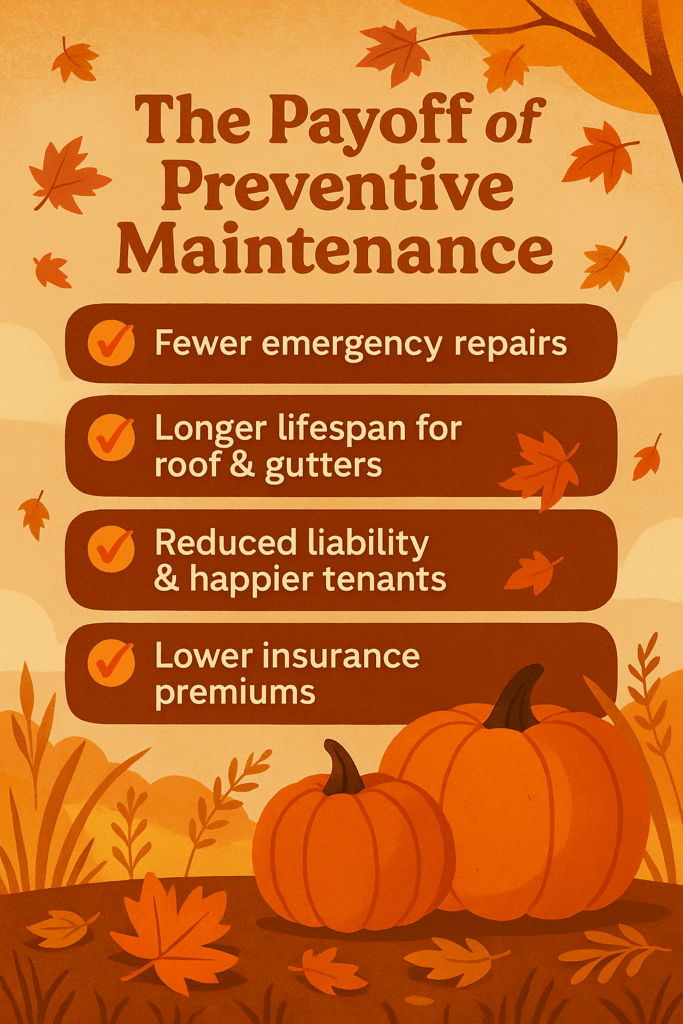
It’s easy to view roof and gutter maintenance as just another to-do on an endless landlord checklist. But the payoff is undeniable:
- Fewer emergency repairs in the middle of winter.
- Longer lifespan for your roof and drainage systems.
- Reduced liability and happier tenants.
- Lower insurance premiums over time if claims are reduced.
A clean, well-maintained roof and gutter system may not be flashy, but it’s one of the smartest investments you can make in your rental business.
Final Word
Texas landlords know that the weather here keeps you on your toes. One year might bring nothing more than cool breezes and a light frost, while the next brings ice that weighs down gutters and rips shingles free. You can’t predict every storm, but you can prepare your property to withstand whatever winter decides to deliver.
By tackling a fall roof and gutter checklist—inspecting, cleaning, repairing, and documenting—you’re not just protecting your investment, you’re building peace of mind for yourself and your tenants. And in the rental business, that peace of mind is worth its weight in shingles.


