

This Content Is Only For Subscribers
January is renewal season’s opening bell. Tenants have fresh resolutions, budgets are reset, and your vacancy math sets the tone for the year. A smooth renewal cycle isn’t luck; it’s a calendar-driven process with clean data, fair offers, and crisp communication. Here’s a lean, field-tested plan to make January renewals predictable—instead of panicked.
Start with the numbers (not vibes)
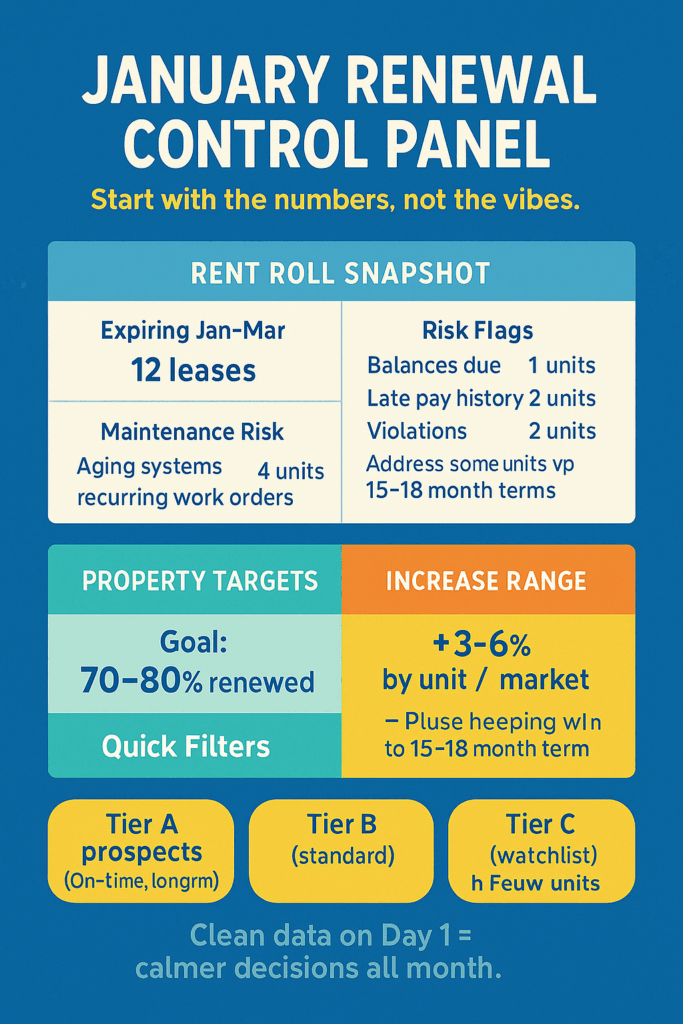
Pull a clean rent roll the first business day of January. Flag:
- Leases expiring in Jan–Mar
- Current rent, market rent, concessions, balances
- On-time payment history and lease violations
- Maintenance risk (aging systems, recurring work orders)
Set a target by property: renewal rate (e.g., 70–80%), increase range (e.g., 3–6% by unit/market), and acceptable vacancy for turns. Decide where you’ll push for longer terms vs. take a light touch to keep stable residents.
Craft renewal offers by tier
Not every resident gets the same offer. Keep tiers simple and consistent:
- Tier A (low risk, high value): On-time payers, long-term, few issues. Offer your best rate and a small sweetener (filter delivery, parking discount, or a minor upgrade like a ceiling fan).
- Tier B (standard): Typical residents with occasional hiccups. Offer a standard increase and routine refreshes (paint touch-ups, fixture swaps).
- Tier C (watchlist): Repeated late payments, noise complaints, or heavy wear. Offer a shorter term or month-to-month premium—or choose not to renew if allowed and warranted.
Document your criteria so decisions stay fair and defensible.
Time your communication—then automate it
Day 0–2 (early January): Send a friendly heads-up to all January–March expirations:
“Happy New Year! We’re preparing renewal details this week. If you’re considering changes (roommates, pets, term length), please reply by Friday so we can tailor your options.”
Day 3–5: Deliver formal offers with terms, rate, and a response deadline (10–14 days). Give two or three term choices (e.g., 6, 12, 15 months) with transparent pricing.
Mid-cycle nudges: Schedule an automated reminder three days before the deadline. If there’s still no reply, place a quick courtesy call.
Pro tip: Add a one-click “I intend to renew” button that triggers e-sign and compliance tasks (updated renters insurance, pet records).
Lead with clarity
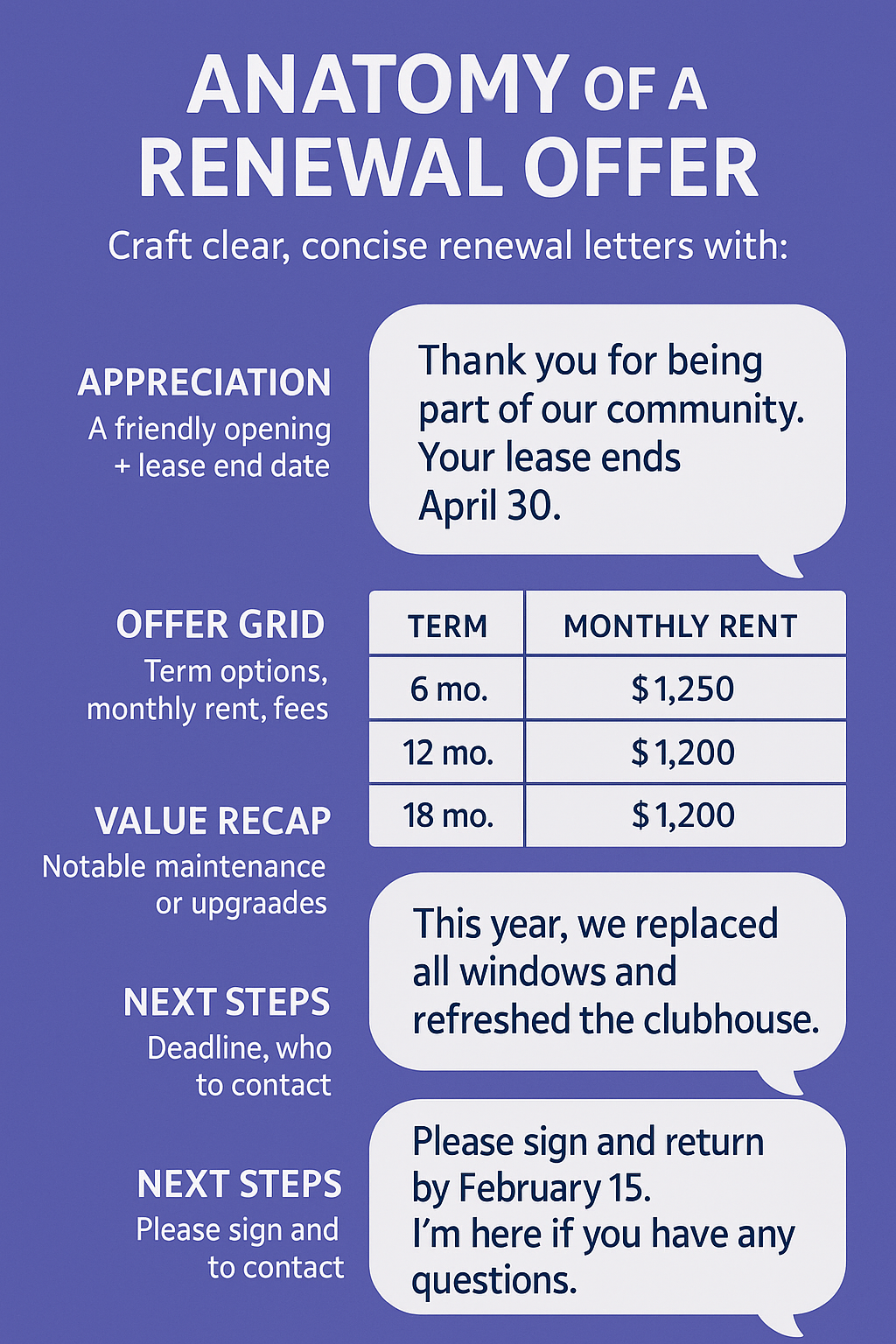
A good renewal letter is short, readable, and anticipates questions:
- Opening: appreciation + dates (“Your lease ends Feb. 28”).
- Offer grid: term options, monthly rent, any fees, and the security deposit status.
- Value recap: notable maintenance or community upgrades completed last year.
- Next steps: deadline, how to sign, who to contact.
Avoid jargon; format for mobile—most tenants will read on a phone.
Price with a story
Residents don’t need a dissertation, but they do want a rationale. Pair your increase with one sentence that connects to value or cost reality:
“We’ve kept most increases under 4% while replacing the building’s water heaters and upgrading exterior lighting.”
Offer a no-surprise path:
- Early-bird lock: renew within seven days to lock the quoted rate.
- Flex term: a slightly higher rate for shorter commitments.
Handle pushback gracefully
When a tenant balks, use a three-step script:
- Confirm priorities:
“Is rate the main concern, or are you also hoping for a different term or upgrade?”
- Offer bounded choices:
“I can lower the increase by 1% with a 15-month term, or keep your preferred 12-month term at the quoted rate.”
- Close with a date:
“Let me know by Wednesday so we can reserve the rate.”
Avoid haggling spirals. Two options, one deadline, then move on.
Lock the logistics
- E-sign everything. Route leases for initials on key clauses (late fees, utilities, notice to vacate).
- Update compliance. Collect renewed renters insurance, pet addenda, and parking registrations with the lease execution—don’t chase later.
- Schedule touch-ups. Pre-renewal walkthroughs catch small repairs before they grow; offer a quick spruce—caulk, filters, door sweeps—to reinforce value.
Prepare for the “no”
Vacancy happens; plan the turn the minute a resident declines.
- Notice to vacate: Send a move-out checklist, cleaning standards, utility transfer dates, and key-return instructions.
- Pre-marketing: Photograph in daylight; draft the listing now; schedule first showings within 48 hours of move-out confirmation.
- Turn scope: Order parts early (blinds, caulk, paint) and reserve vendors; target a 5–7 day make-ready.
Keep score (and improve)
At month’s end, review:
- Renewal rate by tier
- Average increase accepted vs. offered
- Days to decision
- Turn time and cost for non-renewals
Use what you learn to refine February offers and sharpen next year’s budget.
The quiet win
January renewals aren’t glamorous, but they might be the most profitable hours you spend all year. Lead with data, communicate like a human, and give residents clear choices with respectful deadlines. Do that, and you’ll start the year with fewer vacancies, cleaner turns, and a rent roll that lets you sleep at night.


