

This Content Is Only For Subscribers
If you’ve been a landlord in Texas for a while, you’ve probably gotten familiar with the sweet side of depreciation. As we covered in Landlord Legal Lowdown: Understanding Depreciation Rules for Texas Rentals, the IRS lets you spread the cost of your property across its “useful life,” deducting a portion each year. It’s one of the biggest tax advantages of owning rental real estate.
But there’s a catch that often surprises landlords when they decide to sell: depreciation recapture. If you’ve been enjoying the annual deductions, the IRS will want to “recapture” some of those benefits when you sell your property. Let’s break down how it works, what it costs, and how you can prepare.
What Is Depreciation Recapture?
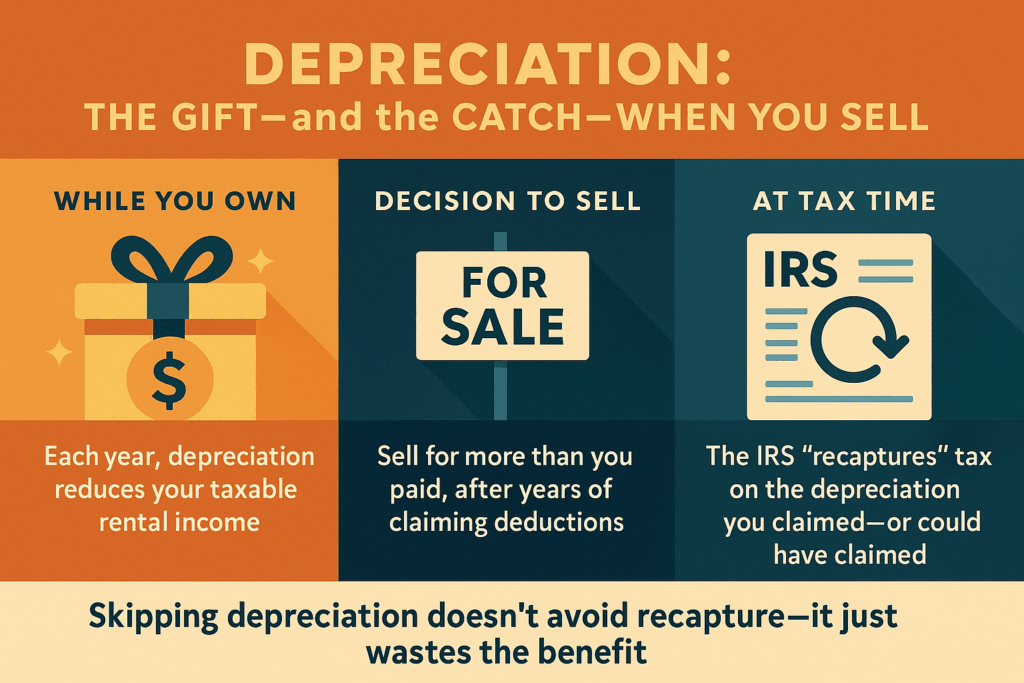
Depreciation recapture is the IRS’s way of balancing the books. When you sell a rental property, you have to pay taxes not just on capital gains (the profit above your purchase price) but also on the depreciation you claimed—or could have claimed—over the years.
Here’s the kicker: even if you didn’t actually take the depreciation deductions, the IRS assumes you did. That means skipping depreciation doesn’t save you from recapture; it just means you lost out on valuable deductions along the way.
How Recapture Is Taxed
Depreciation recapture is taxed at a maximum rate of 25%, which is usually higher than the long-term capital gains rate most landlords expect. Let’s look at a simplified example:
- You bought a rental property in Austin for $200,000.
- Over ten years, you claimed $72,727 in depreciation (based on the standard 27.5-year schedule for residential rentals).
- You sell the property for $300,000.
Your total gain is $100,000. Of that, $72,727 is depreciation recapture, taxed at up to 25%. The remaining $27,273 is capital gain, taxed at the long-term capital gains rate (usually 15% or 20%, depending on income).
This difference can be a shock to landlords who thought they were only facing the lower capital gains tax rate.
Can You Reduce the Impact?
While you can’t avoid depreciation recapture completely, there are strategies to soften the blow:
- 1031 Exchange: Roll the proceeds into another investment property, and you can defer both capital gains and depreciation recapture taxes. This is especially popular in Texas, where many landlords want to scale up portfolios without taking a tax hit.
- Cost Segregation Studies: These allow you to accelerate depreciation on certain parts of your property (like appliances or landscaping). While this increases recapture down the road, it also maximizes upfront deductions, giving you more cash flow today.
- Plan Ahead: Work with a CPA who understands real estate. Sometimes timing a sale for a lower-income year, or spreading sales across tax years, can reduce your total tax liability.
The Bottom Line for Texas Landlords
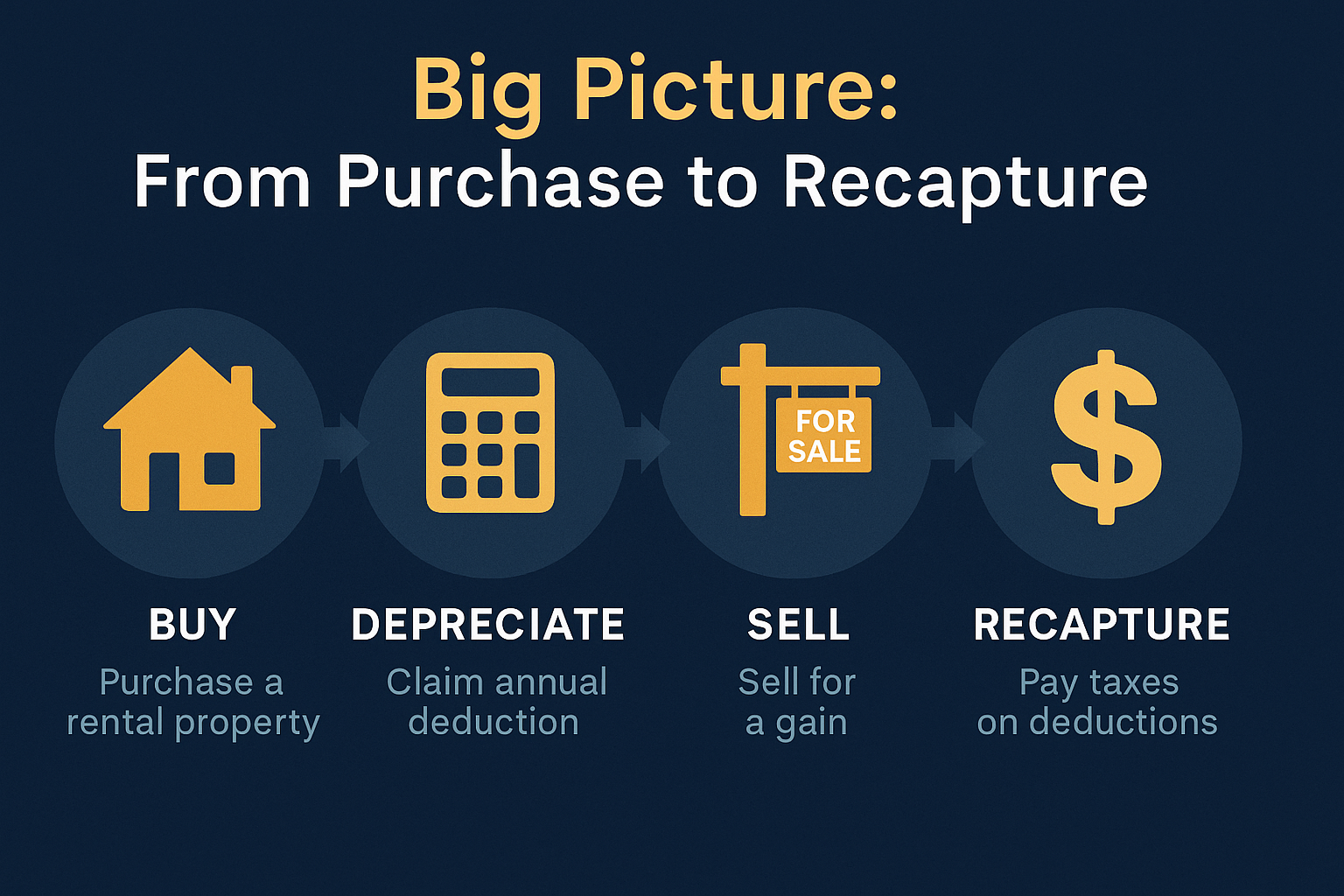
Depreciation is a gift that makes rental real estate one of the most tax-advantaged investments out there. But when it’s time to sell, the IRS wants its share back in the form of depreciation recapture.
If you understand the rules and plan ahead, you can make smart decisions that minimize the sting—and keep your hard-earned profits working for you.


