

This Content Is Only For Subscribers
Your lease is not a family heirloom. It’s a working tool. And with the wave of new Texas laws hitting in late 2025 and early 2026, that tool needs a tune-up.
Here are the practical lease updates I’d be looking at as a Texas landlord heading into 2026. (Usual disclaimer: this is information, not legal advice. Run final language past a Texas attorney or the association you use.)
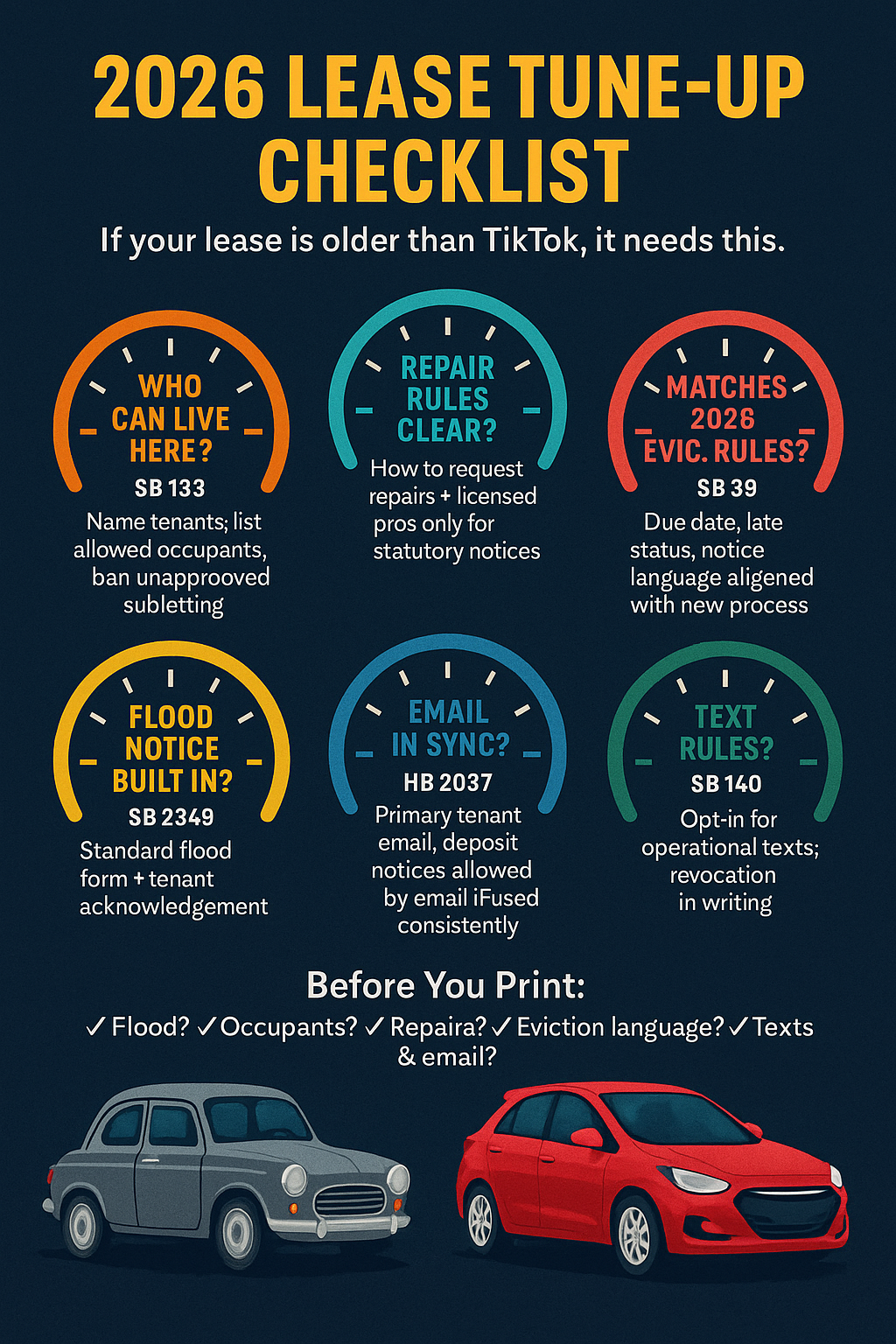
1. Tighten “Who Can Live Here” and Unauthorized Occupant Language
With SB 1333 giving law enforcement a faster path to remove true squatters and criminalizing fake leases, it’s more important than ever that your lease clearly spells out:
- Who is the tenant (names on the lease)
- Who are approved occupants (kids, partner, etc.)
- That no one else gains any right to occupy without your written consent
- That subletting or assigning the lease without approval is prohibited
Good language here does two things:
- It helps you show that unauthorized people are not tenants if a squatter situation arises, and
- It gives you cleaner grounds to act if the home turns into a revolving-door roommate hostel.
2. Build Floodplain & Flood History Into Your Standard Package
SB 2349 cleans up floodplain disclosure rules but does not get most landlords off the hook. You still have to give written notice if:
- The dwelling is in a FEMA 100-year floodplain, or
- It has flooded in the last five years
Short-term leases (under 30 days) and certain temporary sale-related leasebacks are now exempt, but most standard residential leases are not.
What to change:
- Add a flood disclosure form to your default lease packet for any non-exempt rental.
- Include a lease clause where the tenant acknowledges receiving the flood notice and understands any known risk.
That one extra page can be the difference between, “We were all informed adults here,” and, “You never told me this place floods.”
3. Clarify Repair Requests and Who Does the Work
HB 2037 updates the “repairs and remedies” world. When a tenant properly triggers the statutory notice-to-repair route, qualifying repairs now must be done by an independent contractor—and if the city requires licensing for that trade, the contractor must be licensed.
Lease tweaks that help:
- Spell out exactly how tenants must submit repair requests (address, email, portal).
- State that repairs may be performed by independent, appropriately licensed professionals you select.
- Remind tenants that unauthorized repairs they arrange on their own may not be reimbursed unless the Property Code’s specific conditions are met.
Clear written process + the right vendors means fewer “my cousin fixed it” surprises and better compliance if a tenant goes the formal notice route.
4. Modernize Security Deposit & Email Provisions
HB 2037 also clarifies some security deposit notice rules and allows using email to communicate about deposits when that’s an established channel.
Consider adding:
- A clause designating one primary email address per tenant for official written notices (including deposit accounting), while still complying with any mailing requirements.
- A requirement that tenants update their email and forwarding address in writing when they move out.
You’re not required to go all-digital, but if your operation already lives in email, it makes sense for your lease to explicitly say so.
5. Tune Up Default, Notice, and Eviction-Related Language
SB 38 doesn’t rewrite your lease word-for-word, but it does change the eviction process starting January 1, 2026—faster timelines, clarified venue, and new procedures around unauthorized occupants.
Lease sections to review with that in mind:
- Nonpayment of rent
- Due date and any grace period
- When a payment is considered late
- How and when notices will be delivered
- Defaults and remedies
- Cross-check your default language with your new notice templates for nonpayment and lease violations.
- Make sure you’re not promising procedures you no longer have to follow—or skipping steps the statute now expects.
The goal isn’t to squeeze tenants; it’s to avoid having a lease that fights with the new law or confuses your own team about what happens next.
6. Add Clean Consent for Texts and Electronic Communication
With SB 140 expanding “telephone solicitation” to cover texts and other digital messages (and tying violations to the Texas Deceptive Trade Practices Act), you don’t want a messy texting situation.
In your lease or application, consider:
- A short consent section where tenants agree to receive non-marketing texts about
- Rent due / late notices
- Maintenance scheduling
- Emergency alerts
- A line making clear they can revoke consent in writing.
Keep marketing blasts out of the landlord-tenant channel; use texts for operations, not sales, and get written consent to back that up.
7. Quick Checklist Before You Hit “Print”
Before you lock in your 2026 lease version, ask:
- Does it address flood disclosure where needed?
- Does it clearly define tenants vs. occupants and ban unauthorized subletting?
- Does it align with updated repair, email, and deposit rules?
- Does it avoid promising eviction procedures that no longer match SB 38 timelines?
- Does it handle texts and email in a way that’s clear and consent-based?
If you can check those boxes—and have a Texas attorney bless the final language—you’ll walk into 2026 with a lease that actually belongs in 2026.


