

This Content Is Only For Subscribers
Seasonal issues are predictable: décor creeping into hallways, space heaters tripping breakers, windy balconies turning planters into projectiles. The clean way to manage all of it is a short, plain-English Seasonal Rules Addendum attached to the lease—neutral in tone, specific enough to enforce, and easy for residents to follow.
Below is a tighter framework plus plug-and-play clauses you can adapt.
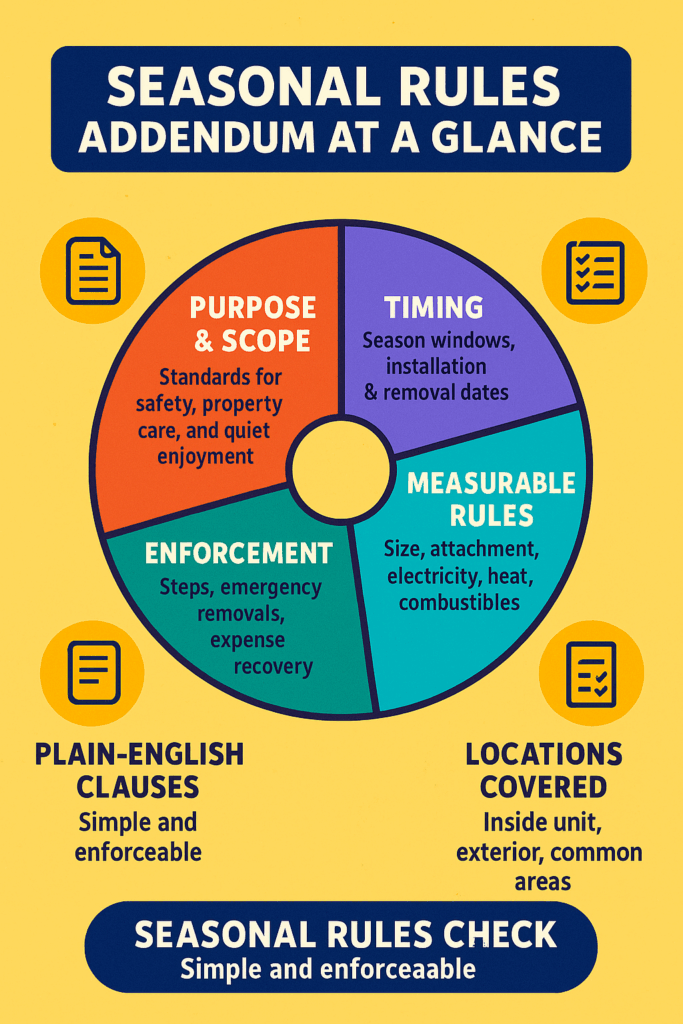
What your addendum should do
- State the purpose. Safety, property care, quiet enjoyment.
- Define the season windows. When rules start/end (e.g., Nov–Jan for winter décor).
- Scope by location. Inside unit vs. doors/windows/balconies vs. common areas.
- Set measurable standards. Size limits, attachment methods, wattage, clearance.
- Explain enforcement. Notice steps, emergency removals, cost recovery.
- Align with everything else. Core lease, building policies, HOA rules, local codes.
Two or three pages with headings and bullets is ideal.
Model Seasonal Rules Addendum (sample language)
1) Purpose and Scope
This Addendum sets neutral, safety-focused standards for seasonal activities and decorations. It applies to all occupants/guests and covers the Premises (interior), doorways, balconies, windows, and common spaces.
2) Timing
- Winter/Holiday Décor: Install on/after Nov 15; remove by Jan 10.
- Spring/Summer Outdoor Items (plants, grills where permitted, patio lights): Mar 1 – Oct 31.
Management may adjust dates with written notice for weather/safety.
3) Inside the Dwelling
Residents may decorate inside the home provided they:
a) Avoid open flames that create fire risk;
b) Do not overload outlets/circuits;
c) Use mounting methods that do not damage surfaces;
d) Observe quiet hours for sound- or light-producing displays.
Resident is responsible for unusual cleaning or repairs caused by decorations/activities.
4) Doors, Windows, and Balconies
a) Door Décor: Flat/flush, under 18 in. diameter, projecting no more than 2 in. Do not cover unit numbers, peepholes, locks, or safety devices.
b) Windows: Do not pinch cords in the sash or route cords outside; keep displays inside the glass line.
c) Balconies/Patios: Nothing may hang beyond the rail or extend into walkways. Secure items against wind. Where grills are prohibited, do not store or operate grills/smokers.
d) Attachment: Use removable, non-damaging products (e.g., command-style hooks, suction cups for glass). No screws in metal doors, drilling into masonry, or adhesives on finished wood.
5) Electrical and Lighting
a) Only UL/ETL-listed LED light strings/devices.
b) No daisy-chained extension cords; no cords under rugs, across walkways, or pinched in doors/windows.
c) Outdoor lights must be rated for exterior use.
d) Decorative lights off by 10:00 p.m. unless approved in writing.
6) Combustibles, Heat, and Sprinklers
a) No open flames in hallways/common areas.
b) Keep décor at least 36 in. from heat sources.
c) Do not attach or hang anything from sprinkler piping/heads.
d) Live trees must be watered and away from heat; management may prohibit/remove any item that presents a fire hazard.
7) Common Areas
Residents may not place personal items in hallways, lobbies, stairs, elevators, laundry rooms, or other shared spaces. Exits and exit signs must remain clear/visible at all times. Management controls common-area décor and may remove items without notice if they present safety or accessibility issues.
8) Weather and Winterization
a) During freezing weather, maintain indoor temperature to prevent frozen pipes and follow any drip/door-open instructions issued by management.
b) Report loss of heat or water immediately and follow shut-off instructions if directed.
c) On balconies/patios, secure items against wind and clear snow/ice as instructed.
9) Noise and Courtesy
Seasonal gatherings must comply with quiet hours. Bass-heavy music and amplified sound are not permitted on balconies or in common areas. Management may require immediate reduction of noise that disturbs others.
10) Trash, Recycling, and Tree Disposal
Break down boxes; use designated bins; do not leave materials in corridors. Live trees and large packaging must be disposed of per posted instructions; fees may apply for oversized or improper disposal.
11) Enforcement and Costs
a) Management may issue written notice with a time to correct.
b) Items creating immediate safety risks may be removed/disabled without prior notice; management will document with photos and notify Resident.
c) Resident is responsible for reasonable costs of removal, repair, or unusual cleaning caused by violations, consistent with the Lease and applicable law.
12) Content-Neutral Standards
These rules apply to all decorations and seasonal activities regardless of theme or tradition. They regulate method, placement, timing, and safety—not viewpoint.
13) Conflicts with Other Documents
If this Addendum conflicts with community rules, HOA restrictions, or building safety notices, the stricter standard applies. All other Lease terms remain in effect.
Resident Acknowledgment
By signing, Resident acknowledges receipt of the Seasonal Rules Addendum, agrees to comply, and understands potential costs for violations or resulting damage.
___ Resident Signature / Date
___ Resident Signature / Date
___ Management / Date
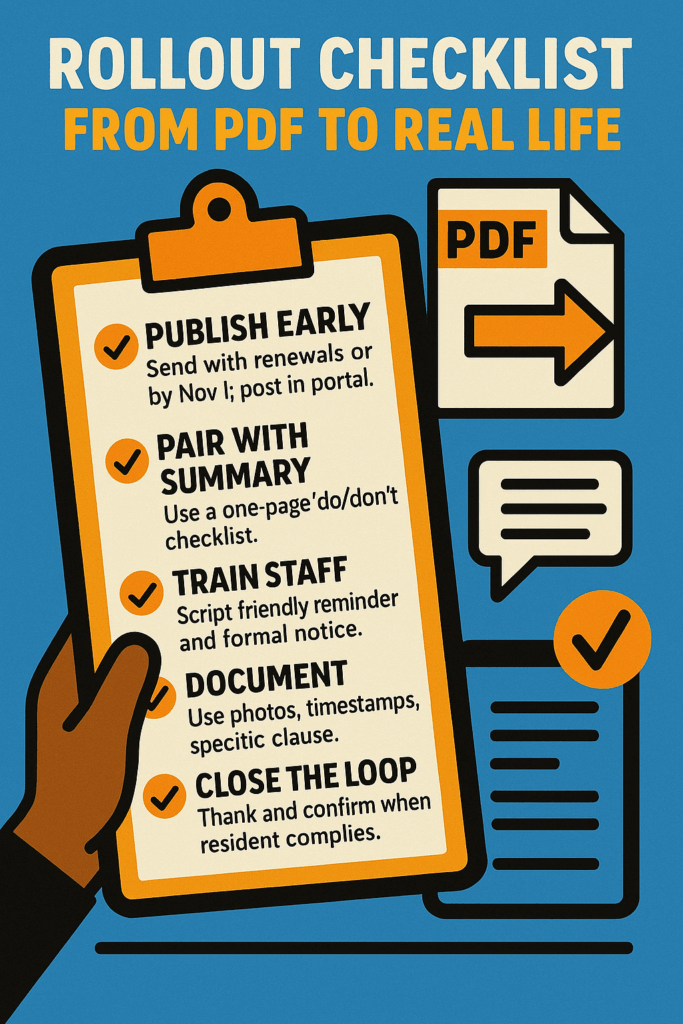
Rollout tips (so it actually works)
- Publish early. Send with renewals or by Nov 1; post in the portal.
- Pair with a one-page summary. A simple checklist and visual “do/don’t” boosts compliance.
- Train staff on scripts. One friendly reminder template, one formal notice template. Keep comments about content/traditions out—cite the rule and the reason.
- Document neutrally. Photos, timestamps, specific clause.
- Close the loop. When residents correct an issue, thank them and confirm compliance.
A tight, neutral addendum turns seasonal chaos into a routine. You’ll protect life safety and property condition, keep enforcement fair, and give residents clear guardrails for celebrating the season.


