

This Content Is Only For Subscribers
In our main column, we took a high-level view of the complete property walkthrough. Now, we’re focusing on the exterior—the building’s armor. In Texas, this armor is constantly under assault from intense sun, heavy rain, and the occasional hailstorm. A proactive inspection of your property’s gutters, roof, and yard is not about cosmetic upkeep; it’s about actively defending your foundation, preventing water intrusion, and ensuring the safety of your tenants. This is where a few hours of work in the spring can save you thousands of dollars in repairs down the road.
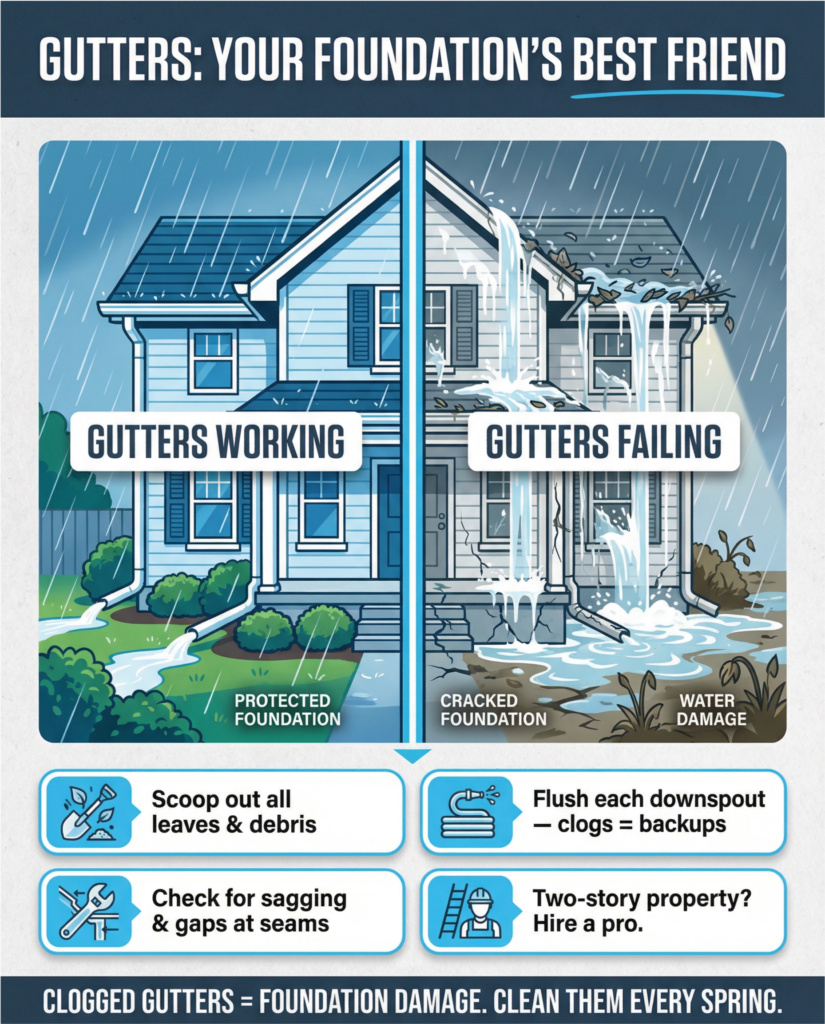
Gutters: The Unsung Heroes of Water Management
It’s easy to ignore your gutters, but they perform a function that is absolutely critical to your building’s health: they collect rainwater from the roof and direct it safely away from the foundation. When gutters fail, that water sheets down the side of the building, saturates the ground next to the foundation, and can lead to catastrophic and expensive foundation issues. Cleaning your gutters is not optional.
Your Gutter Maintenance Checklist:
•Safety First: If you’re using a ladder, ensure it is on stable, level ground. Always maintain three points of contact with the ladder (two feet and one hand). For two-story properties, it is strongly recommended to hire a professional for this task.
•The Debris Scoop: Using gloves, a small trowel, or a gutter scoop, remove all leaves, twigs, and shingle grit from the gutters. You’ll be surprised how much accumulates over the winter.
•The Downspout Flush: After the main channels are clear, use a garden hose to flush each downspout. If the water backs up, you have a clog. Often, a firm rap on the side of the downspout can dislodge it. If not, you may need to use a plumber’s snake to clear the obstruction.
•Inspection: While you’re up there, look for any signs of sagging, or areas where the gutters are pulling away from the fascia board. Check for leaks at the seams. These are signs that the gutter system itself may need repair or replacement.
The Roof: Your Property’s Primary Shield
A full, on-roof inspection should be left to a licensed and insured roofing professional. However, a thorough visual inspection from the ground is a critical first step that any landlord can and should perform.
Your Visual Inspection Checklist:
•Scan for Shingle Damage: Using binoculars can be very helpful here. Look for any shingles that are missing, cracked, curling at the edges, or have lost their granular surface. Pay special attention to the south and west-facing sides of the roof, as they take the most abuse from the sun.
•Look for Signs of Hail: Hail damage can be subtle. Look for dark “bruises” on the shingles where the granular surface has been knocked away. Also, check for dents on any metal roof vents or flashing.
•Inspect Flashing and Penetrations: The most common sources of roof leaks are not in the main field of the roof, but at the points where the roof is penetrated. Look closely at the flashing (the metal strips) around the chimney, skylights, and any plumbing or exhaust vents. Ensure it is tight and free of rust or damage.
If your visual inspection reveals any areas of concern, it is time to call a professional roofer for a full evaluation. Do not delay. A small roof leak can go undetected for months, silently rotting the roof deck and causing mold to grow in the attic.
The Yard: Curb Appeal and Liability
Your property’s yard is more than just grass and plants; it’s the first impression you make on a prospective tenant and a potential source of liability.
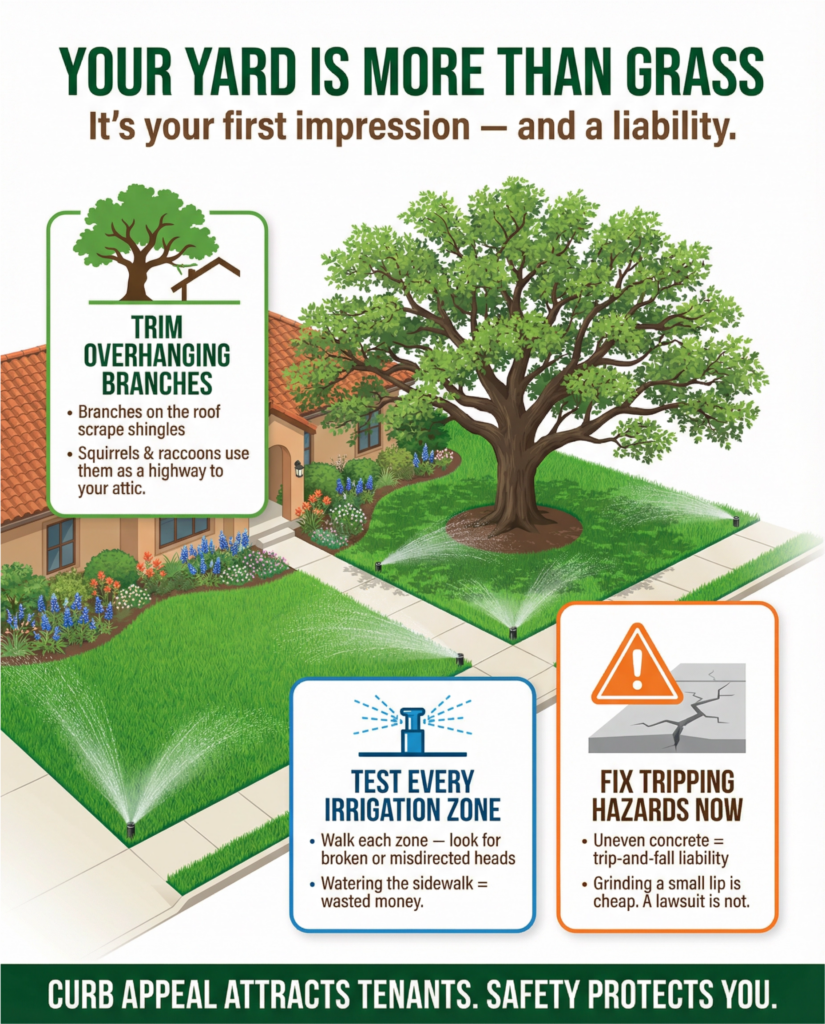
Your Yard Prep Checklist:
•Tree and Shrub Trimming: This is a safety issue. Any tree branches that are touching or overhanging the roof must be trimmed back immediately. They can scrape away the granular surface of your shingles and provide a highway for pests like squirrels and raccoons to access your attic.
•Irrigation System Test: Your irrigation system has been dormant all winter. Now is the time to test it. Manually run through every zone, one by one. Walk the property and look for sprinkler heads that are broken, clogged, or pointing in the wrong direction (watering the sidewalk is a waste of money). Adjust and repair as needed.
•Walkways and Patios: Inspect all sidewalks, driveways, and patios for tripping hazards. Look for uneven sections caused by tree roots or soil settlement. Grinding down a small concrete lip is an inexpensive fix that can prevent a costly trip-and-fall claim.
By systematically addressing the gutters, roof, and yard, you are hardening your property’s defenses against the elements and mitigating potential liabilities. This is the hands-on work that defines proactive property management and protects the long-term value of your investment.


