

This Content Is Only For Subscribers
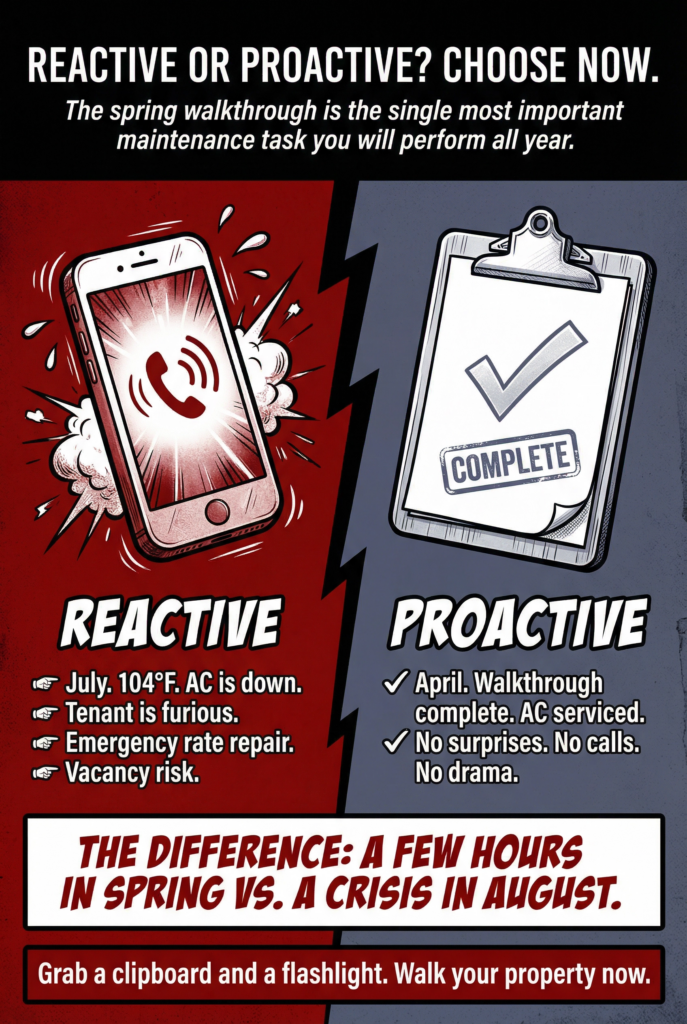
In property management, there are two ways to operate: reactively or proactively. The reactive landlord waits for the tenant’s call about a broken air conditioner in July. The proactive landlord, however, spends a few hours in the spring methodically inspecting their property, identifying potential failures before they happen. This isn’t just good practice; it’s fundamental asset protection. The spring walkthrough is the single most important preventative maintenance task you will perform all year.
Welcome to Maintenance Matters, your new resource for practical, actionable guidance on keeping your rental properties in prime condition. We’re not here to talk about theory; we’re here to talk about process. This column is about providing you with the checklists and know-how to get the job done right. So, grab a clipboard and a flashlight. It’s time to walk your property.
The Proactive Mindset and Toolkit
A successful walkthrough is systematic. It’s not a casual stroll; it’s a forensic examination of your asset. Before you begin, assemble your toolkit. You’ll need a detailed checklist (use this article as your guide), a clipboard and pen for taking detailed notes, and a camera (your smartphone is perfect). Document everything with photos. A picture of a small crack now is invaluable if it becomes a large one later. You should also bring a powerful flashlight for looking into dark corners, attics, and under sinks, along with a GFCI outlet tester—a small, inexpensive tool that can identify life-safety issues.
Your mindset should be one of a detective. You are looking for clues—small signs of wear, water intrusion, or pest activity—that can point to larger, hidden problems. Document everything, no matter how minor it seems. The goal of preparing for heavy summer use is to address the minor issues in April so they don’t become major catastrophes in August.
The Exterior Inspection: The First Line of Defense
Your inspection should always begin with the exterior. The building envelope is your property’s first line of defense against the Texas weather, and curb appeal is what attracts your next high-quality tenant. Start at the street and work your way in.
Roof, Gutters, and Siding
Begin with a visual roof inspection. From the ground, scan the entire roof. Are there any missing, cracked, or curling shingles? Look for signs of hail damage, which can be subtle. Pay close attention to the flashing around chimneys, vents, and skylights, as these are common failure points.
Next, examine the gutters and downspouts. Are the gutters sagging or pulling away from the fascia? Are they full of leaves and debris from the winter? Clogged gutters are a primary cause of water damage to the foundation and siding. Ensure downspouts are clear and are directing water several feet away from the foundation.
Walk the entire perimeter to inspect the siding and trim. Look for cracked mortar on brick, warped or rotted wood siding, and damaged vinyl. Pay special attention to the areas around windows and doors. Caulk and weatherstripping degrade over time; if you see gaps, they need to be resealed to prevent water intrusion and improve energy efficiency before the summer heat sets in.
Landscaping and Foundation
The harsh Texas summer is brutal on landscaping, and neglected landscaping can, in turn, be brutal on your property. Inspect the trees and shrubs. Are there any dead branches overhanging the roof or power lines? These need to be trimmed back. Are bushes overgrown and touching the siding? This creates a bridge for pests to enter the home and prevents the siding from drying out after a rain.
Pay close attention to the grading around the foundation. The soil should slope away from the house to ensure proper drainage. In Texas, our expansive clay soils shrink during summer droughts, which can cause foundation settling. Ensure that your irrigation system or soaker hoses are functioning properly to maintain consistent soil moisture around the perimeter.
The Interior Inspection: Systems and Safety
Once the exterior is secure, move inside. The interior inspection is less about aesthetics and more about the functional health and safety of the property’s core systems.
HVAC and Plumbing: The Summer Lifelines
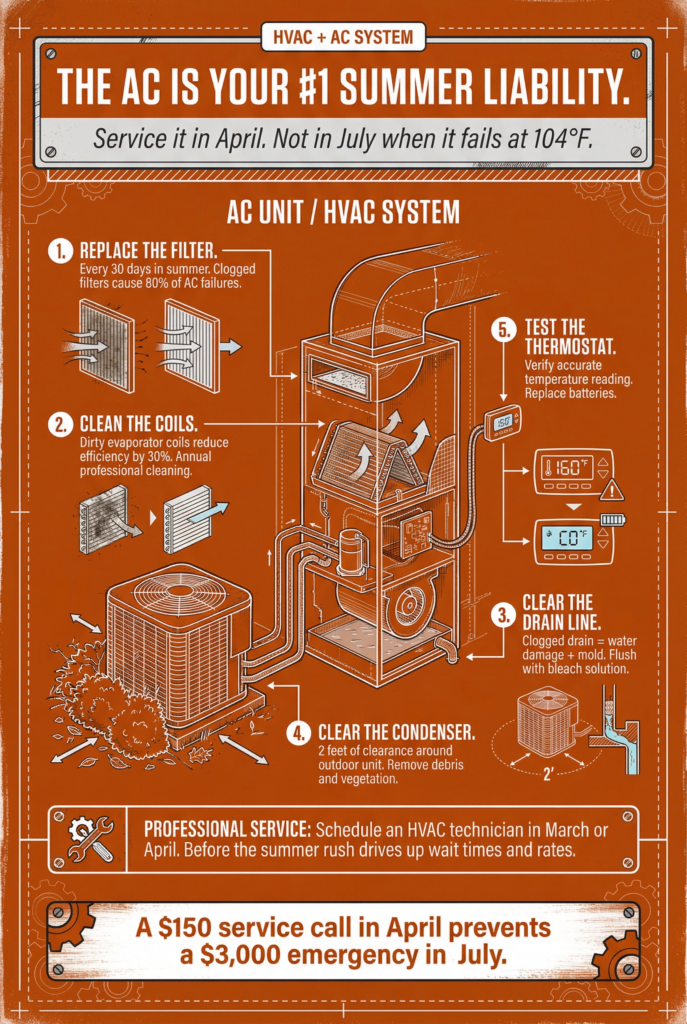
The most critical system in a Texas rental property during the summer is the HVAC unit. Do not wait until the first 100-degree day to find out it’s failing. Turn the system on and let it run. Does it cool effectively? Is the airflow strong from all vents? Check the air filter; if it’s dirty, replace it immediately and remind the tenant of their obligation to do so regularly. We strongly recommend scheduling a professional tune-up in the spring to clean the coils, check the refrigerant levels, and ensure peak efficiency. We will cover this in more detail in our companion article, AC & Plumbing Checks Before Peak Usage.
Plumbing issues are the second most common source of emergency calls. Check under every sink for signs of leaks or water damage. Look for warped cabinet bottoms or water stains. Test all faucets for drips and ensure the drains are flowing freely. Inspect the toilets to make sure they are secure to the floor and not running continuously. Finally, locate the water heater. Check for any signs of rust, corrosion, or pooling water around the base.
Electrical and Safety Devices
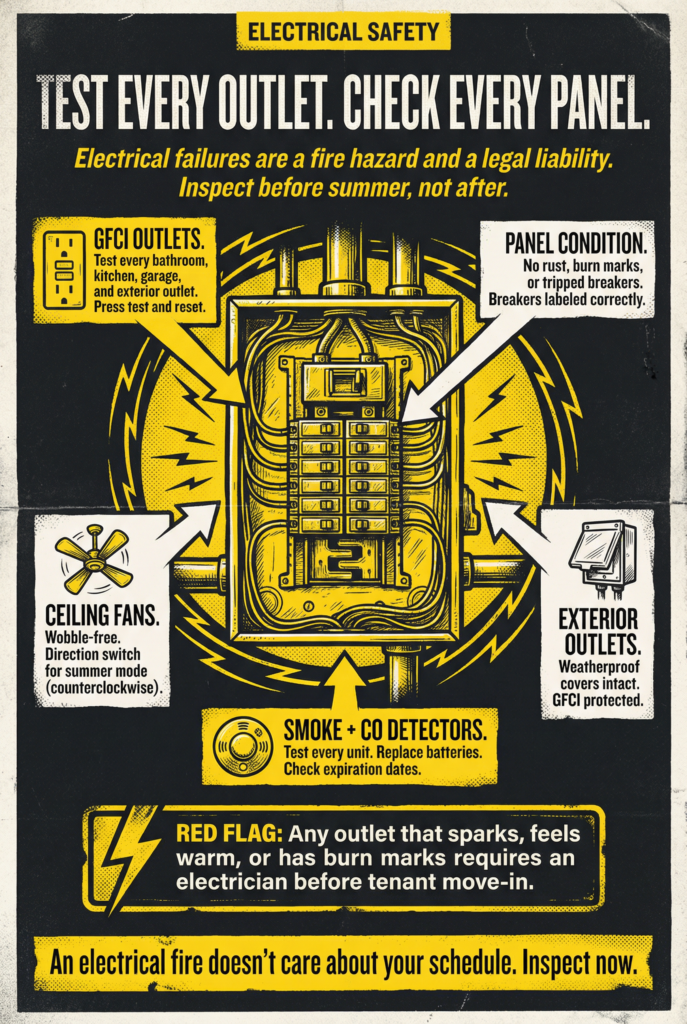
Electrical safety is non-negotiable. Use your GFCI tester to check every outlet in the kitchen, bathrooms, and exterior. These outlets are designed to prevent electrocution in wet areas, and they must function perfectly. Test all other accessible outlets to ensure they are properly grounded.
Check every smoke detector and carbon monoxide detector in the property. Press the test button to ensure the alarm sounds. If the detectors are battery-operated, replace the batteries now, regardless of when they were last changed. If the detectors are hardwired, ensure the backup batteries are fresh. Verify that fire extinguishers (if provided) are fully charged and easily accessible.
Windows, Doors, and Pest Control
The summer heat will exploit any weakness in your property’s insulation. Check the weatherstripping around all exterior doors and windows. If you can see daylight or feel a draft, the weatherstripping needs to be replaced. Ensure that all windows open, close, and lock smoothly. Check the window screens for tears or holes; intact screens are essential for keeping out the inevitable summer bugs.
Speaking of bugs, keep an eye out for signs of pest activity during your walkthrough. Look for droppings in the pantry, signs of chewing on baseboards, or mud tubes on the exterior foundation (a sign of termites). Summer brings a surge in pest activity, so sealing entry points now is crucial. We will dive deeper into this topic in Pest Control Prep for High Summer Occupancy.
High-Traffic Areas and Preventative Measures
Rental properties experience more wear and tear than owner-occupied homes, particularly in high-traffic areas. The summer months often mean kids are home from school, guests are visiting, and the property is simply used more intensely.
Flooring and Walls
Inspect the flooring throughout the unit. Look for loose tiles, lifting laminate, or torn carpet seams. These are tripping hazards that need to be addressed immediately. Check the grout in the bathrooms and kitchen; cracked or missing grout can lead to water damage behind the tiles.
Examine the walls and ceilings for signs of water stains, which could indicate a hidden plumbing leak or a roof issue. Look for cracks in the drywall, particularly around door frames and windows, which can be a sign of foundation movement. While minor settling cracks are common, large or growing cracks should be evaluated by a professional.
Appliances and Fixtures
If your rental includes appliances, test them all. Turn on the oven and stove burners. Run the dishwasher through a short cycle to ensure it fills and drains properly. Check the refrigerator and freezer temperatures, and inspect the door seals for cracks. A failing refrigerator seal will force the compressor to work overtime during the summer, leading to premature failure.
Inspect all interior doors to ensure they latch properly and don’t rub against the frame. Tighten any loose doorknobs or cabinet pulls. These seem like minor details, but addressing them proactively prevents the tenant from feeling like the property is falling apart.
Categorize and Execute
By the time you finish your walkthrough, you will likely have a long list of notes. The key to a successful inspection is what you do with that list. Do not become overwhelmed. Instead, categorize your findings into three actionable groups.
First, identify the Immediate Life-Safety Issues. These are non-negotiable and must be addressed within 24 to 48 hours. This includes failing smoke detectors, exposed wiring, non-functioning GFCI outlets, or significant trip hazards.
Second, list the Professional Repairs. These are the tasks that require specialized knowledge or licensing, such as HVAC servicing, major plumbing repairs, or roof work. Schedule these contractors immediately, before their summer schedules fill up.
Finally, compile your DIY and Handyman Tasks. These are the minor repairs—caulking, weatherstripping, changing filters, and tightening hardware—that you or a general handyman can knock out in a weekend.
The Value of Preparation
The summer season will inevitably bring unexpected challenges. However, by conducting a thorough, systematic spring walkthrough, you significantly reduce the likelihood of those challenges being catastrophic. You are shifting your operations from reactive to proactive.
This approach saves money by catching small problems before they become expensive disasters. It protects your asset by ensuring the building envelope and core systems are sound. Most importantly, it keeps your tenants happy and comfortable during the hottest months of the year, reducing turnover and protecting your bottom line.
Preparation is the ultimate form of property management. For more specific strategies on managing this busy season, keep an eye out for our upcoming pieces, Preventive Checks for High-Traffic Rentals and Emergency Repair Plan for Summer. Now, grab your clipboard, head to your property, and get to work.
The Communication Component
While the physical inspection is paramount, a proactive landlord also uses the spring walkthrough as an opportunity for tenant communication. If the property is currently occupied, use the required notice of entry to remind them of their seasonal responsibilities, such as changing the HVAC filter or keeping the AC set to a reasonable temperature to prevent freezing the coils.
When you are on-site, ask the tenant if they have noticed any slow drains, flickering lights, or drafts. Often, tenants will live with minor annoyances rather than submit a formal maintenance request, but these small issues are exactly what you want to catch early. A brief, friendly conversation during your walkthrough can uncover hidden problems and reinforce a positive landlord-tenant relationship, proving that you are invested in the quality of their home.


