

This Content Is Only For Subscribers
We’ve covered the mechanical systems and the building envelope, but the final piece of a truly proactive spring maintenance plan is a deep dive into cleaning and safety. This isn’t about the day-to-day tidiness that is a tenant’s responsibility. This is about landlord-level cleaning that directly impacts the longevity of your asset, and a systematic safety inspection that protects both your tenants and your business from catastrophic failure. These two processes go hand-in-hand; a thorough cleaning often reveals hidden safety issues.
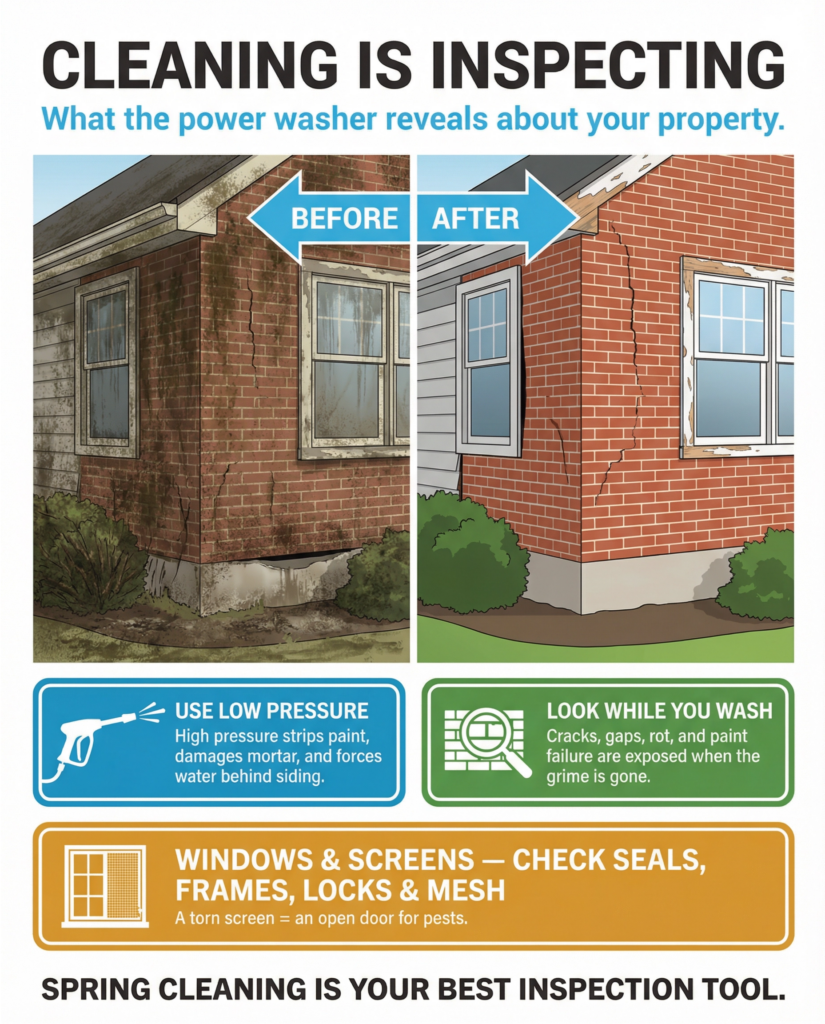
Exterior Cleaning: More Than Just Curb Appeal
A clean exterior is attractive to prospective tenants, but the process of cleaning is also a powerful inspection tool. It strips away the winter grime and reveals the true condition of your building’s surfaces.
•Strategic Power Washing: A low-pressure wash can remove a year’s worth of dirt, mold, and mildew from siding, brick, and concrete. The key word here is low-pressure. A high-pressure stream can strip paint, damage mortar, and force water behind siding, creating the very problem you’re trying to prevent. As you wash the property, you get an up-close look at the condition of the paint, the integrity of the siding, and any cracks or gaps that were previously hidden by dirt.
•Window and Screen Washing: Clean windows make a huge difference in how a property feels, but the process is also a critical checkpoint. As you clean each window, you should be inspecting the seals for any signs of failure (like condensation between the panes), checking the frames for rot or damage, and ensuring the locks function correctly. At the same time, inspect every window screen. A torn screen is an open invitation for pests, and replacing screen mesh is a simple and inexpensive preventative measure.
Interior Systems: Cleaning for Longevity and Safety
Inside the property, your focus should be on the hidden components of your major appliances. Proper cleaning of these systems is a primary fire prevention and efficiency task.
•The Dryer Vent: A Critical Fire Safety Check: This is, without question, one of the most overlooked but most critical maintenance tasks. A dryer vent clogged with lint is a severe fire hazard. At least once a year, the entire vent line should be cleaned, from the back of the dryer to the exterior vent cap. For shorter runs, this can be a DIY job with a specialized brush kit. For longer, more complex runs, hiring a professional is a wise and necessary investment. Document this service for your records.
•Refrigerator Coils: The condenser coils on a refrigerator are responsible for releasing heat. Over time, they become caked with dust and pet hair, forcing the compressor to work harder and run longer. This wastes electricity and shortens the life of the appliance. Pulling the refrigerator out and using a long, narrow brush and a vacuum to clean the coils is a 15-minute job that can save you a thousand-dollar replacement cost.
•Dishwasher and Garbage Disposal: Check and clean the filter at the bottom of the dishwasher. A clogged filter leads to poor cleaning performance and service calls. For the garbage disposal, use a specialized disposal cleaning brush to remove any built-up grime that can cause odors.
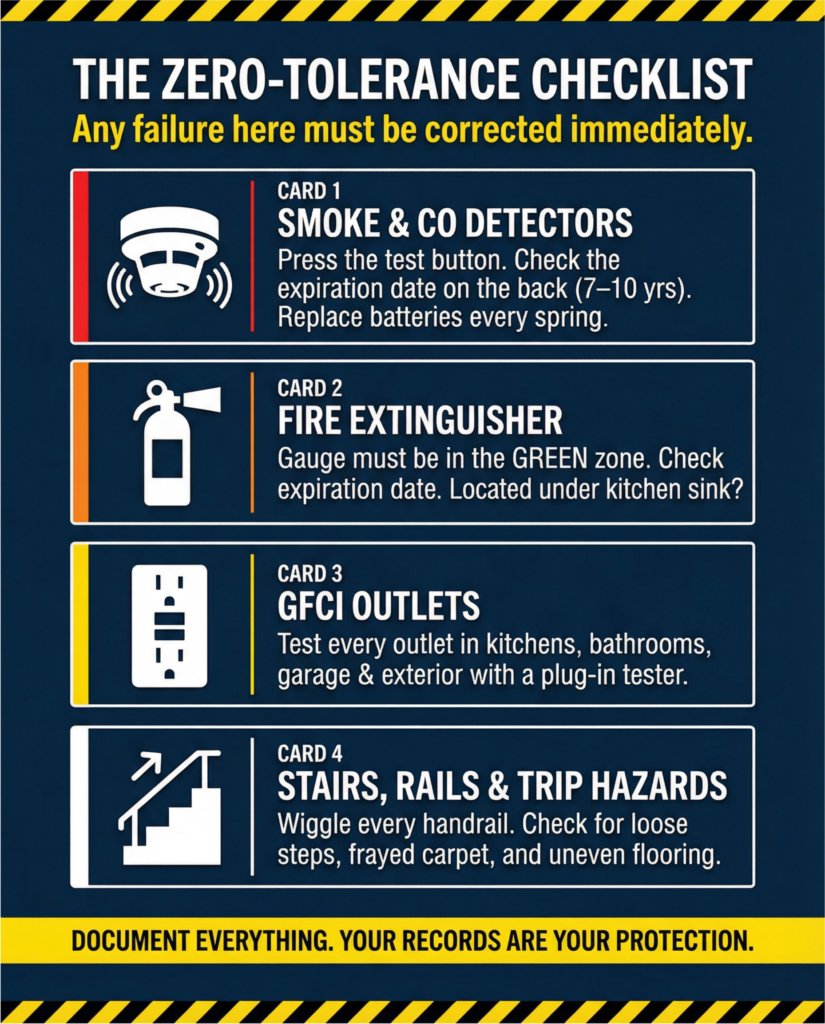
The Life-Safety Inspection: A Non-Negotiable Process
This final checklist is the most important part of your entire spring walkthrough. The items on this list directly impact the safety of your tenants and your legal liability as a landlord. This is a zero-tolerance inspection; any failure must be corrected immediately.
•Smoke and Carbon Monoxide Detectors: Do not just press the test button. While this confirms the alarm sounds, it doesn’t confirm the sensor is still effective. Every detector has an expiration date printed on the back (typically 7-10 years from the date of manufacture). If a detector is expired, it must be replaced. As a matter of best practice, replace the batteries in all detectors every spring, regardless of their charge.
•Fire Extinguisher: Every rental unit must have a fire extinguisher, usually located under the kitchen sink. Check the pressure gauge to ensure it is in the green “full” zone. Note the expiration date and replace if necessary.
•GFCI Outlets: As mentioned in our main column, use a plug-in GFCI tester to verify the function of every GFCI outlet in the kitchens, bathrooms, garage, and on the exterior. These devices are essential for preventing electric shock in damp environments.
•Stairs, Handrails, and Trip Hazards: Walk all interior and exterior stairs, checking for any loose steps or wobbly handrails. Scan the flooring for any loose tiles, frayed carpet edges, or other potential trip hazards.
By integrating these cleaning and safety checks into your annual spring maintenance routine, you are doing more than just tidying up. You are actively identifying and neutralizing risks. This systematic process is the hallmark of a professional, proactive landlord who understands that the best time to solve a problem is before it ever happens.


