

This Content Is Only For Subscribers
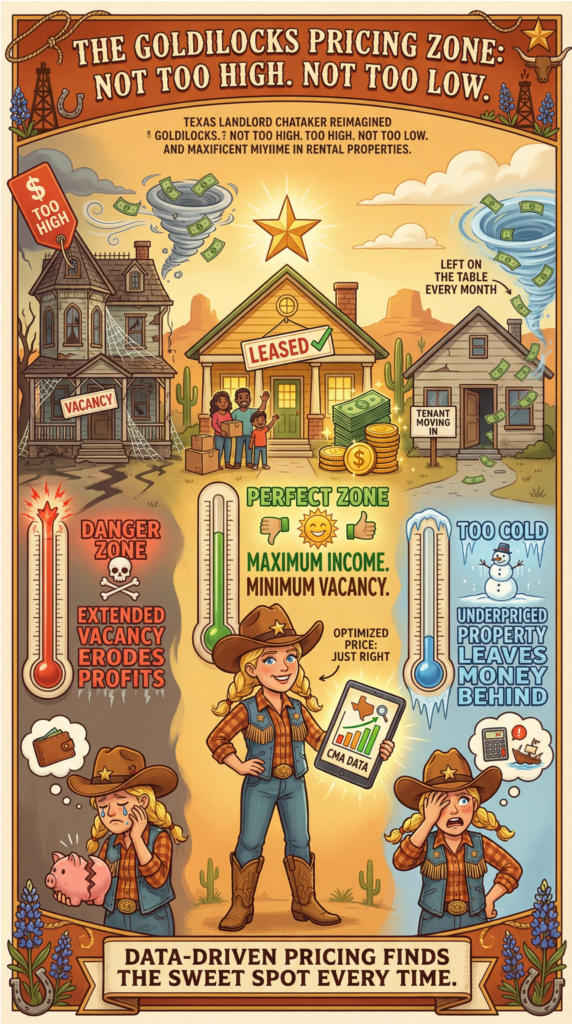
There is no single decision that has a greater impact on your annual return than the price you set for your rental property. Price it too high, and you risk extended vacancy that erodes your profits. Price it too low, and you are leaving money on the table every single month. The difference between a successful investor and a struggling landlord often comes down to one thing: the successful investor sets their price based on data, while the struggling landlord sets their price based on gut feeling, hope, or what they charged last year. In a dynamic market, this is a recipe for failure.

The Fallacy of “What I Need to Get”
The most common pricing mistake is to base your rent on your expenses. Your mortgage, taxes, and insurance costs are irrelevant to the market. A tenant does not care what your PITI payment is; they care about what their other options are. Your price must be a function of the market, not a function of your balance sheet. The market is the ultimate arbiter of value. Your job is not to guess what that value is, but to discover it through a systematic analysis of real-time data.
Building Your Comparable Market Analysis (CMA)
A Comparable Market Analysis, or CMA, is the foundational tool of every professional real estate investor and agent. It is a methodical process of gathering and analyzing data on similar, nearby properties to determine a narrow, defensible price range for your own. In the summer peak season, this analysis must be sharp, specific, and up-to-the-minute.
Here’s how to build a powerful, data-driven CMA for your rental property:
1.Define Your “Comparable” Criteria: The key to an accurate CMA is an apples-to-apples comparison. Your comparable properties (comps) should match your own on a few key criteria:
•Location: Your comps must be in the same neighborhood or submarket. Real estate is local, and prices can vary dramatically from one side of a highway to the other.
•Property Type: If you have a 3-bedroom, 2-bathroom single-family home, your comps should be the same. Don’t compare a duplex to a high-rise condo.
•Size: Your comps should be within a reasonable range of your property’s square footage (typically +/- 10-15%).
•Condition: This is the most subjective but most important factor. You must honestly assess the condition of your property (e.g., recently renovated, updated, or dated) and seek out comps that match.
2.Gather Your Data: There are several powerful tools at your disposal for gathering this data:
•Zillow, HotPads, and Apartments.com: These are your primary sources for currently available listings. Search for properties that match your criteria and note their asking price, days on market, and the quality of their photos and marketing.
•The Zillow “Recently Rented” Filter: This is a powerful but underutilized tool. It allows you to see what properties similar to yours actually rented for in the last 30-60 days. This is the most important data you can have, as it represents real, closed transactions, not just aspirational asking prices.
•Local Property Managers and Real Estate Agents: If you have a relationship with a local professional, they can often provide you with access to MLS data, which is the most accurate and comprehensive source of rental market information.
3.Analyze and Adjust: Once you have a list of 3-5 strong comps, it’s time to analyze. Create a simple spreadsheet to track each comp’s address, square footage, price, and features. Now, you must make adjustments. If your property has a fenced-in yard and a comp does not, your property is worth slightly more. If a comp has a brand-new kitchen and yours is 10 years old, your property is worth slightly less. This process of adjustment will allow you to triangulate a narrow price range for your own property.
The Price is a Hypothesis
Even with a data-driven CMA, the price you set is still a hypothesis. The market will provide the ultimate validation. Your pricing strategy must include a feedback loop. If you list your property and you do not have a significant number of qualified inquiries within the first 48-72 hours, the market is telling you that your price is too high. Every day you wait to adjust is a day of lost revenue. A small, immediate price reduction of $50 can often be the catalyst that generates a flood of new interest and saves you from weeks of costly vacancy.
Data-driven pricing is the hallmark of the professional investor. It removes emotion and guesswork from your most critical business decision. It allows you to enter the peak leasing season with a clear, defensible strategy that maximizes your income and minimizes your risk. It is the final and most important step in ensuring that your strategic upgrades truly pay off.


