

This Content Is Only For Subscribers
Howdy, landlords. We’ve spent a lot of time talking about planning, scheduling, and the art of proactive property management. But let’s be honest: no amount of planning can prevent every crisis. Sooner or later, you’re going to get that late-night phone call. A pipe has burst, the AC has died in the middle of a Texas August, or a circuit breaker keeps tripping and won’t reset. These are the moments that test your mettle as a landlord.
How you respond to an emergency doesn’t just determine the extent of the damage to your property; it defines your relationship with your tenant. A swift, professional, and calm response can turn a crisis into a moment of trust-building. A slow, fumbling, or panicked response can sour a tenancy for good. So, let’s talk about how to be ready before disaster strikes.
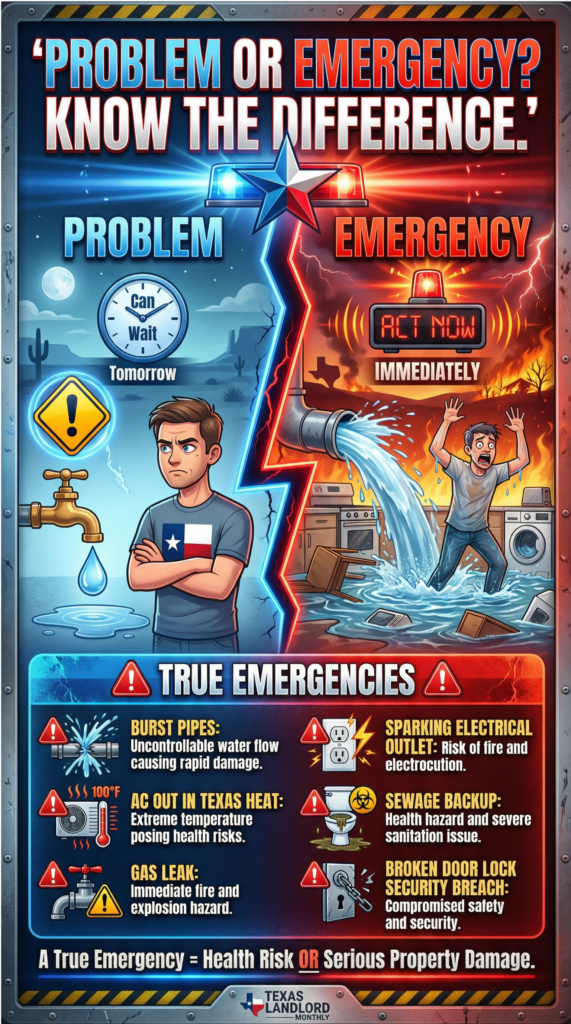
What Qualifies as a True Emergency?
First, it’s important to distinguish between a problem and a true emergency. A dripping faucet is a problem. A kitchen that’s actively flooding is an emergency. It’s a good idea to educate your tenants on this distinction when they move in. Generally, a true emergency is any situation that:
•Poses an immediate threat to the health or safety of the tenants.
•Is causing ongoing, serious damage to the property.
Here are some classic examples:
•Major water intrusion: This includes burst pipes, a failed water heater, or a serious roof leak during a storm.
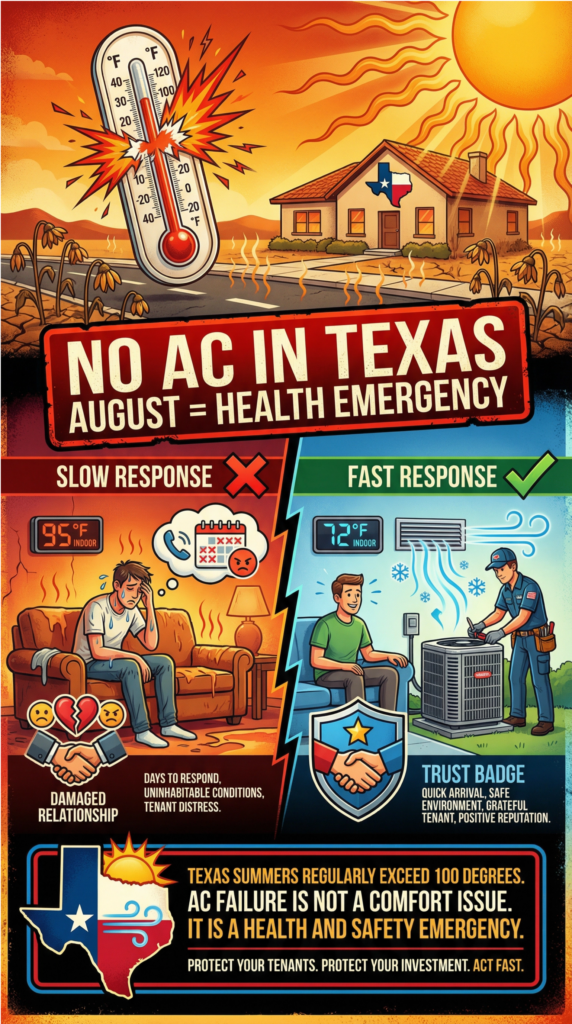
•No air conditioning in the summer: In Texas, a lack of AC when it’s 100 degrees outside isn’t a matter of comfort; it’s a health and safety issue.
•No heat in the winter: While our winters are milder, a sudden cold snap can make a home uninhabitable, especially for vulnerable tenants.
•A suspected gas leak: This is a “call 911 first, then call me” situation.
•Serious electrical faults: This includes sparking outlets or a total loss of power that isn’t part of a wider neighborhood outage.
•A complete sewage backup.
•A security breach: A broken window or a front door that won’t lock, for example.
Your Emergency Preparedness Kit
You can’t build your emergency plan in the middle of an emergency. You need to have your tools ready to go. This means having a pre-vetted list of trusted contractors who offer 24/7 service. Don’t just have one name for each category; have a primary and a backup.
Your emergency contact list should include:
•A 24/7 Plumber
•A 24/7 HVAC Technician
•A 24/7 Electrician
•A Locksmith
•A Restoration Company (for water and fire damage)
These numbers should be saved in your phone and posted somewhere easily accessible, like on your refrigerator or in your home office. These are your first calls when a tenant reports a crisis.
The Three-Step Emergency Response: Assess, Dispatch, Communicate
When that emergency call comes in, your response should be automatic. Just follow these three steps.
1.Assess: Stay calm and listen carefully to your tenant. Your calm demeanor will help keep them calm, too. Ask clarifying questions to understand the severity of the situation. “Is water dripping or is it gushing?” “Do you see any smoke or sparks?” If the situation is life-threatening, like a fire or gas leak, your first instruction should be for them to leave the property and call 911.
2.Dispatch: As soon as you hang up with the tenant, call the appropriate contractor from your emergency list. Give them the property address, the tenant’s name and contact information, and a clear, concise description of the problem. Get an estimated time of arrival (ETA) from them.
3.Communicate: This is the crucial final step. Call your tenant back immediately. Let them know who is coming and when they are expected to arrive. “Okay, I’ve spoken with Mike from Reliable Plumbing. He’s on his way and should be there in about 45 minutes.” This simple act of closing the loop is incredibly reassuring. It tells your tenant that you have heard them, you have taken action, and help is on the way.
Handling emergencies is one of the most stressful parts of being a landlord, but it’s also where you can truly shine. By preparing in advance and acting with a clear, three-step plan, you can protect your property, take care of your tenants, and prove that you’re a professional who has things under control. And that’s the kind of peace of mind that’s priceless.


