

This Content Is Only For Subscribers
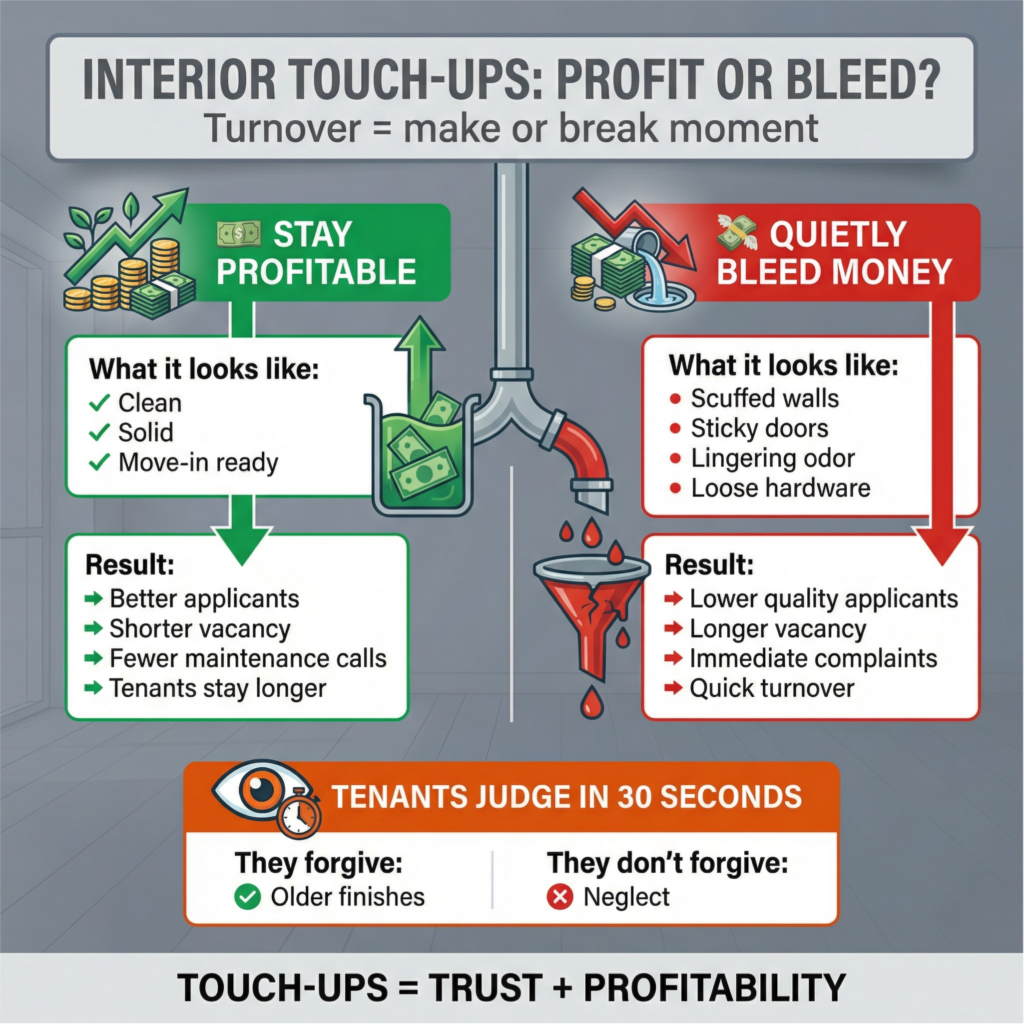
Turnover is where single-family rentals either stay profitable or quietly bleed money. A house can be “basically fine” and still feel tired to a new tenant—scuffed walls, sticky doors, a lingering odor, loose hardware. Those little issues don’t just affect pride of ownership; they affect rentability, applicant quality, and how soon the first maintenance request hits your inbox.
This checklist is focused on fast, high-impact interior touch-ups you can complete between tenants (or schedule efficiently) to make the home feel clean, solid, and move-in ready—without over-renovating.
1) Start with a “tenant-eye” walkthrough (not a contractor-eye one)
Before you touch anything, walk the house slowly like you’re seeing it for the first time. Use a notes app and list what stands out in the first 30 seconds of each room.
Pay attention to:
- Smell (musty, pet, stale air)
- First impressions (entry, living room, kitchen)
- Anything that looks broken rather than “used”
- Anything that feels sticky, loose, or noisy (doors, cabinets, fans)
Your goal is to remove distractions. New tenants will forgive older finishes faster than they’ll forgive things that seem neglected.
2) Odor control: fix the source, not the symptom
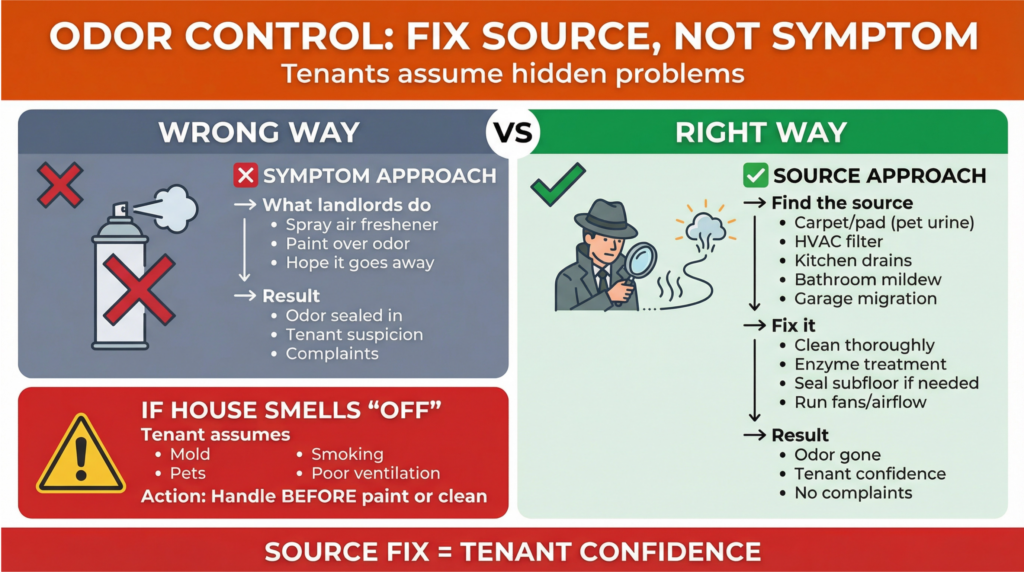
If a house smells “off,” tenants assume hidden problems—mold, pets, smoking, poor ventilation. Handle odor before you paint or clean, or you’ll just seal in the issue.
Common sources to address:
- Carpet and pad (pet urine often lives below the surface)
- HVAC return and filters (replace filter immediately)
- Garbage disposal and kitchen drains
- Bathroom mildew behind caulk or around exhaust fans
- Garage odors migrating into the house
Best practice:
- Clean thoroughly first
- Use enzyme treatment where needed (especially pet areas)
- Consider sealing subfloor if urine is confirmed and carpet is being replaced
- Run fans/airflow for a day if possible
Avoid relying on air fresheners. They raise suspicion instead of confidence.
3) Paint and wall repairs: make it look cared for
You don’t always need a full repaint. Most turnovers benefit from targeted work:
- Patch holes and dings (especially from TV mounts and anchors)
- Touch up high-traffic scuffs near switches, hallways, and doorways
- Re-caulk trim gaps that look dirty or cracked
- Clean fingerprints around door frames
Pro tip: If you repaint, repaint strategically. Fresh paint in the entry, main living area, and primary bedroom often delivers most of the “new” feeling without doing the entire house.
Also: check doorstops. Many wall dents exist because a $2 doorstop is missing.
4) Floors: clean, secure, and safe
Floors affect the entire feel of a house. Focus on three things:
- Cleanliness
- Stability
- Trip hazards
Checklist:
- Tighten or replace loose transition strips
- Re-secure lifting vinyl edges
- Repair squeaky or loose stair treads
- Deep clean grout lines if tile looks dingy
- Steam clean carpets only if odors/stains are minimal (otherwise, replacement is often smarter)
If you have hard floors, a proper clean and polish (not waxy residue) can dramatically improve appearance.
5) Kitchen: the highest expectation zone
Tenants judge the entire home by the kitchen. You don’t need luxury upgrades—just functionality and cleanliness.
Touch-up priorities:
- Degrease cabinet fronts and handles
- Clean the range hood filter
- Deep clean the oven and stovetop
- Confirm the dishwasher runs and drains properly
- Check faucet for leaks and good water pressure
- Tighten loose cabinet doors and replace missing bumpers
If drawers stick or cabinet doors sag, fix them. Those small annoyances create early maintenance calls.
6) Bathrooms: “clean” must look clean
Bathrooms don’t have to be new, but they must look sanitary.
Checklist:
- Replace cracked or missing caulk around tubs/showers
- Treat mildew and reseal where needed
- Confirm exhaust fans work and vent properly
- Fix running toilets and slow drains
- Replace worn toilet seats (cheap, high impact)
- Check towel bars and toilet paper holders for sturdiness
A new tenant will notice old caulk and assume the home isn’t maintained—even if everything else is fine.
7) Doors, windows, lights, and hardware: the “solid” feeling
A house feels better when things operate smoothly.
Do a quick pass:
- Lubricate sticky locks and hinges
- Confirm all windows lock
- Replace burned-out bulbs (use consistent color temperature if possible)
- Check ceiling fans for wobble and noise
- Replace broken blinds and torn screens
If you provide garage remotes or smart locks, test them before move-in—day one lock issues create immediate stress.
The spring takeaway
Interior touch-ups are about trust. When a tenant moves into a house that feels clean, solid, and cared for, they’re more likely to treat it that way—and less likely to nitpick, complain, or churn quickly.
Focus on odors, walls, floors, kitchens, bathrooms, and “solid operation” details. Done well, these improvements don’t just make the home prettier—they reduce maintenance calls, shorten vacancy, and help you attract tenants who plan to stay.


