

This Content Is Only For Subscribers
For single-family rentals, the exterior does more than “look nice.” It protects the structure, prevents water problems, and helps you keep good tenants. Spring is the moment when growth resumes, insects wake up, and small exterior issues start turning into big, expensive ones.
This checklist focuses on two high-impact areas you can control: landscaping (for function and curb appeal) and pest prevention (mostly about closing entry points). Run it once each spring, document what you did, and you’ll reduce emergencies all summer.
Landscaping: functional curb appeal that prevents damage
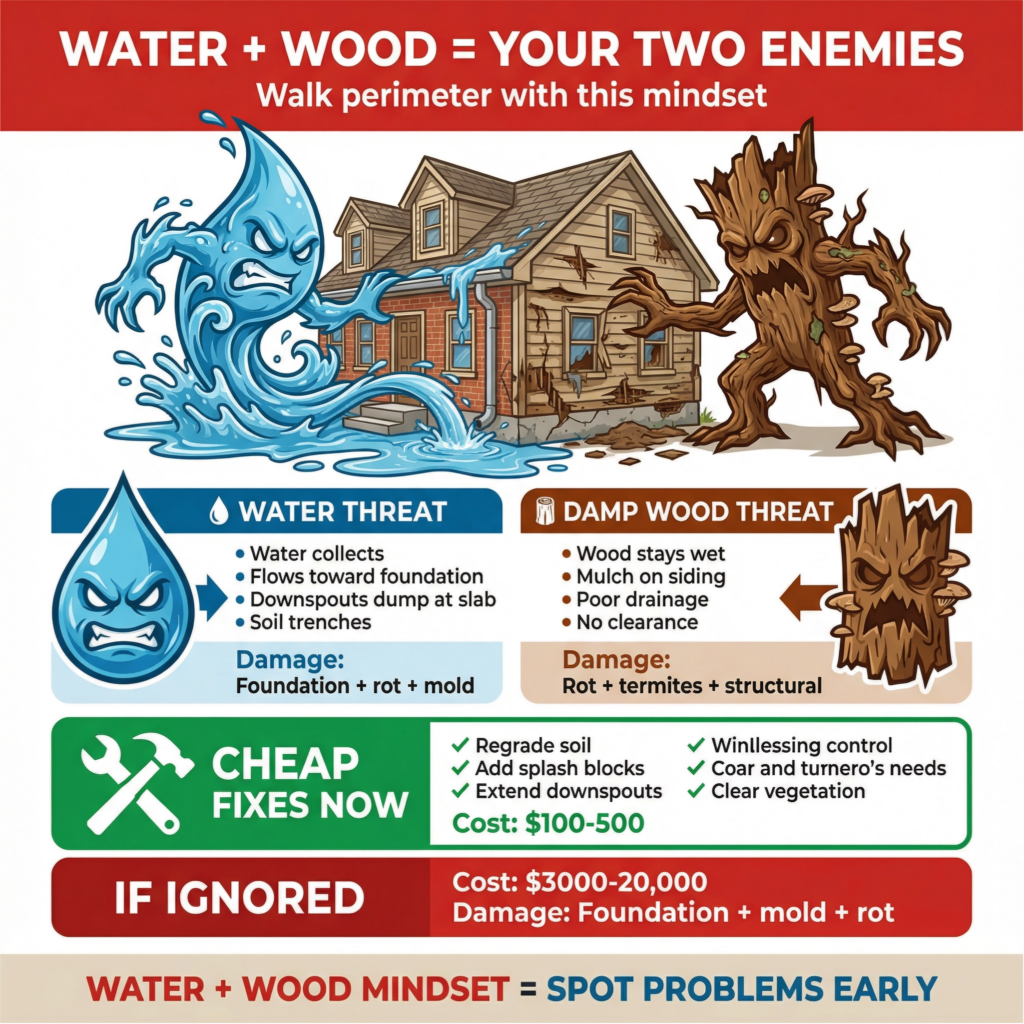
1) Walk the perimeter with a “water and wood” mindset
As you circle the house, look for two things:
- Where water collects or flows
- Where wood stays damp
Problems to flag:
- Soil graded toward the foundation
- Mulch piled against siding or trim
- Downspouts dumping right at the slab
- Bare soil channels where water cuts trenches
Quick fixes—regrading with soil, adding splash blocks, extending downspouts—are often far cheaper than foundation movement, rot, or mold later.
2) Trim back vegetation from the house (pest highways)
Branches and shrubs touching the home create easy access for ants, rodents, and roaches. They also trap moisture against siding.
Target clearances:
- Shrubs: ideally 12–18 inches from exterior walls
- Tree limbs: keep off the roof and away from gutters
- Vines: remove or control aggressively (they hide damage and invite pests)
If you have a large tree overhanging the roof, spring is a good time to schedule trimming before storm season.
3) Reset the lawn plan: mow lines, weeds, and bare spots
Even if the tenant mows, spring is when yards go from “fine” to “out of control” quickly.
Check:
- Is grass thin or bare in high-traffic areas?
- Are weeds taking over beds and fence lines?
- Is the yard holding water after rain?
If the tenant is responsible for yard care, send a spring reminder that sets simple expectations (mowing frequency, weed control basics, pet waste removal). If you provide landscaping, get ahead of it now—overgrown yards lead to complaints and vacancy risk.
4) Refresh mulch—but don’t create rot or termites
Mulch is great for weed control and appearance, but it can cause issues if applied incorrectly.
Rules that save money:
- Keep mulch several inches away from siding and trim
- Don’t bury the base of wood fence posts
- Avoid piling mulch against weep holes on brick homes
- Use a moderate layer—not a mountain
Mulch against the structure holds moisture and becomes a hiding place for insects.
5) Sprinkler and hose bib checks (water waste + damage prevention)
If the property has irrigation:
- Turn it on and check for broken heads
- Look for overspray hitting siding or windows
- Confirm the timer is set for the season (not winter settings)
- Watch for soggy zones (could indicate leaks)
Even without irrigation, test exterior hose bibs for drips and make sure the area around them is sealed. Small leaks near the foundation add up.
Pest control: prevention is mostly “close the gaps”
Spring pest control isn’t just spraying. It’s reducing what attracts pests and blocking how they get in.
1) Seal entry points you can see in one walk
Bring a flashlight and look for gaps at:
- Pipe penetrations (AC line set, hose bibs, gas lines)
- Dryer vents and bath fan exhausts
- Gaps under exterior doors
- Torn window screens
- Cracks at corners of siding/trim
Easy upgrades:
- Door sweeps and weather stripping
- Mesh covers for vents (installed properly so airflow isn’t restricted)
- Caulk/sealant at small gaps (use appropriate exterior-grade products)
If you can see daylight, pests can get in.
2) Clean up the “pest buffet”
Pests thrive where there’s shelter and food.
Spring cleanup list:
- Remove leaf piles and debris near the foundation
- Clear clutter in the garage (rodents love storage piles)
- Keep trash bins closed and away from doors
- Address pet waste areas promptly
- Rake out thick thatch and dead growth
If tenants keep bird seed or pet food outside, that’s an open invitation for rodents. Consider lease language that limits outdoor food storage.
3) Watch for early warning signs
You don’t need to be an exterminator to spot trouble.
Look for:
- Ant trails near windows, baseboards, sinks
- Small droppings in garage corners or attic access points
- Mud tubes on foundation (termite risk)
- Chewed materials or nesting in sheds/attic
If you see termite indicators or recurring rodent evidence, don’t DIY your way into a bigger problem—call a professional.
4) Decide: preventive service plan or “as needed”?
For many single-family rentals, a quarterly pest plan is worth it, especially if:
- The home backs to greenbelt/fields
- There are mature trees and heavy landscaping
- The property has a history of ants, roaches, or rodents
- You want consistent documentation and fewer tenant complaints
If you go “as needed,” at least do a spring exterior barrier treatment and document it. Tenants often blame landlords for pests even when housekeeping contributes—records help keep the conversation factual.
The spring takeaway
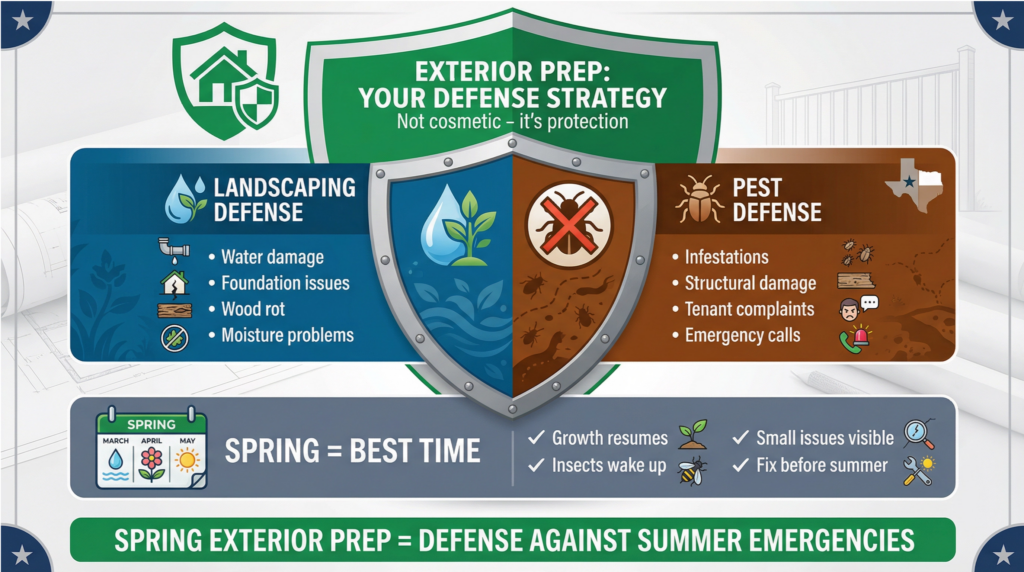
Exterior prep is not cosmetic fluff. It’s a defense strategy:
- Landscaping controls water, moisture, and curb appeal
- Pest prevention is mostly exclusion and cleanup
- Spring is your chance to do both before storms and heat amplify problems
Run this checklist, take a few photos, and handle the small fixes now. It’s the easiest way to avoid the midsummer call that starts with, “So… there are ants everywhere,” and ends with a bill you didn’t plan for.


