

This Content Is Only For Subscribers
Move-out is where most lease relationships either end smoothly—or go sideways. A tenant gives a casual “we’re leaving soon” text, you assume you have time, and then suddenly the house is empty, the keys are on the counter, and you’re scrambling to figure out notice dates, forwarding addresses, and whether you can charge for anything.
Texas doesn’t require a complicated move-out procedure, but the details matter. The best way to protect your time and your security deposit process is to treat move-out notice like a checklist, not a conversation.
Here’s what small landlords of single-family homes in Texas should know and what to do in practice.
1) Start with the lease: notice is often a lease issue first
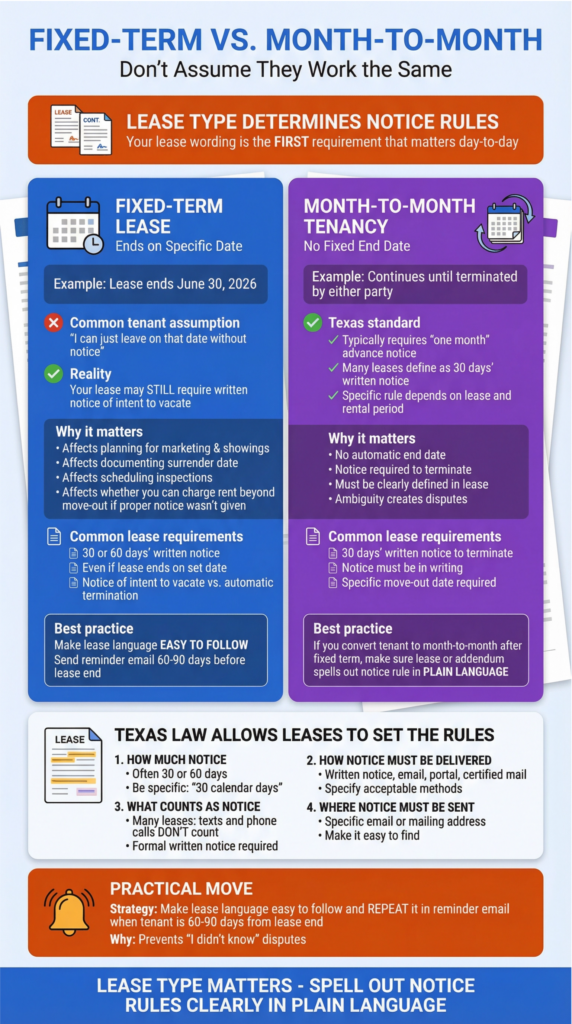
Texas law allows leases to set the rules for notice in many situations. That means your lease wording is the first “requirement” that will matter day-to-day.
Common lease notice requirements include:
- How much notice a tenant must give (often 30 or 60 days)
- How notice must be delivered (written notice, email, portal, certified mail, etc.)
- What counts as notice (many leases say texts and phone calls don’t count)
- Where notice must be sent (specific email or mailing address)
Practical move: make your lease language easy to follow and repeat it in a reminder email when the tenant is 60–90 days from lease end.
2) Fixed-term leases vs. month-to-month: don’t assume they work the same
Fixed-term (ending on a specific date)
If a lease ends on a set date (for example, June 30), some tenants assume they can simply leave on that date without notice. In practice, your lease may still require a written notice of intent to vacate.
Why it matters:
- It affects your planning for marketing and showings.
- It affects how you document the surrender date and schedule inspections.
- It affects whether you can charge rent beyond the move-out if proper notice wasn’t given (depending on lease terms).
Month-to-month
Month-to-month tenancies typically require advance notice to terminate. In Texas, the common standard is “one month” notice, but the specific rule can depend on the lease and the rental period. Many leases define it clearly as 30 days’ written notice.
If you ever convert a tenant to month-to-month after a fixed term, make sure your lease or addendum spells out the notice rule in plain language.
3) Put notice in writing—every time
The fastest path to confusion is a casual message like:
- “We’re probably moving in a few weeks”
- “I think we’ll be out by the end of next month”
- “We bought a house!”
That’s helpful information, but it’s not the same as a formal notice to vacate.
Your goal: get a clear written notice that states a specific move-out date.
A simple written notice should include:
- The property address
- The tenant’s intended move-out date
- A forwarding address (or a statement that it will be provided)
- A signature (even electronic) or at least a clear identifying reply from the tenant
If the tenant gives you a verbal heads-up, respond with something like:
- “Thanks for the update—please send your official written notice to vacate with your move-out date so we can confirm scheduling and next steps.”
This keeps things polite and precise.
4) Confirm the “surrender” process (keys, garage remotes, possession)
In Texas, your deposit accounting timeline is tied to when the tenant surrenders the property and provides a forwarding address. In real life, surrender can get messy:
- Keys returned late
- Garage remotes missing
- Tenant’s belongings still in the garage
- Utilities shut off before move-out
Avoid ambiguity by defining surrender in your move-out instructions:
- All occupants and belongings removed
- All keys/remotes returned (with count)
- Property locked and secured
- Move-out date and time confirmed (drop box or in-person)
Then document it:
- Photo of keys/remotes received
- Date/time you regained possession
- Quick “entry condition” photos the same day
This isn’t about being rigid—it’s about having a clean timeline if questions arise later.
5) Always ask for the forwarding address early
Many landlords wait until after move-out to request a forwarding address. By then, the tenant is busy, traveling, or emotionally checked out. That’s how deposits get delayed and disputes start.
Best practice:
- Request the forwarding address as soon as you receive notice, and again one week before move-out.
- Put it in your move-out checklist: “Deposit/accounting will be sent to the forwarding address provided in writing.”
If the tenant won’t provide one, keep a record that you requested it.
6) Provide a move-out checklist and cleaning standards
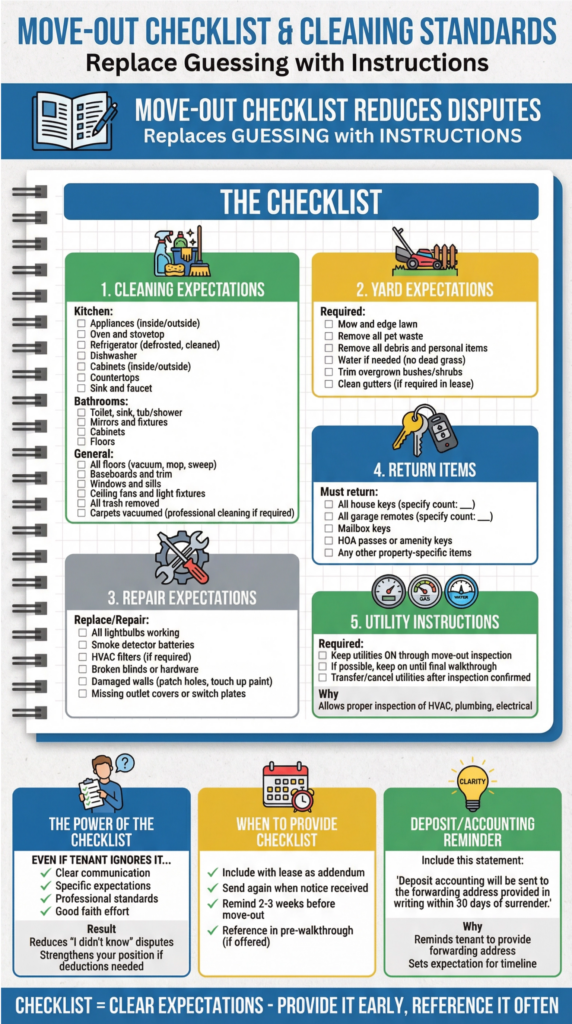
A move-out checklist reduces disputes because it replaces guessing with instructions.
Your checklist should include:
- Cleaning expectations (appliances, bathrooms, floors, trash)
- Yard expectations (mow/edge, remove pet waste, no debris)
- Repair expectations (lightbulbs, batteries, filters if required)
- Return items (keys, remotes, mailbox keys, HOA passes)
- Utility instructions (keep on through move-out inspection, if possible)
Even if the tenant ignores it, you’ve shown you communicated clearly.
7) Handling early move-outs and “notice” gaps
If a tenant gives short notice or leaves early:
- Don’t improvise agreements by text that contradict the lease.
- Put any arrangement (prorated rent, re-leasing terms, fees) in writing.
- Be careful about taking possession too early if the tenant is still paying rent—confusion here can create legal risk.
A clean way to handle early termination is a written agreement that states:
- The agreed move-out/surrender date
- Rent responsibility through a specific date
- Any re-letting terms (if applicable)
- Condition and inspection expectations
The bottom line
Move-out notice problems aren’t usually “legal” problems—they’re process problems. In Texas, you protect yourself by keeping move-out structured:
- Require written notice with a specific date
- Confirm surrender details (keys, remotes, vacancy)
- Get the forwarding address early
- Provide a checklist so expectations are clear
Do those things consistently, and you’ll spend far less time debating timelines—and far more time turning the house efficiently for the next tenant.


