

This Content Is Only For Subscribers
Seasonal repairs aren’t a surprise—you just experience them that way if you don’t budget for them. The same patterns hit most single-family rentals every year: spring HVAC service, summer irrigation issues, fall gutter problems, winter weather wear, plus the occasional “this finally gave out” replacement.
For small landlords, the goal of a seasonal budget isn’t to predict every repair. It’s to keep your cash flow steady so a water heater failure doesn’t wipe out three months of profit—or force you to cut corners that create bigger costs later.
Here’s a simple, landlord-friendly way to budget for seasonal repairs and upgrades.
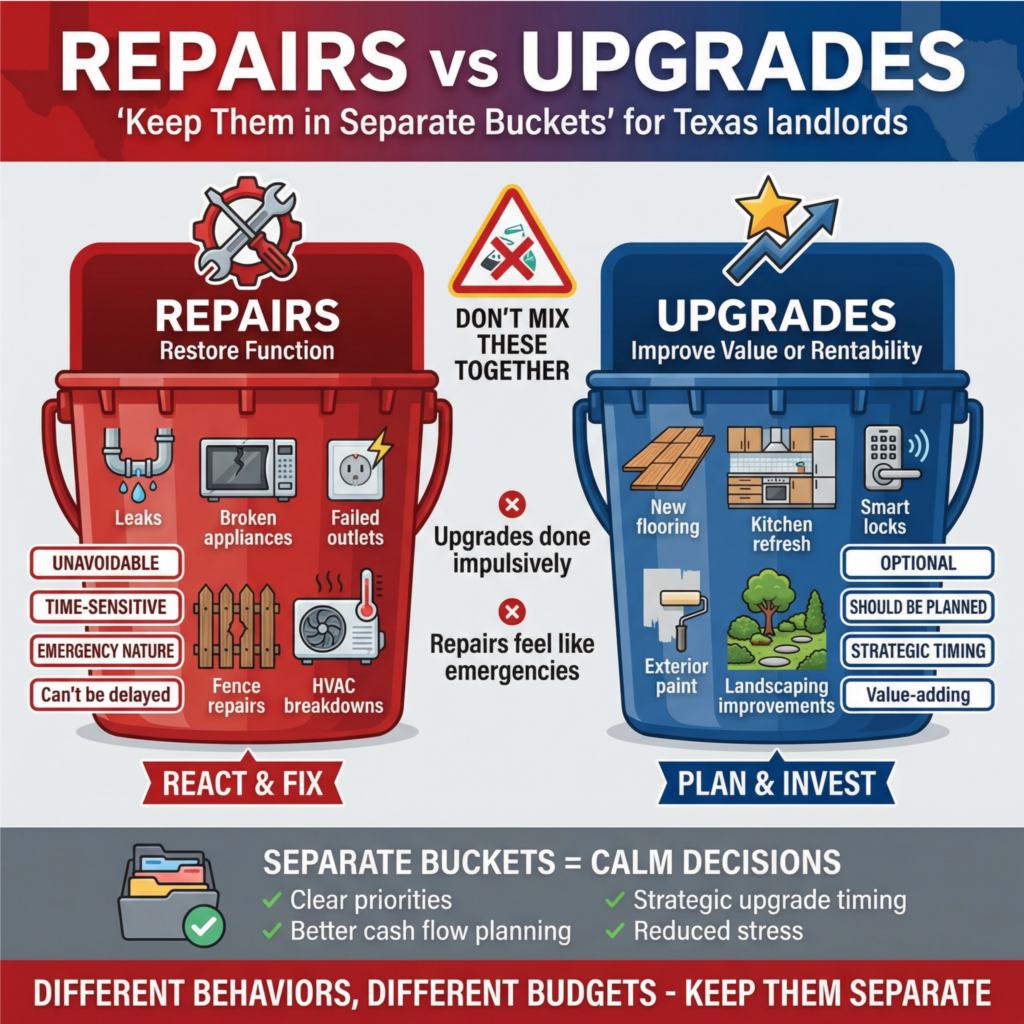
Step 1: Separate “repairs” from “upgrades” (they behave differently)
Repairs restore function: leaks, broken appliances, failed outlets, fence repairs, HVAC breakdowns. They’re unavoidable and time-sensitive.
Upgrades improve value or rentability: new flooring, kitchen refresh, smart locks, exterior paint, landscaping improvements. They’re optional and should be planned.
If you mix these together, upgrades get done impulsively and repairs feel like emergencies. Keep them in separate buckets so you can make calm decisions.
Step 2: Build three budget layers
1) Recurring seasonal maintenance (predictable)
These are the “every year” items:
- HVAC tune-up / filter plan
- Pest prevention
- Gutter cleaning
- Yard and tree trimming
- Dryer vent cleaning
- Sprinkler start-up/winterization (if applicable)
Budget these like subscriptions. Even if costs vary, you know they’re coming.
2) Wear-and-tear repairs (semi-predictable)
These show up in cycles:
- Garbage disposal replacements
- Faucet cartridges, toilet fill valves
- Garage door tune-ups/sensors
- Minor plumbing leaks
- Blinds, screens, door hardware
You won’t know which month, but you know they’ll happen.
3) Capital replacements (big-ticket and inevitable)
These are the “not if, when” items:
- Roof
- HVAC system replacement
- Water heater
- Major appliances
- Exterior paint/rot repair
- Flooring refresh
You don’t budget these as surprises—you budget them as future certainty.
Step 3: Use a simple reserve rule you’ll actually follow
Landlords love complicated formulas. You don’t need one.
Pick a reserve approach that matches your comfort level and property age:
- Newer home / newer systems: set aside a smaller percentage of rent monthly
- Older home / older systems: set aside more because failures are more likely
What matters is consistency. A reserve that’s funded monthly keeps you from deciding repairs based on your checking account balance.
If you want a practical method:
- Create a dedicated “Property Reserve” account per property (or one combined reserve)
- Auto-transfer a set amount every month
- Treat it like a non-negotiable expense
Step 4: Budget seasonally, not just annually
An annual budget is helpful, but seasonal planning prevents cash crunches.
A simple seasonal approach:
Spring (inspection + prevent)
- HVAC service, filters, condensate line
- Gutters/downspouts check
- Roof scan after winter
- Pest prevention
- Irrigation check
Summer (stress season)
- Higher HVAC wear, potential repairs
- Irrigation leaks, yard complaints
- Storm damage risk
Fall (prep + protect)
- Gutters again (especially heavy trees)
- Tree trimming before storms/winter
- Weather stripping, exterior caulk touch-ups
- Heating system check (where relevant)
Winter (damage control + planning)
- Freeze protection (where applicable)
- Interior leak vigilance
- Plan upgrades for spring turnover window
You’re not just budgeting dollars—you’re budgeting timing.
Step 5: Plan upgrades around turnover—or around tenant retention
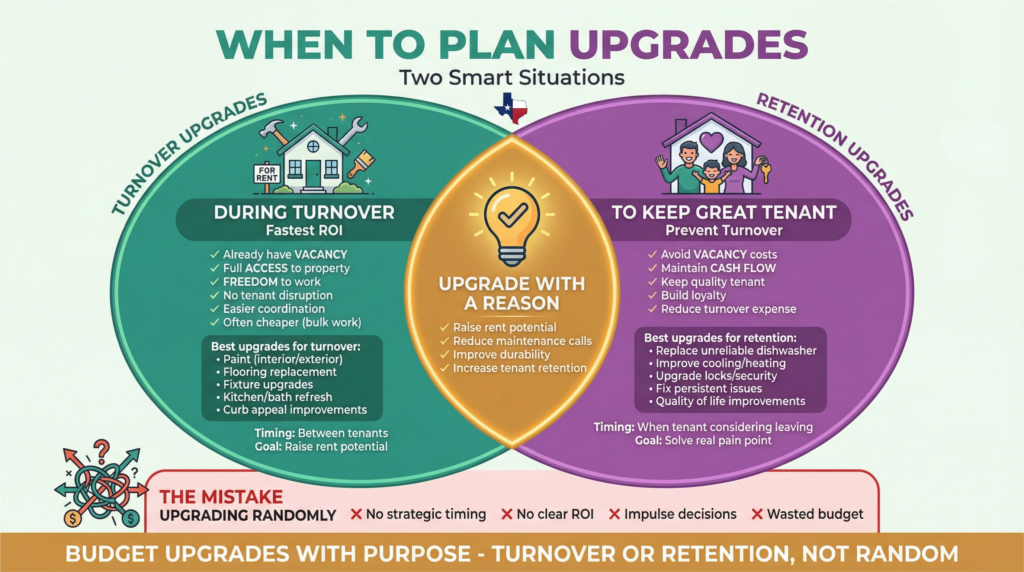
Upgrades make the most sense in two situations:
- During turnover (fastest ROI)
You already have vacancy, access, and freedom to work. Paint, flooring, and fixture upgrades are easier and often cheaper. - To keep a great tenant
A small upgrade can prevent turnover when a tenant is considering leaving. This only works if it solves a real pain point (e.g., replacing an unreliable dishwasher, improving cooling, upgrading locks).
The mistake is upgrading randomly. Budget upgrades with a reason:
- Raise rent potential
- Reduce maintenance calls
- Improve durability
- Increase tenant retention
Step 6: Use a maintenance log to make your budget smarter each year
Your best budgeting tool isn’t a spreadsheet—it’s your own history.
Track:
- What broke
- What it cost
- How often it repeats
- Which vendors were reliable
After a year, patterns emerge. After two years, you can forecast with confidence.
A simple log also helps you decide when to replace instead of repair (the “third repair is the replacement” rule).
The bottom line
Seasonal budgeting is how you stay in control as an investor.
Separate repairs from upgrades, fund a reserve monthly, and plan by season so cash flow doesn’t get ambushed by predictable cycles. When you treat maintenance as a system instead of a surprise, you protect profit, reduce stress, and make better long-term decisions about when—and where—to invest in the property.


