

This Content Is Only For Subscribers
Spring is when rent increases feel easiest. Demand is usually stronger, more tenants are moving, and the market is noisier—in a good way. But “spring” isn’t a blank check. The smartest landlords raise rent when the market supports it and when the tenant relationship can absorb it without triggering an unnecessary turnover.
For small landlords renting single-family homes, the best rent increases are the ones that stick—because you keep a good tenant, protect cash flow, and avoid a vacancy that erases the gain. Here’s how to read spring market trends and decide when an increase is truly worth it.
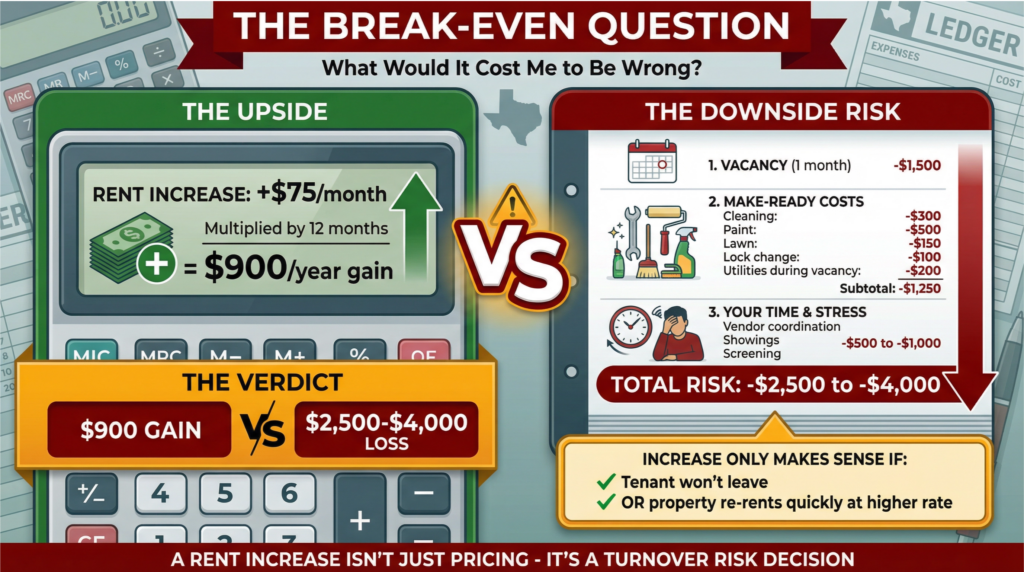
Start with the right question: “What would it cost me to be wrong?”
A rent increase isn’t just a pricing decision. It’s a turnover risk decision.
Before you raise rent, estimate your “break-even” vacancy point:
- One month vacant often wipes out several months of a modest increase.
- Add make-ready costs (cleaning, paint, lawn, lock change, utilities).
- Add your time and the stress cost of coordinating vendors.
If your planned increase is $75/month, that’s $900/year. If a turnover costs you $2,500–$4,000 in vacancy and make-ready, then the increase only makes sense if it doesn’t push the tenant out—or if you’re confident the property will re-rent quickly at the higher rate.
Spring trend #1: More demand doesn’t always mean more pricing power
In spring, more people shop for rentals, but that doesn’t automatically mean your house can command more rent. Pricing power depends on competition.
You have leverage when:
- Comparable houses are scarce
- Well-priced listings go pending quickly
- Tenants are accepting fewer concessions (credits, reduced deposits, freebies)
You have less leverage when:
- There are many similar houses available
- Listings sit longer even in spring
- You see more “move-in specials” and credits in your area
Trend-reading is about what’s happening to comparable inventory, not headlines.
Spring trend #2: The “first 10 days” rule for listings tells you the market temperature
A simple way to read spring conditions is to watch new listings like an investor:
- Do similar homes get a lot of saves, inquiries, and showings quickly?
- Do they disappear fast, or do they keep popping up week after week?
- Are landlords lowering prices after two weeks?
Fast absorption suggests you have room to increase. Slow absorption suggests caution—even if it’s April.
If you’re already advertising a vacancy, the market will give you real-time feedback. If you’re deciding a renewal increase, you have to infer from comps.
Spring trend #3: Renewal season timing matters as much as the market
A spring rent increase is easiest when it aligns with a renewal window that gives you options.
If your tenant’s lease ends in late spring or early summer:
- You have better re-leasing conditions if they leave.
- The tenant knows it’s a popular moving season, so they expect some pricing movement.
If your tenant’s lease ends in late fall or winter:
- A big increase can backfire because turnover is riskier for you.
- Even if spring comps look strong, your best move might be a smaller increase to keep stability through the slow season.
The market can support a higher rent and still make it a bad strategy for your calendar.
Spring trend #4: Single-family renters pay for “life fit,” not just square footage
House renters often choose based on:
- School zone timing
- Yard and pet compatibility
- Garage/storage needs
- Commute changes
- Family growth (new baby, blended household, home office)
These tenants may tolerate an increase if the home fits their life well and moving would be disruptive. That gives you leverage—but only if the home has been well maintained and the tenant trusts you.
If your response time is slow, the house has unresolved issues, or the tenant feels nickel-and-dimed, spring is not the time to test their patience with a steep increase.
So when should you increase rent in spring?
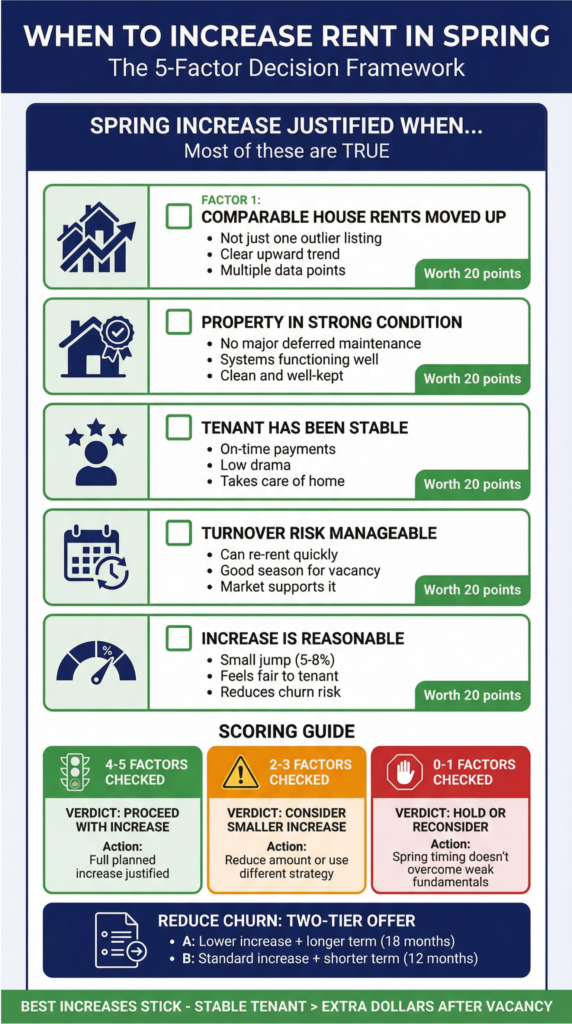
A spring increase is most justified when most of these are true:
- Comparable house rents have clearly moved up (not just one outlier listing).
- Your property is in strong condition (no major deferred maintenance).
- Tenant has been stable (on-time payments, low drama, takes care of the home).
- Your turnover risk is manageable (you can re-rent quickly in your season).
- Your increase is reasonable relative to the tenant’s current rent (small jumps feel fairer and reduce churn).
If you only have one or two of these, consider a smaller increase or a different strategy.
A practical way to communicate increases without triggering churn
- Give notice early (don’t surprise them).
- Explain it briefly: “Market rents have increased and costs have risen.”
- Offer a simple option: renew at $X or discuss move-out timing.
- Keep it calm and businesslike—no long justifications.
If you want to reduce churn, consider a two-tier approach:
- Slightly lower increase for a longer renewal term
- Standard increase for a shorter term
The spring takeaway
Spring trends can support rent increases, but the best landlords don’t raise rent just because it’s spring. They raise rent when the combination of market conditions, property condition, and tenant stability makes it a low-risk move.
Read the local competition, measure your turnover downside, and aim for increases that stick—because a stable, paying tenant is often worth more than the extra dollars you might win after a stressful vacancy.


