

This Content Is Only For Subscribers
The spring turnover season is a race against the clock, and your vendors—the cleaners, painters, and handymen—are the pit crew. As a small landlord, you are the project manager, and your ability to coordinate these essential services directly determines your vacancy rate. In the high-demand spring market, where every landlord is competing for the same limited pool of quality labor, a disorganized approach is a recipe for costly delays.
As highlighted in “How to Manage Increased Tenant Turnover in Spring,” the key to success is to treat your make-ready process like an assembly line with zero downtime. This requires a strategic approach to vendor management that begins long before the move-out date.
Phase I: Building Your A-Team in the Off-Season
The time to find a reliable contractor is not when a pipe bursts or a tenant moves out. It is in the quiet winter months when they are less busy and more willing to build a long-term relationship.
1. The Vetting Process
A good contractor is more than just a skilled tradesperson; they are a reliable business partner. Your vetting process should be rigorous: start with word-of-mouth referrals from trusted sources, always verify their license and insurance (a contractor without proper insurance is a massive liability risk), and get at least three bids for any significant job. Remember, the cheapest bid is often the most expensive in the long run; balance cost with a proven track record of reliability.
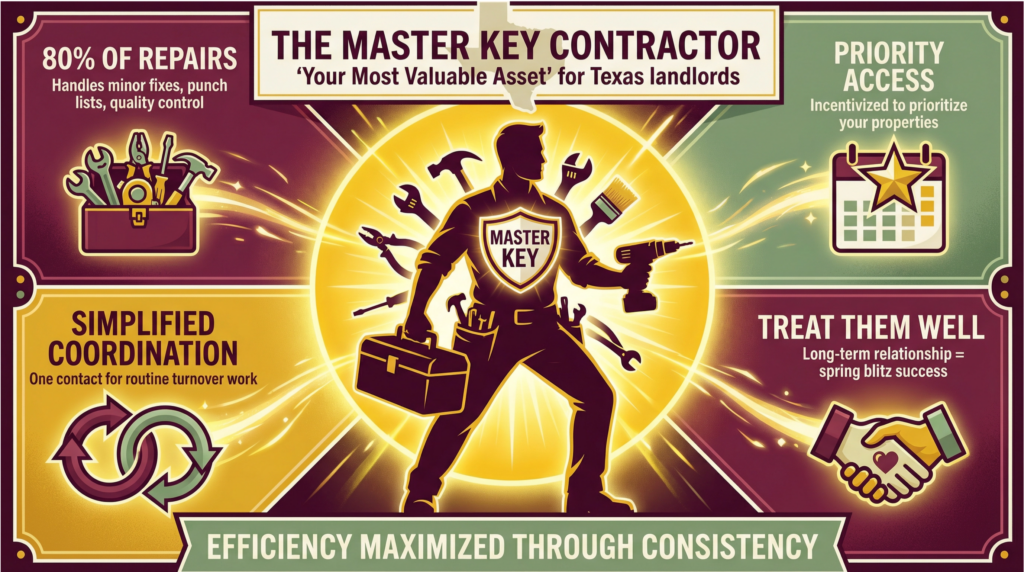
2. The Master Key Contractor Strategy
For the single-family landlord, efficiency is maximized by identifying one reliable, multi-skilled handyman to serve as your Master Key Contractor. This individual should be capable of handling 80% of your minor repairs, final punch list items, and quality control. By giving them the bulk of your routine turnover work, you incentivize them to prioritize your properties, dramatically simplifying coordination. Treat this person well—they are your most valuable asset during the spring blitz.
Phase II: Setting the Stage for Seamless Execution
Once you have your team, the next step is to formalize the relationship and set clear expectations that eliminate ambiguity during the rush.
1. Formalize the Relationship and Rate Sheet
Never rely on a handshake. Every job, no matter how small, should be governed by a written agreement that clearly outlines the scope of work, materials, and a firm payment schedule tied to completed milestones. To ensure cost certainty and speed up the approval process, negotiate fixed-rate pricing for common turnover tasks in advance. This “Turnover Rate Sheet” (covering items like standard paint jobs, deep cleaning, and re-keying locks) allows you to issue a work order instantly without waiting for a new quote, saving precious time during the make-ready process.
Phase III: The Assembly Line of Accountability
During the actual turnover, your role shifts to project manager, ensuring a seamless flow of work from one vendor to the next.
1. The Inspection as the Work Order
As detailed in “Coordinating Inspections During Peak Season,” the final move-out inspection report should immediately become the work order for your contractors. Share the documented findings—especially the photos of required repairs—with your vendors instantly. This eliminates the “float” time between the tenant moving out and the first contractor starting work.
2. Daily Communication, Monitoring, and Payment
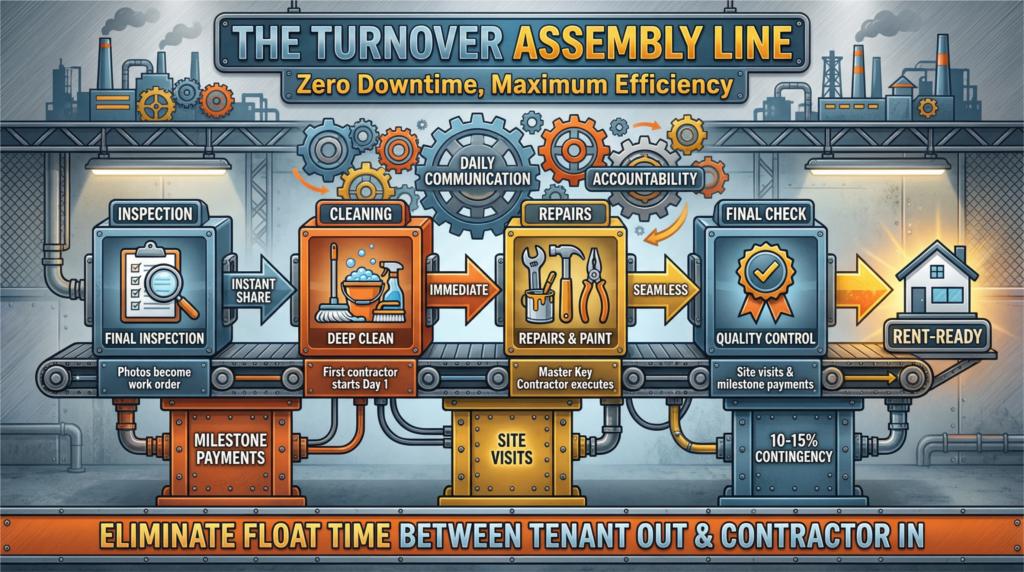
During the make-ready, communication must be daily, not weekly. A quick 10-minute check-in each morning confirms progress and holds the contractor accountable. Furthermore, monitor the work by making regular, unannounced site visits. This demonstrates your involvement and commitment to quality, which encourages contractors to maintain a high standard of work [2]. Never pay for the entire project upfront. Structure payments in installments tied to completed milestones. This protects your investment and incentivizes the contractor to finish the job promptly. Finally, always budget a 10-15% financial contingency for unexpected issues.
By treating your vendors as valued partners, setting clear expectations, and integrating their work into a rigid, assembly-line schedule, you can ensure that your single-family home turnover is executed with the speed and efficiency required to thrive during the peak spring season.


