

This Content Is Only For Subscribers
Once you’ve set income goals for the year, the best way to protect them is simple: keep good tenants longer. Turnover is expensive—lost rent, make-ready, marketing, and your own time. A tenant retention plan helps turn your rentals into a stable, predictable business instead of a revolving door.
Step 1: Know What Turnover Really Costs
Before you get strategic, put numbers to the problem.
For your last couple of move-outs, estimate:
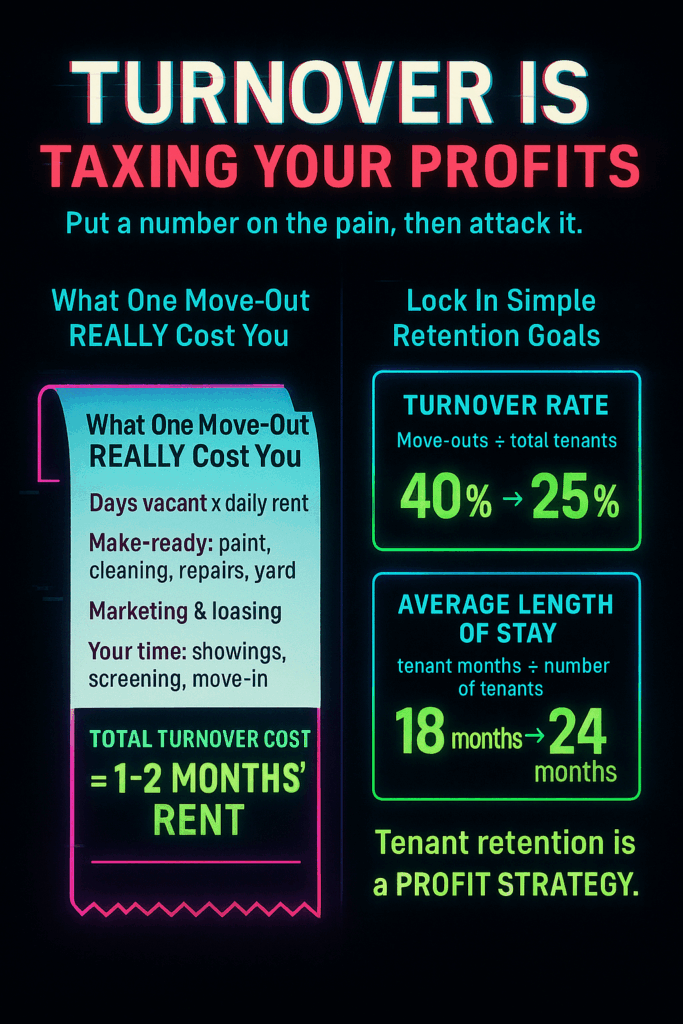
- Days vacant × daily rent
- Make-ready costs (paint, cleaning, repairs, yard)
- Marketing and leasing costs
- Your time for showings, screening, and move-in
It’s often the equivalent of one to two months’ rent per turnover. Once you see that number, “tenant retention” becomes a profit strategy, not just a nice idea.
Step 2: Set Simple Retention Goals
Measure what you want to improve:
- Turnover rate = move-outs ÷ total tenants
- Average length of stay = tenant months ÷ number of tenants
Example goals:
- “Reduce turnover from 40% to 25% this year.”
- “Increase average tenancy from 18 to 24 months.”
Now you’ve got something concrete to track.
Step 3: Start with the Right Tenants
You can’t retain people who were never a good fit.
Create written screening criteria and use them for everyone:
- Income standard (e.g., 3x rent)
- Credit/background basics
- Rental history
- Pet and occupancy rules
Be honest in your marketing. Clear expectations up front attract tenants who are more likely to stay.
Step 4: Make Move-In and Early Days Frictionless
The first 30–90 days set the tone.
Have a simple move-in system:
- Welcome packet (how to pay, how to request repairs, trash day, quirks of the property)
- Move-in checklist with photos
- Quick check-in a month after move-in:
“Just checking in—how’s everything going at the property?”
A smooth start buys a lot of patience later.
Step 5: Communicate Clearly and Fix Things Fast
Most good tenants leave because they feel ignored, not because of a rent bump.
- Pick a primary channel: portal, email, or text.
- Acknowledge non-emergency requests within a business day.
- Give a clear timeline for maintenance, then follow through.
In Texas, reliable communication around HVAC and weather-related problems is huge for tenant trust.
Step 6: Use Maintenance as a Retention Tool
Preventative work is cheaper than emergency work—and keeps tenants happier.
- Schedule HVAC service before peak heat.
- Do seasonal checks on roofs, exterior, and safety items.
- Build a small, reliable vendor list so you’re not scrambling.
Fast, predictable repairs make tenants think twice before moving.
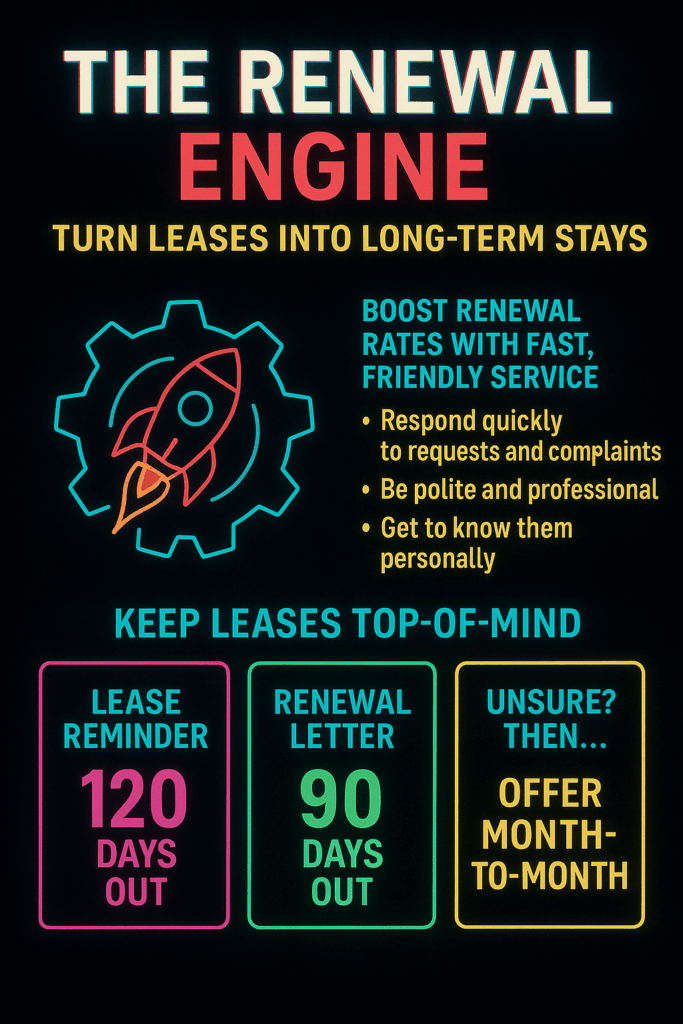
Step 7: Have a Renewal Playbook
Don’t wait until 30 days before lease-end.
- 60–90 days out: Review tenant history and market rents.
- 45–60 days out: Send a renewal offer (with any rent change) and highlight the benefits of staying—no moving costs, known home, responsive management.
You can sweeten early renewals with small, low-cost upgrades or slightly smaller increases.
Step 8: Write It Down and Adjust
Your retention plan can fit on one page:
- Goals
- Screening criteria
- Move-in steps
- Communication standards
- Maintenance basics
- Renewal timeline
Review once a year: what worked, what didn’t, and one or two tweaks. Over time, that simple retention plan will cut your vacancies, protect your income goals, and make landlording a lot less stressful.


