

This Content Is Only For Subscribers
If you’ve owned rental property for more than a minute, you already know repairs are part of the job. From a leaky faucet to a full roof replacement, every property eventually demands attention. But here’s the part many landlords overlook: how you document those repairs can mean the difference between a smooth tax season and leaving money on the table.
In our recent feature, Ask a Property Manager: How Property Managers Help with Tax Time, we covered how professional managers keep track of income, expenses, and deductions. Today, let’s take a closer look at one slice of that puzzle—repairs—and why careful record-keeping matters so much for Texas landlords.
Repairs vs. Improvements: Why It Matters
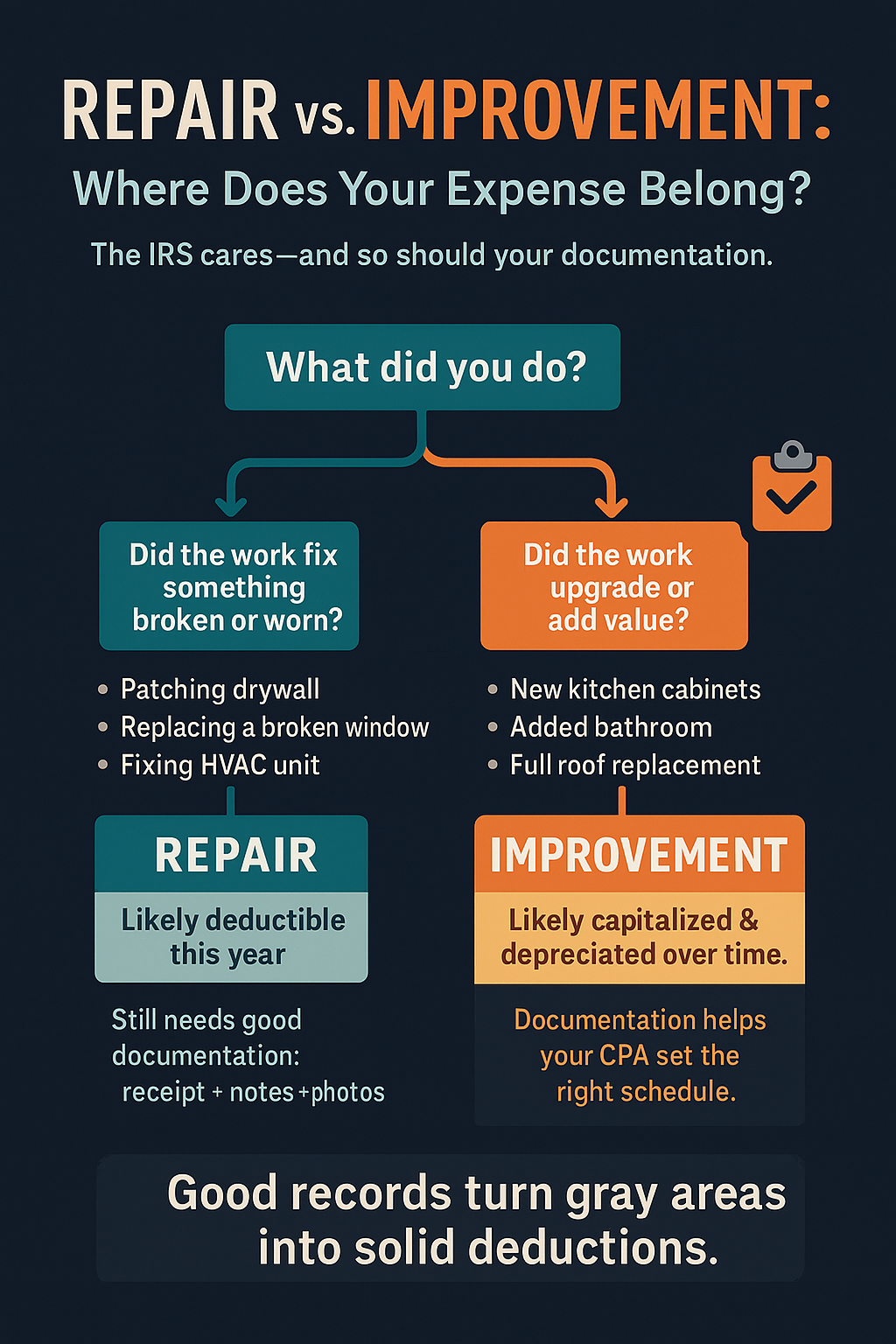
The IRS draws a firm line between a repair and an improvement, and your tax bill depends on which side your expense falls. A repair is something that keeps your property in good working order—like patching drywall, replacing a broken window, or fixing an HVAC unit. These costs are generally deductible in the year they happen.
Improvements, on the other hand, are upgrades that add value or extend the property’s life. Think new kitchen cabinets, adding a bathroom, or replacing an entire roof. Those costs typically need to be capitalized and depreciated over time.
For landlords, especially DIY ones, the mistake often comes down to documentation. Without clear records, the IRS may question whether that “repair” you wrote off was actually an improvement. That’s where detailed receipts and notes become your safety net.
The Golden Rule: Keep Everything
A property manager will tell you that the simplest way to protect yourself is to keep every scrap of documentation tied to a repair. That means:
- Receipts and invoices from contractors, hardware stores, or service providers.
- Before-and-after photos to show the scope of the repair.
- Written notes about the issue, what was fixed, and why it was necessary.
For example, if you replace a few shingles after a Texas thunderstorm, photos and receipts show that you repaired storm damage—not that you upgraded the entire roof.
Digital Tools Make It Easy
Gone are the days of crumpled receipts stuffed in a shoebox. Most property managers now use digital systems to track every repair. Apps like Stessa, QuickBooks, or even a simple shared folder can store receipts, categorize expenses, and create year-end reports.
Professional managers do this automatically for their clients. As one Austin-based property manager told me: “When tax time rolls around, we don’t scramble. Every repair—big or small—is logged with receipts, photos, and notes. Landlords get a clean report that their CPA loves.”
The Payoff at Tax Time
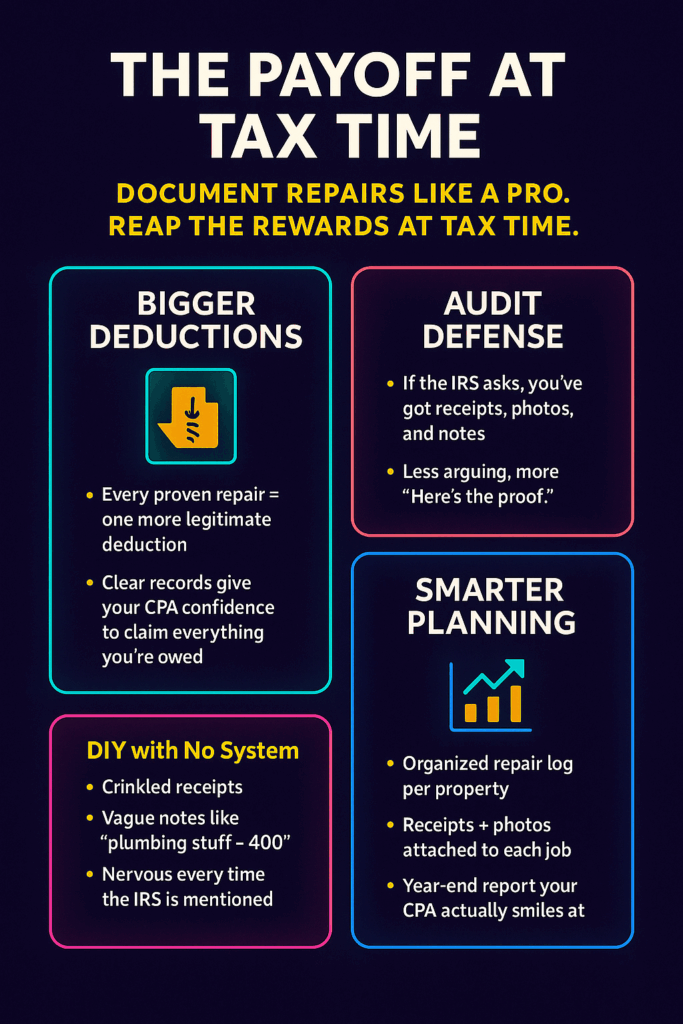
By documenting repairs thoroughly, you’re not just protecting yourself in case of an audit—you’re maximizing your deductions. Every repair you can clearly prove puts real dollars back in your pocket.
And here’s the bonus: organized repair records also help you spot trends in your properties. If the same HVAC unit keeps showing up in your files, maybe it’s time to budget for a replacement.
For Texas landlords, good record-keeping isn’t just about compliance—it’s about making every repair count. Whether you manage your rentals yourself or lean on a property manager, documenting repairs is one of the smartest tax strategies you can adopt.


