

This Content Is Only For Subscribers
For many Texas landlords, managing rental income and expenses boils down to two familiar options: spreadsheets or dedicated accounting software. Both can get the job done, but the real question is which approach saves you more time, reduces errors, and helps you stay ready for tax season.
In our earlier feature, Tech for Landlords: Accounting Software Every Landlord Should Try, we compared tools like QuickBooks, Buildium, and Stessa. Those programs were designed specifically with landlords in mind, but plenty of investors still swear by their trusty Excel or Google Sheets. Let’s weigh the pros and cons of each so you can decide which works best for your portfolio.
The Case for Spreadsheets
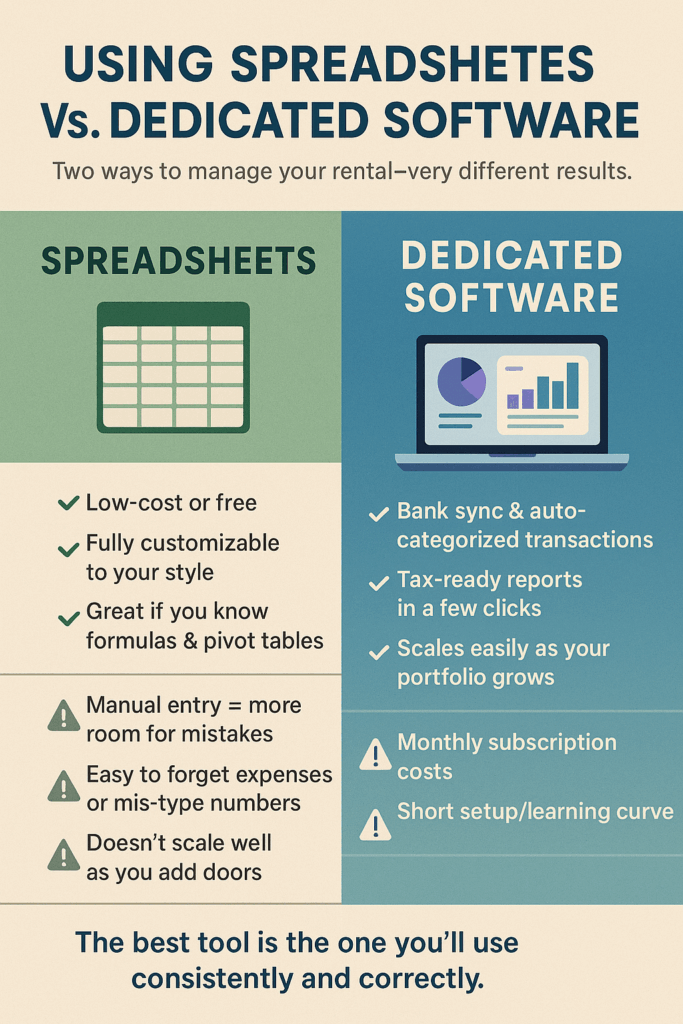
Spreadsheets remain a popular choice for do-it-yourself landlords, especially those with just one or two properties. Why? They’re free or nearly free, customizable, and flexible enough to handle everything from tracking rent payments to listing deductible expenses.
If you know your way around formulas and pivot tables, spreadsheets can be powerful. You can build templates tailored exactly to your properties, categorize expenses in line with IRS rules, and even generate basic profit-and-loss reports.
But there’s a downside. Spreadsheets rely heavily on manual entry, which opens the door to mistakes. Forget to log a repair, or misplace a decimal, and your year-end totals could be off—something that becomes a real headache during tax season. There’s also the issue of time. The more units you add, the harder it is to keep every column up to date.
The Case for Dedicated Software
Dedicated landlord accounting software—like the tools we covered in Accounting Software Every Landlord Should Try—takes much of the heavy lifting off your plate. These platforms can automatically sync with your bank accounts, categorize transactions, generate tax-ready reports, and even integrate with tenant screening and rent collection.
For landlords with growing portfolios, the automation alone is a game-changer. No more chasing down missing receipts or manually calculating mileage deductions—the software does it for you. Many programs also create professional reports you can share directly with your CPA, saving you both time and stress at tax time.
Of course, software isn’t free. Subscription fees typically range from $10 a month for basic plans to $100+ for more robust property management systems. Still, for landlords managing multiple doors, the time savings and accuracy often justify the investment.
Finding the Right Fit
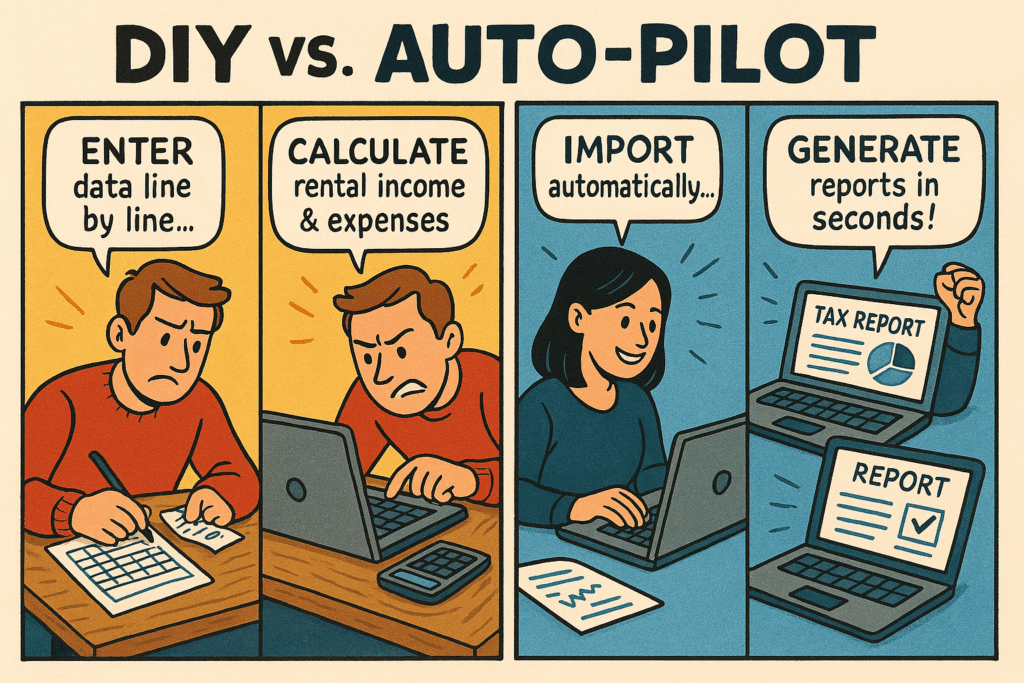
So which is best for Texas landlords? If you’re just starting out with a single rental home, spreadsheets may be more than enough. But as your portfolio grows—or if you want the peace of mind that comes with automation—dedicated software is the smarter long-term move.
At the end of the day, the right system is the one you’ll actually use consistently. Whether you stick with spreadsheets or embrace property management software, the goal is the same: track your income and expenses accurately so you can maximize deductions and keep more money in your pocket.


