

This Content Is Only For Subscribers
Timing is everything in real estate—or at least, that’s what most investors say. But in practice, deciding whether to buy now or hold off is more complicated than watching the clock. For Texas landlords, this decision is front and center as the year winds down. Rising interest rates, evolving rental demand, and shifting property values all factor into whether pulling the trigger on a new purchase is the right move—or if patience pays off.
In our recent feature, Investor Corner: Year-End Market Outlook: Hold or Buy?, we dug into broader rental trends and property values. Building on that conversation, let’s zoom in on the practical question every landlord faces: how do you know when it’s smart to buy, and when it’s better to wait?
The Case for Buying Now
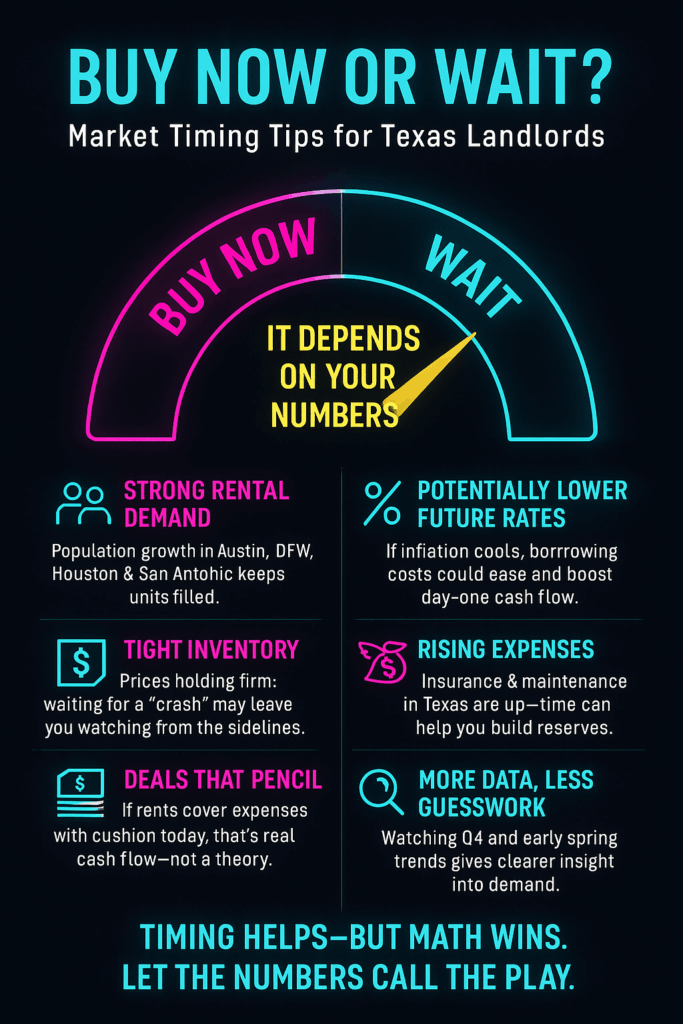
One of the strongest arguments for buying now is rental demand. Texas continues to see steady population growth, especially in metro areas like Austin, Dallas–Fort Worth, Houston, and San Antonio. More people equals more tenants, and that translates to lower vacancy risk for landlords.
Even with higher interest rates, property values in many markets are holding strong because inventory is tight. Waiting for prices to “crash” might leave you on the sidelines while others scoop up cash-flowing properties. If you find a deal where the numbers make sense—rents cover expenses with some cushion—it may be worth acting now rather than betting on a future dip.
Another incentive: locking in a property before the new year can sometimes offer tax advantages. Expenses tied to acquisitions, like mortgage interest and closing costs, may provide deductions sooner rather than later. For landlords focused on tax planning, that’s not a small consideration.
The Case for Waiting
On the other hand, patience has its perks. Interest rates remain elevated compared to just a few years ago. Some analysts predict that inflation cooling could open the door for lower borrowing costs in the coming year. Waiting could mean a more affordable mortgage and stronger cash flow from day one.
There’s also the question of property maintenance and insurance costs, which have risen significantly in Texas. By waiting, landlords might see more stability in those expenses—or at least have more time to build reserves before taking on a new property.
Additionally, the end of the year often brings clarity. Watching how markets perform during the holiday season, or how rental demand looks heading into spring, can give you valuable data. For landlords who aren’t in a rush, this breathing room can be a strategic advantage.
Practical Tips for Timing Your Move
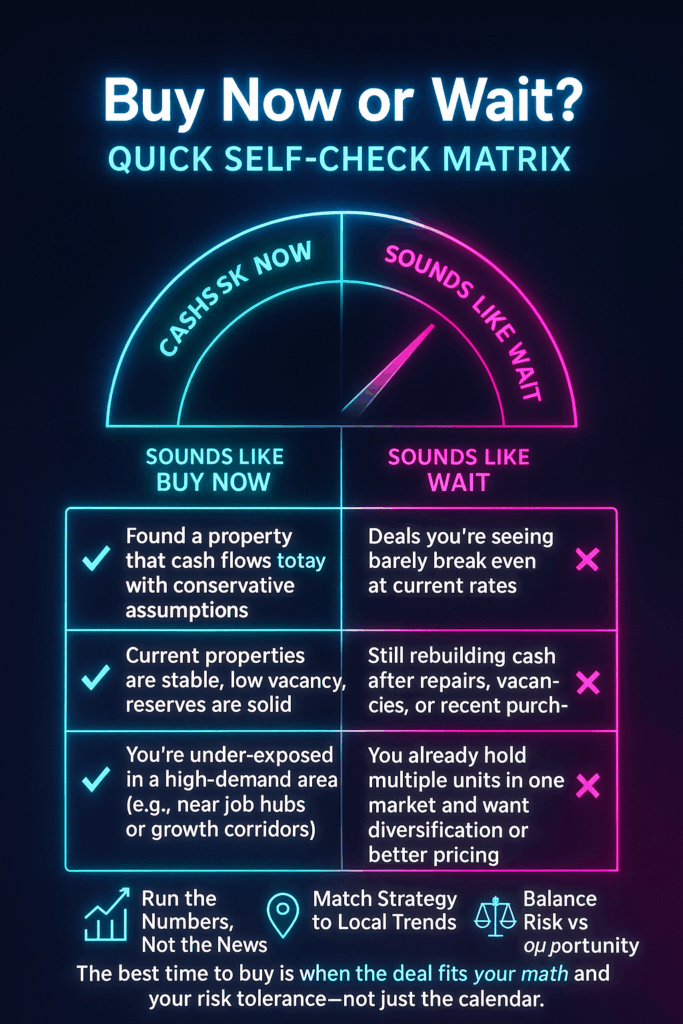
So, buy now or wait? The truth is, there’s no one-size-fits-all answer. But here are a few tips:
- Run the numbers, not the headlines. A property that cash flows today is worth more than a “perfect deal” that may or may not come tomorrow.
- Stay market-specific. Austin’s rental market might look different than San Antonio’s or Houston’s. Compare trends locally, not just statewide.
- Balance risk and opportunity. Consider your portfolio’s stability. If you already have solid cash flow, waiting for the right deal could make sense. If you’re short on units in a high-demand area, buying now may position you for growth.


