

This Content Is Only For Subscribers
If you’ve been a landlord for more than a season or two, you already know that timing is everything. The right rent price, the right lease dates, the right maintenance schedule—they all add up to smoother operations and fewer headaches. One thing I’ve learned from years in property management is that early year-end inspections can make a huge difference, especially for landlords here in Texas.
In our recent article Ask a Property Manager: How Property Managers Help with Tax Time, we discussed how professional management services simplify record-keeping so you’re not scrambling in April. Well, the same philosophy applies to inspections. Getting ahead of potential issues before the calendar flips not only protects your property but can also keep your books cleaner and your tenants happier.
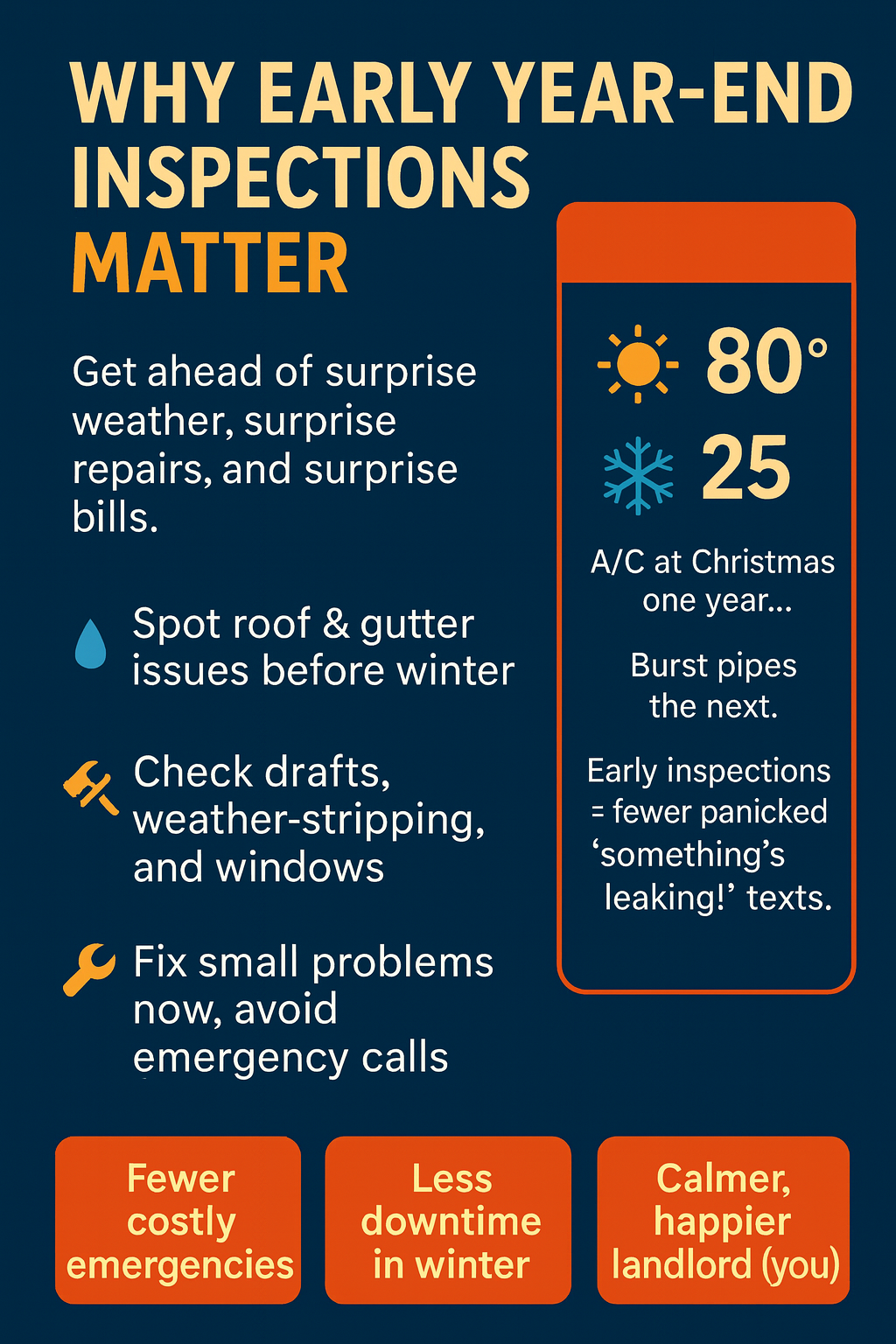
Why Early Year-End Inspections Matter
Texas weather can be unpredictable. One winter we’re running the A/C on Christmas morning, and the next we’re dealing with ice storms that send repair requests through the roof. By conducting inspections in late fall or early winter, you can identify small problems before they turn into major expenses.
Things like worn weatherstripping, clogged gutters, or a slow leak in the roof can quickly worsen if left unchecked. When you catch them early, you not only prevent costly repairs but also avoid those frantic calls from tenants when something goes wrong in the middle of a cold snap.
It’s Not Just About Maintenance
While the obvious goal is protecting your investment, year-end inspections also tie directly into financial planning. When you know about needed repairs before December closes, you can decide whether to take care of them this tax year—potentially giving you an additional deduction—or roll them into the new year’s budget.
This mirrors the way property managers help with tax time. Just like tracking income and expenses throughout the year makes filing easier, early inspections give you clarity on upcoming costs. It’s about eliminating surprises and making informed choices.
A Tenant-Friendly Approach
Another benefit? Tenants usually appreciate the proactive effort. A quick email letting them know you’ll be scheduling a year-end inspection sends the message that you’re invested in their comfort and safety. Plus, it gives them a chance to point out minor issues they may not have mentioned yet.
That kind of communication builds trust. Tenants who feel taken care of are more likely to renew, and renewals mean less downtime and fewer turnover expenses for you.
A Simple Checklist
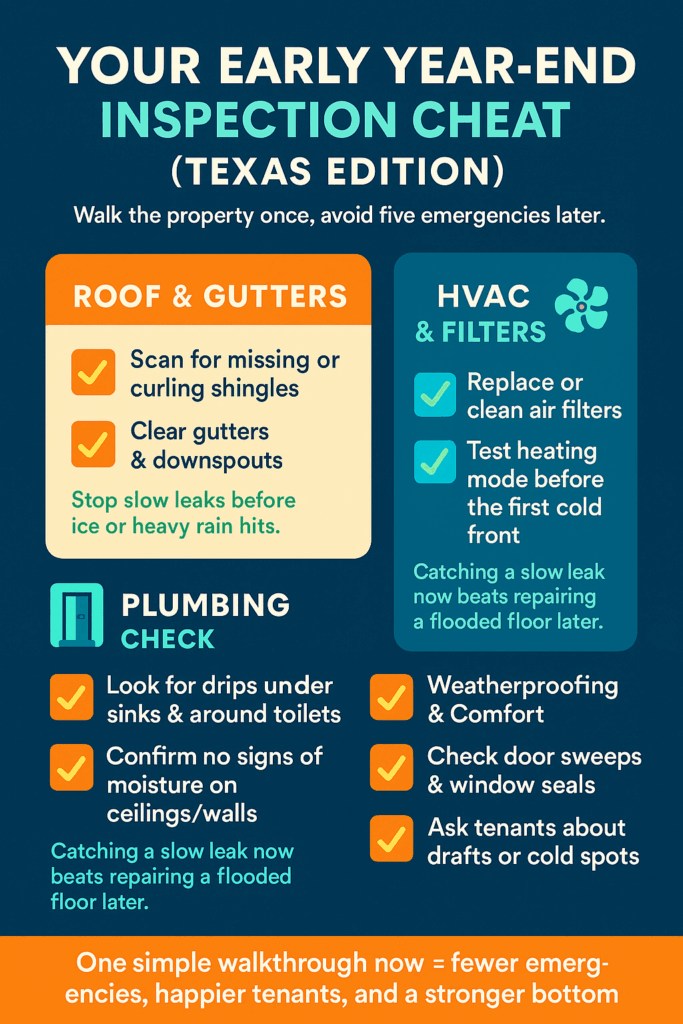
For Texas landlords, I recommend focusing on:
- Roof and gutters – Look for missing shingles or clogged downspouts.
- HVAC filters and systems – Clean or replace filters, and check heating function before temps drop.
- Plumbing – Inspect for leaks under sinks and around toilets.
- Weatherproofing – Ensure doors and windows are sealed.
The Bottom Line
Just as organized financial tracking saves time at tax season, early inspections save money and stress during the winter months. For Texas landlords, where weather can swing from 80 to freezing in a week, it’s all about staying one step ahead. A simple year-end walkthrough now can mean fewer emergencies, happier tenants, and a healthier bottom line come January.


