

This Content Is Only For Subscribers
If you own rentals in Texas in 2026, you’re not just competing on price and location anymore. You’re competing on experience — how easy it is to pay, request repairs, sign a lease, get in the door, and get answers without three phone calls and a voicemail.
The good news: you don’t have to be a Silicon Valley founder to use PropTech. You just need to know which tools are actually worth your attention, especially if you’re running a small portfolio or operating in Texas-specific reality (hello, heat waves and property taxes).
Here’s what’s really moving the needle this year — and how a Texas landlord can ride the wave instead of getting run over by it.
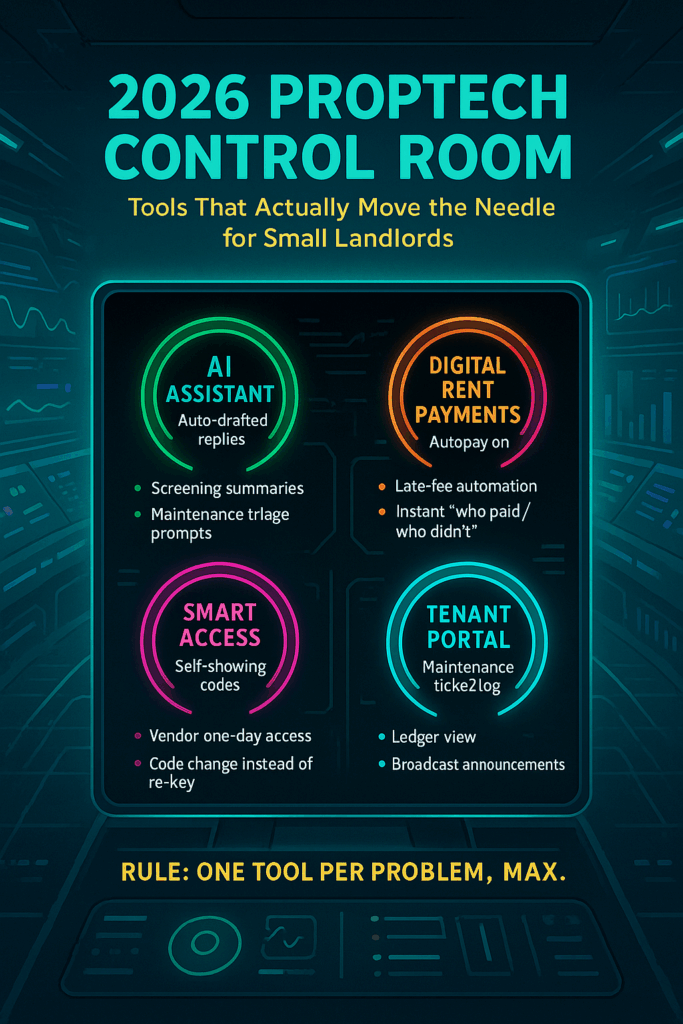
1. AI Becomes Your (Surprisingly Useful) Assistant
AI in property management isn’t just a buzzword anymore. It’s quietly sliding into the boring-but-critical parts of landlording: screening, responding to common questions, pricing, and even maintenance planning.
Recent analyses show property managers using AI to automate tenant screening, dynamic pricing, maintenance triage, and paperwork, with clear efficiency gains and better decision-making.
Where you’ll see it in 2026:
- Email and message drafting
You’ll see tools that read tenant messages and draft friendly, policy-compliant replies for you to approve — “What’s the pet policy?” “Can I install a camera doorbell?” “When is late rent reported?” - Screening and risk scoring
Systems that pull credit, eviction, income, and rental history and give you a clear risk summary instead of ten separate PDFs. (You still set the criteria; AI just helps you read the data faster.) - Pricing guidance
“Rent estimate” tools are getting smarter: they look at your area, current demand, and seasonality and suggest realistic rent ranges instead of fantasy numbers. - Maintenance triage
AI chat or text flows that ask follow-up questions about a maintenance issue (“Is it leaking now or just damp?”) before it hits your inbox, so you send the right vendor the first time.
Texas angle: AI can’t interpret Texas Property Code or local ordinances for you (please don’t let it), but it can keep all your standard policies, FAQ answers, and process steps in one place so you respond consistently.
2. Digital Rent Payments 2.0 (Checks Are Basically Vintage Now)
Your tenants already buy groceries, rideshares, and concert tickets on their phones. Rent is catching up fast.
Industry guides note that digital rent payment systems reduce late payments, give instant visibility into delinquencies, and make record-keeping far easier than checks or cash.
A recent Austin-focused piece points out that younger renters basically never write checks at all, and online payment is rapidly shifting from “nice-to-have” to “expected.”
Trends you’ll feel in 2026:
- Everything in one portal – Rent, fees, deposits, and sometimes even utility reimbursements in a single app.
- Autopay & reminders – Tenants can set-and-forget, and the system does the nagging for you.
- Digital wallets & instant pay – Think Apple Pay / Google Pay support on top of card/ACH. Some platforms are experimenting with crypto, but that’s still niche.
Texas doesn’t have a law that says how rent must be paid — it’s mostly whatever your lease says. Just be mindful of tenants who genuinely need an alternative (e.g., reasonable accommodation issues, older renters without reliable internet).
Practical move:
Pick one platform, set clear rules in the lease, and stop taking five different payment methods that turn reconciling into a part-time job.
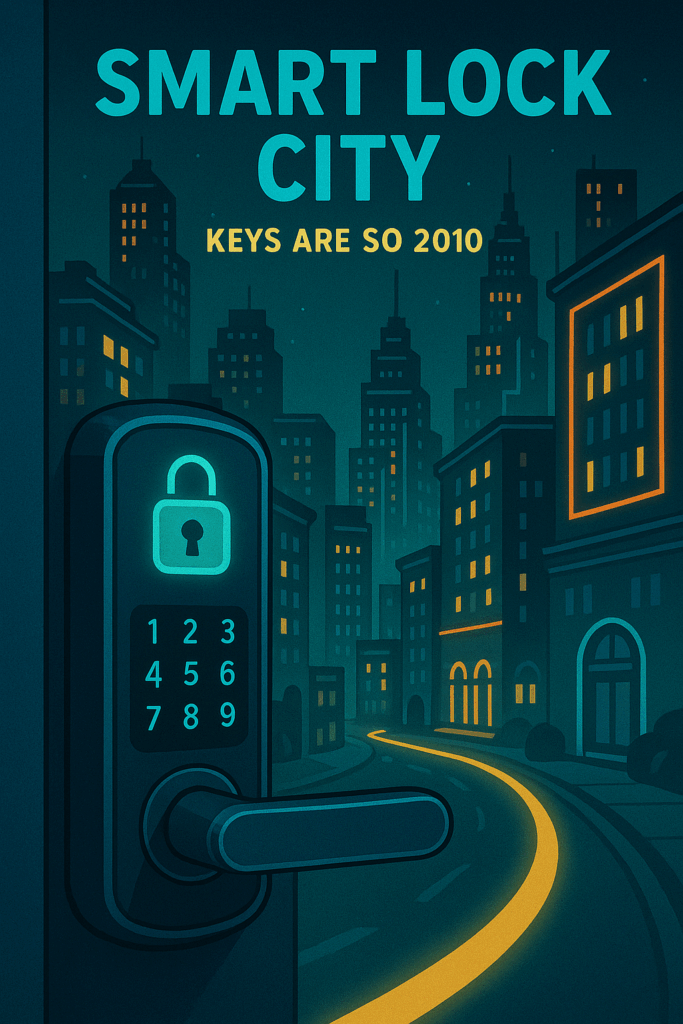
3. Smart Locks and Self-Access Go Mainstream
Smart locks aren’t sci-fi anymore; they’re just… normal. Analysts estimate the global smart lock market at billions of dollars and growing at double-digit annual rates, with North America — especially the U.S. — leading adoption thanks to strong demand for app-controlled security.
For Texas landlords, especially with scattered single-family rentals, smart access is quietly transforming operations.
What you can do with smart locks in 2026:
- Self-showings
Generate one-time or time-limited codes for prospects. No more burning an afternoon driving across town to jiggle a lockbox for a no-show. - Vendor & cleaner access
Give your plumber a one-day code and never leave a key under the mat again. - Re-keying without a locksmith
Change access codes between tenancies instead of paying for physical re-keys.
Short-term rental data suggests smart locks are becoming standard in that segment, and longer-term rentals aren’t far behind, with the smart-lock market for rentals projected to grow more than 15% annually through the early 2030s.
Cautions:
- Have a clear policy for what happens if the power or Wi-Fi goes out.
- Make sure your setup still meets Texas requirements on locks and security devices.
- Choose devices that allow offline codes, not just cloud-only control.
Done right, smart access reduces headaches and actually makes units feel safer to many residents.
4. Predictive Maintenance and “Listen-to-Your-Building” Tech
Instead of reacting to breakdowns, more property managers are letting sensors and AI tell them when something is about to go wrong.
Recent industry pieces highlight predictive maintenance as a “game changer,” using sensor data and AI to identify failing equipment early, reduce emergency calls, and protect long-term property value.
What this looks like on the ground:
- Water leak sensors under water heaters, sinks, and in pans
– You get an alert before a small drip turns into a soaked ceiling. - HVAC monitoring
– Smart thermostats and sensors that can flag abnormal runtimes, filter issues, or failing components before the system quits on a 104°F day. - Portfolio dashboards
– For multifamily or larger portfolios, you’ll see “equipment health scores” similar to how cars now tell you when service is due.
For a small Texas landlord, you don’t need a full IoT command center. Even a few smart leak detectors and smart thermostats can drastically cut risk in a state where frozen pipes and brutal summers are a yearly tradition.
Where to start:
Pick your most expensive pain point (water damage, HVAC failures, roof leaks) and pilot one or two devices there. You don’t need sensors on everything to get value.
5. Tenant Portals as the Default, Not the Upgrade
In 2026, the “tech” conversation is less about shiny gadgets and more about basic digital hygiene:
- Can tenants pay rent, request maintenance, and see their ledger in one place?
- Can you broadcast building notices without taping paper to doors?
- Can you see a clean history of communication if a dispute comes up?
PropTech trend reports emphasize that integrated portals are now a core expectation, not a premium feature — they centralize payments, service requests, messaging, and documents, and they’re becoming the center of the resident experience.
Why this matters in Texas specifically:
- You may need a record of when you sent a notice, or how quickly you responded to a repair, if something escalates.
- Tenants who can easily submit maintenance requests are more likely to report small issues before they become Property Code-level problems.
Does every small landlord need a full-blown portal? Not necessarily. But if you’re over 5–10 units, a system that keeps all your communication and requests in one place will save time and protect you legally.
6. Reporting & Dashboards for Small Portfolios
One quiet trend: the “Wall Street” level dashboards are trickling down to mom-and-pop owners.
PropTech platforms now routinely include reports on:
- Delinquency and collections
- Turnover time and vacancy days
- Maintenance spend by property and by category
- Return on investment per door
Proptech analyses highlight data and analytics as a core theme: AI-augmented dashboards that turn raw numbers into pricing guidance, risk flags, and simple visuals.
For a Texas landlord juggling multiple markets (say, DFW and a couple of houses in a smaller town), this matters. You can:
- See which properties are eating maintenance budget.
- Spot where you’re consistently underpricing or over-improving.
- Get early warning when one property’s delinquency starts creeping up.
Pro tip:
Don’t drown in data. Pick 3–5 metrics you actually care about (e.g., monthly cash flow per door, average days vacant, maintenance per unit per year) and track those consistently.
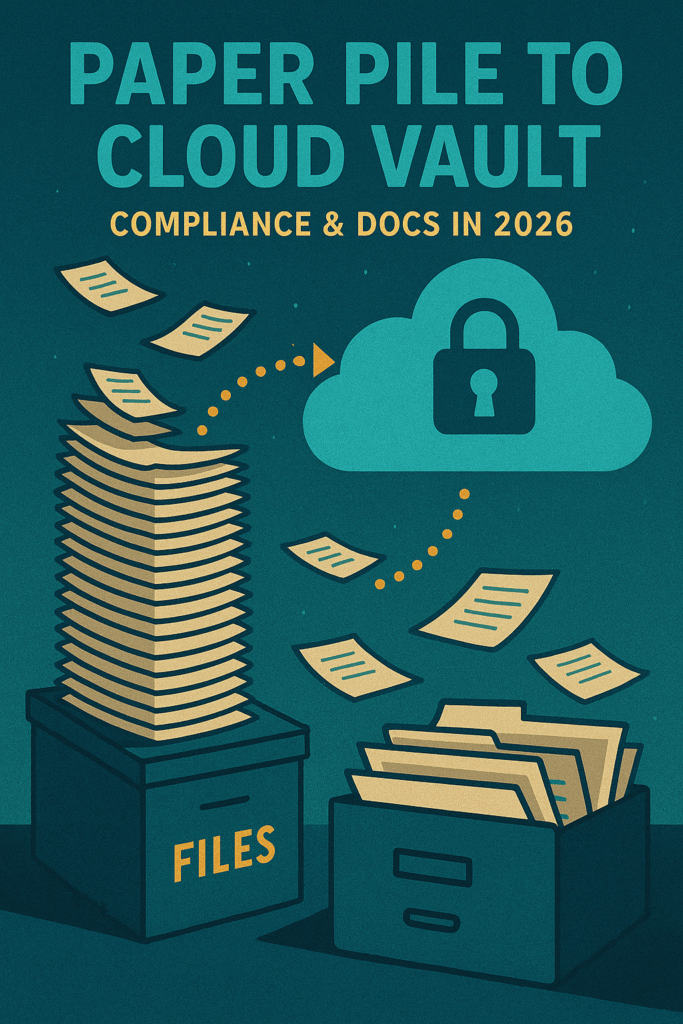
7. Compliance and Document Management Go Digital
Between new flood disclosure requirements, evolving Texas landlord–tenant law, and fair housing risk, keeping your paperwork straight is starting to feel like a second job.
PropTech “back office” tools now handle:
- E-signatures for leases, addendums, renewals
- Automated document storage and version history
- Template management for notices, disclosures, and checklists
Given the recent wave of Texas legal changes around floods, fraud, repairs, and communication, more landlords are leaning on tech to make sure the right documents go out, in the right form, at the right time — and that they’re actually saved somewhere you can find them later.
If you’re the “all my leases are in a stack in the hall closet” type, 2026 is a very good year to upgrade that system.
8. ESG, Energy, and “Keeping the Lights On”
Last but not least: sustainability isn’t just a corporate buzzword anymore. Even smaller operators are nudged toward:
- Smart thermostats and HVAC optimization
- LED lighting and motion sensors in common areas
- Better insulation and air sealing, tracked in energy reports
- Solar or backup systems in some markets
Industry coverage notes that energy optimization and ESG reporting tools are becoming part of mainstream PropTech, helping owners cut operating expenses and meet tenant expectations around comfort and resilience.
In Texas, with grid stress, heat waves, and storms, this has a very practical flavor:
- Lower electric bills = easier renewals.
- Better efficiency = less load on your equipment = fewer breakdowns.
- If you ever sell to an institutional buyer, they’ll ask about this stuff.
You don’t have to brand yourself as a “green landlord.” Just treat energy data like another operating metric you can improve with some smart tech choices.
How to Pick Your 2026 Tech Stack Without Losing Your Mind
You do not need to adopt every trend on this list. Think of them as a menu, not a mandatory checklist.
A sane approach for a Texas landlord:
- Pick your biggest pain point.
Is it late rent? No-shows on showings? Lost maintenance requests? Emergency repairs? Start there. - Choose one tool per problem, max.
One platform for payments + ledger
One for communication/portals (often bundled with payments)
One “extra” (smart locks or maintenance sensors or AI-assistant) to experiment with
- Make 2026 your “standardize and document” year.
Use tech to:
Standardize how tenants contact you
Standardize how you track requests and responses
Standardize how money flows in and out
- Keep the human part.
Tech should make it easier for you to be present, fair, and responsive — not to disappear behind an app.
Final Thought
PropTech in 2026 isn’t about replacing landlords with robots. It’s about making the boring, repetitive, error-prone parts of landlording less painful — so you can spend more time on decisions that actually matter: which properties you buy, which tenants you keep, and how you protect your investments in a state where the weather, the laws, and the markets like to keep things interesting.
Start small, choose tools that solve real problems, and let the trends work for you instead of the other way around.


