This Content Is Only For Subscribers
In a perfect world, every repair request would be dispatched the same day, every vendor would show up on time, and every job would be completed before the tenant had a chance to wonder what was happening. In the real world of Texas property management, parts get backordered, HVAC technicians get booked out for two weeks in August, and your most reliable plumber breaks his wrist the day before he was supposed to replace a water heater. Delays happen. They are not a reflection of your competence as a landlord. How you communicate those delays is.
The landlords who generate the most tenant complaints during repair delays are not the ones with the worst vendors. They are the ones who go silent. A tenant who submitted a maintenance request five days ago and has heard nothing is not just frustrated about the broken appliance. They are convinced they have been forgotten, and that conviction is far more damaging to the relationship than the delay itself.
The First Rule: Communicate Before They Ask
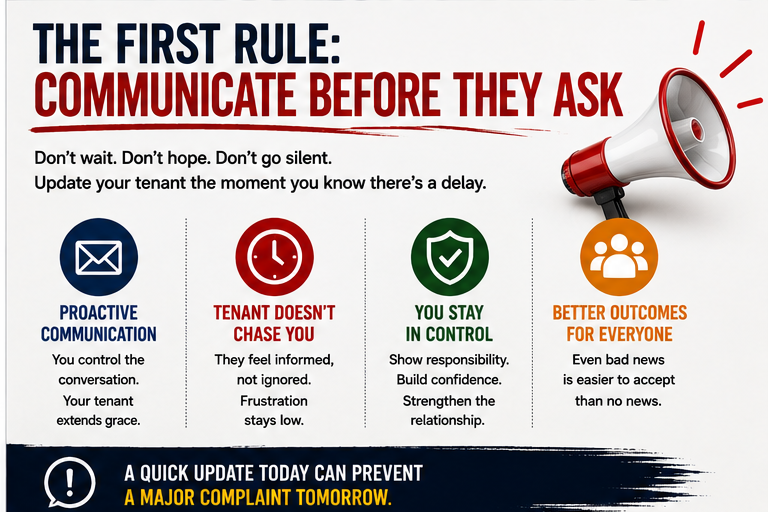
The single most important principle when a vendor is delayed is to push the information to the tenant before they have to chase you for it. The moment you know the original timeline is not going to hold, you must contact the tenant. Not tomorrow. Not when you have a confirmed reschedule date. Now.
This proactive communication does something powerful. It signals that you are in control of the situation, that you are aware of the tenant’s inconvenience, and that you have not simply forgotten about their request. A tenant who hears from their landlord proactively, even with bad news, is a tenant who extends grace. A tenant who has to send a follow-up message asking what is happening is a tenant who is already building a case in their head.
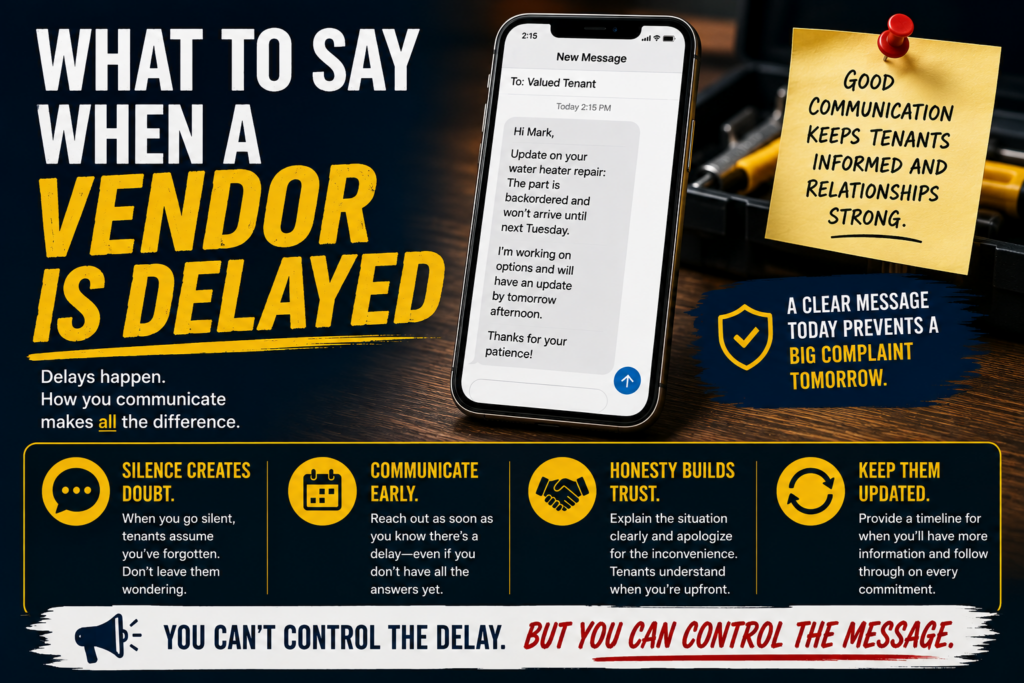
The message does not need to be long. It needs to be honest, specific, and forward-looking. “Hi Sarah, I wanted to update you on the refrigerator repair. The technician we had scheduled had an emergency and cannot make it this week. I am reaching out to two other appliance repair companies today and will have a new appointment confirmed by tomorrow afternoon. I apologize for the inconvenience and will keep you updated.” That message takes sixty seconds to write and completely changes the tenant’s experience of the delay.
What to Include in a Delay Communication
A delay communication should always contain three elements: an acknowledgment of the original request, a clear explanation of why the timeline has changed, and a specific commitment about when you will have more information or a confirmed new date.
The acknowledgment proves you remember the request and take it seriously. The explanation humanizes the situation. Vendors get sick, parts get backordered, and supply chains fail. Tenants understand these realities when explained honestly. What they do not understand is silence.
The forward commitment is the most critical element. Do not end a delay communication with “I will let you know when I hear something.” That is a non-answer that leaves the tenant with no timeline and no confidence. Instead, give a specific date by which you will follow up. “I will have a confirmed appointment date for you by Thursday” is a commitment you can keep. It gives the tenant a specific moment to look forward to and holds you accountable to your own timeline.
When the Delay Involves an Urgent Repair
The communication calculus changes significantly when the delayed repair is an urgent one. A delayed cabinet hinge repair requires a polite update. A delayed HVAC repair in July requires an immediate alternative solution alongside the communication.
When an urgent repair is delayed, your message to the tenant must include what you are doing to mitigate the inconvenience in the meantime. If the HVAC technician cannot come for three days, you need to address the tenant’s immediate comfort. Offering to provide a portable window unit, reimbursing the cost of a hotel night if temperatures are extreme, or sourcing a secondary vendor who can respond faster are all reasonable mitigation options depending on the severity of the situation.
In Texas, where summer temperatures routinely exceed one hundred degrees, a multi-day HVAC delay without any mitigation offer is not just a customer service failure. It can create legal exposure under the Texas Property Code’s habitability standards. Communicate early, offer a solution, and document both the delay and your mitigation efforts in writing.
The Standard That Protects the Relationship
Vendor delays are inevitable. Tenant frustration is optional. The landlords who maintain strong tenant relationships through difficult repair situations are not the ones with the fastest vendors. They are the ones who communicate proactively, set realistic expectations, and follow through on every commitment they make during the delay. That standard, applied consistently, is what separates the landlords whose tenants renew their leases from the ones whose tenants start looking for a new place the moment the repair is finally finished.