This Content Is Only For Subscribers
Automation is one of the most powerful tools available to the small landlord, and one of the most misused. When it is done well, an automated reminder feels like a thoughtful nudge from a professional who has their operation dialed in. When it is done poorly, it reads like a form letter from a faceless corporation, and it erodes the tenant relationship rather than supporting it. The difference is almost entirely in the writing.
Most landlords who experiment with automated reminders make the same mistake. They copy the default template from their property management software, change the property name, and send it. These templates are written by software engineers, not property managers, and they read that way. They are cold, impersonal, and full of stiff, transactional language that signals to a tenant that they are just a unit number in a database. You can do significantly better with about thirty minutes of work.
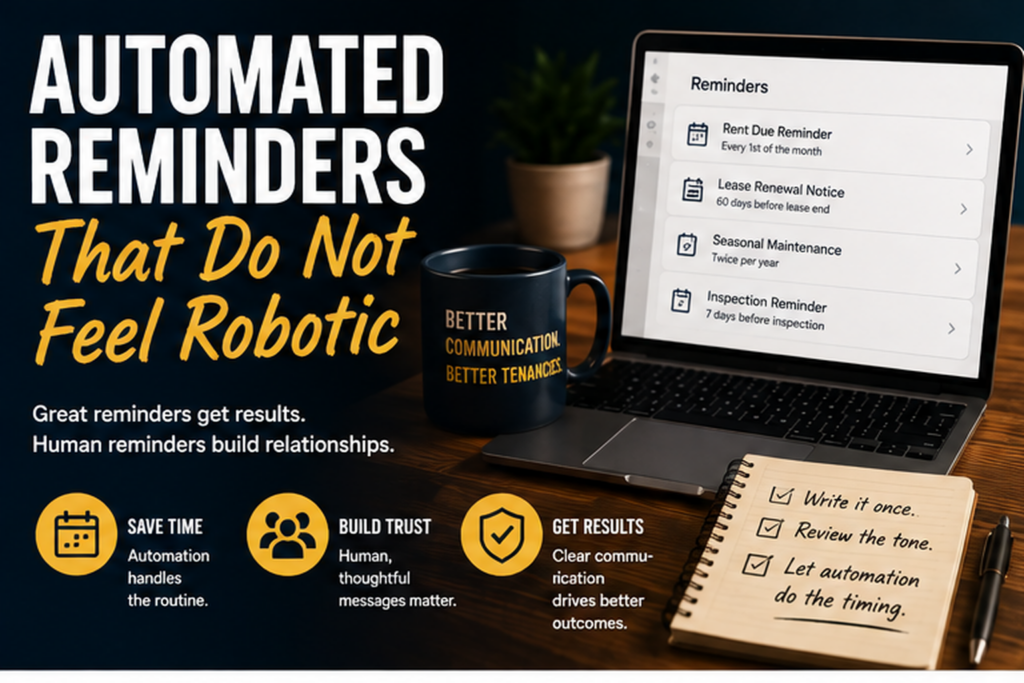
What Automated Reminders Are Actually For
Before you write a single automated message, you need to be clear about what automation is and is not appropriate for. Automated reminders work best for predictable, recurring events where the content of the message is consistent every time. Rent due date reminders, lease renewal notices, seasonal maintenance reminders, and scheduled inspection notifications are all excellent candidates for automation.
What automation is not appropriate for is any communication that requires a personal response or that involves a dispute, a sensitive financial situation, or a tenant who is already frustrated. If a tenant is three weeks late on rent and you have already sent two reminders, the third communication should come from you personally, not from a scheduler. Automation handles the routine. You handle the relationship.
Writing Reminders That Sound Like a Person
The single most effective technique for making an automated message feel human is to write it the way you would actually speak to the tenant if you were calling them on the phone. Read the draft out loud. If it sounds like something a person would actually say, you are on the right track. If it sounds like a terms-of-service agreement, rewrite it.
A rent reminder does not need to say, “This is an automated notification to inform you that your rental payment in the amount of [RENT AMOUNT] is due on [DUE DATE] per the terms of your lease agreement.” It can say, “Hi [First Name], just a quick reminder that rent is due on the 1st. If anything has come up this month, feel free to reach out before the due date. Thanks for being a great tenant.”
The second version takes the same amount of time to send and accomplishes the same logistical purpose. But it also reinforces the relationship. It acknowledges the tenant as a person rather than a transaction. And that small distinction, repeated consistently over the life of a tenancy, is what builds the kind of landlord-tenant relationship where tenants communicate proactively, pay on time, and renew their leases.
Seasonal Reminders That Add Value
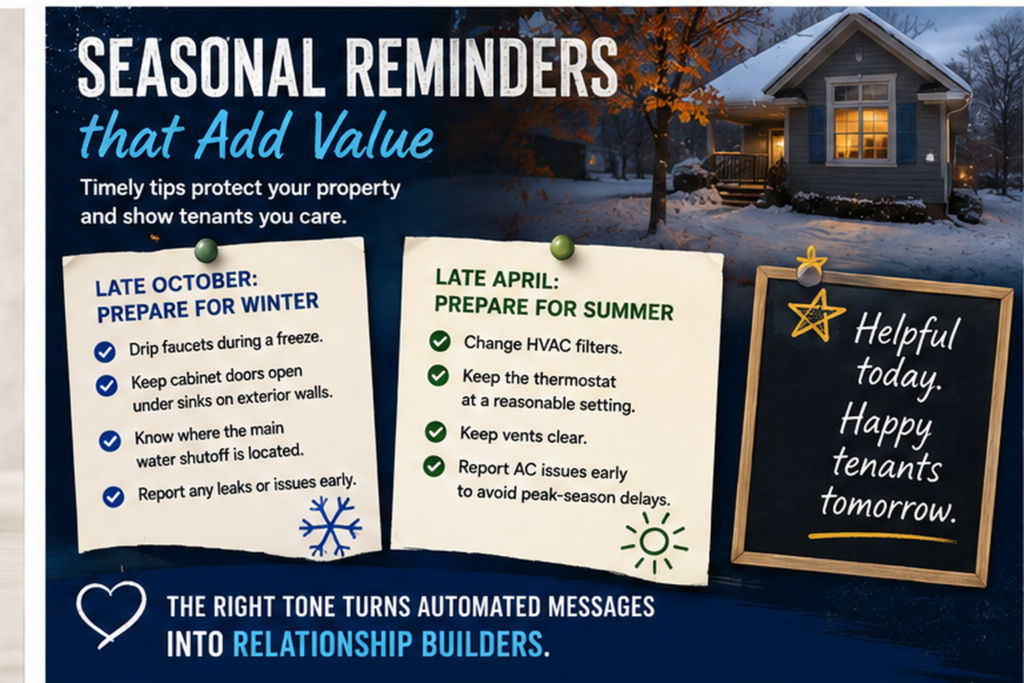
One of the most underused applications of automated messaging for Texas landlords is the seasonal maintenance reminder. These messages serve a dual purpose: they protect your property and they demonstrate that you are an attentive, professional landlord who thinks ahead.
A late October reminder about winterizing the property is genuinely useful to your tenants. Most renters do not know they should drip their faucets during a freeze, keep cabinet doors open under sinks on exterior walls, or know where the main water shutoff is located. A brief, friendly message in late October that covers these points is not just good property management. It is a service to the people living in your home.
Similarly, a late April reminder about changing HVAC filters and keeping the thermostat at a reasonable setting during the summer months protects your equipment and reduces the likelihood of an emergency service call in July. Frame these as helpful tips rather than instructions, and tenants will receive them as a sign that you care about their comfort, not just your asset.
The Tone That Keeps the Relationship Intact
Every automated message you send is a representation of how you run your business. A cold, transactional reminder signals that you view the tenancy as a financial arrangement. A warm, clear, human reminder signals that you view it as a professional relationship built on mutual respect.
You do not need to be overly familiar or casual. You need to be direct, clear, and genuinely considerate of the fact that a real person is going to read what you wrote. Write your automated messages once, read them out loud, revise them until they sound like you, and then let the automation do its job. The system handles the timing. You handle the tone. Together, they handle the relationship.