This Content Is Only For Subscribers
If there is one universal truth in property management, it is that maintenance requests do not respect your schedule. A tenant’s air conditioning will inevitably fail on a Friday evening in July, and a pipe will burst just as you sit down for dinner.
When you manage a small portfolio, you might be able to handle these requests via text message or a phone call. However, as your portfolio grows—and especially when the Texas summer pushes your systems to their limits—relying on your personal cell phone as a maintenance dispatch center becomes a profound liability. Text messages are easily forgotten, phone calls lack a paper trail, and coordinating with vendors requires endless manual follow-up.
To scale your operations and protect your sanity during peak season, you must digitize your maintenance workflow. Here is how modern apps and platforms are revolutionizing the way landlords handle repairs.
The Problem with the “Text Me” Strategy
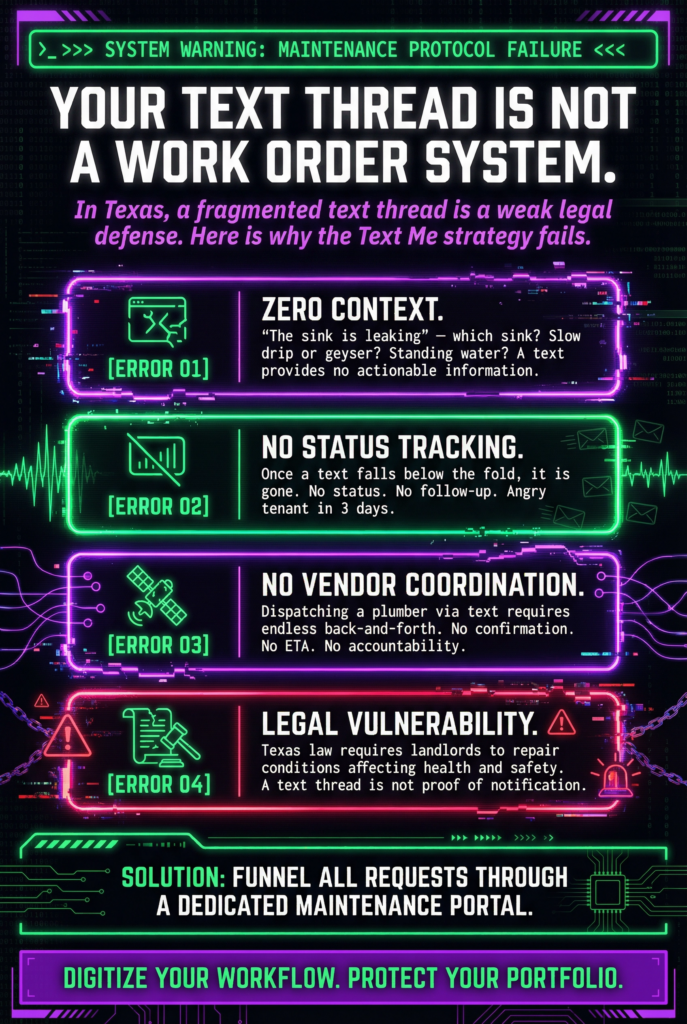
The primary issue with allowing tenants to text you maintenance requests is the lack of structure. A text message saying, “The sink is leaking,” provides zero actionable information. Which sink? Is it a slow drip or a geyser? Is there standing water?
To dispatch a plumber effectively, you need context. If you rely on text messages, you are forced into a back-and-forth interrogation just to understand the scope of the problem. Furthermore, text messages offer no systematic way to track the status of a repair. Once a text falls below the fold on your screen, it is effectively gone until the angry tenant follows up three days later.
Finally, the “text me” strategy creates a massive legal vulnerability. In Texas, landlords have a statutory obligation to repair conditions that materially affect the physical health or safety of an ordinary tenant. If a dispute arises over whether a tenant properly notified you of a failing AC unit in August, a fragmented text thread is a weak defense.
The Power of the Dedicated Maintenance Portal
The solution is to funnel all non-emergency maintenance communication through a dedicated digital portal. This functionality is a core feature of comprehensive property management platforms like Buildium, AppFolio, and TenantCloud, but it is also available through standalone maintenance apps like Property Meld or RentRedi.
When a tenant submits a request through a dedicated portal, the platform forces them to provide structure. They must select the category of the issue (Plumbing, HVAC, Electrical), describe the problem in detail, and indicate whether they grant permission for a vendor to enter the property with a key.
Crucially, these platforms allow—and often require—tenants to upload photos or videos of the issue. A video of a leaking P-trap under the kitchen sink provides your plumber with the exact information they need to bring the right parts on the first trip, saving you the cost of a diagnostic diagnostic visit.
Streamlining Vendor Coordination
Once a request is submitted, the true power of the maintenance app becomes apparent: vendor coordination.
In the analog world, you receive a request, call your plumber, leave a voicemail, wait for a call back, coordinate a time, call the tenant to confirm the time, and then call the plumber back to finalize. It is a logistical nightmare.
With a maintenance app, you review the tenant’s request and, with one click, assign it to a specific vendor in your digital rolodex. The vendor receives an automated notification containing the work order details, the photos, and the tenant’s contact information. The vendor can then communicate directly with the tenant through the app to schedule the repair, completely removing you from the logistical middleman position.
The Digital Audit Trail
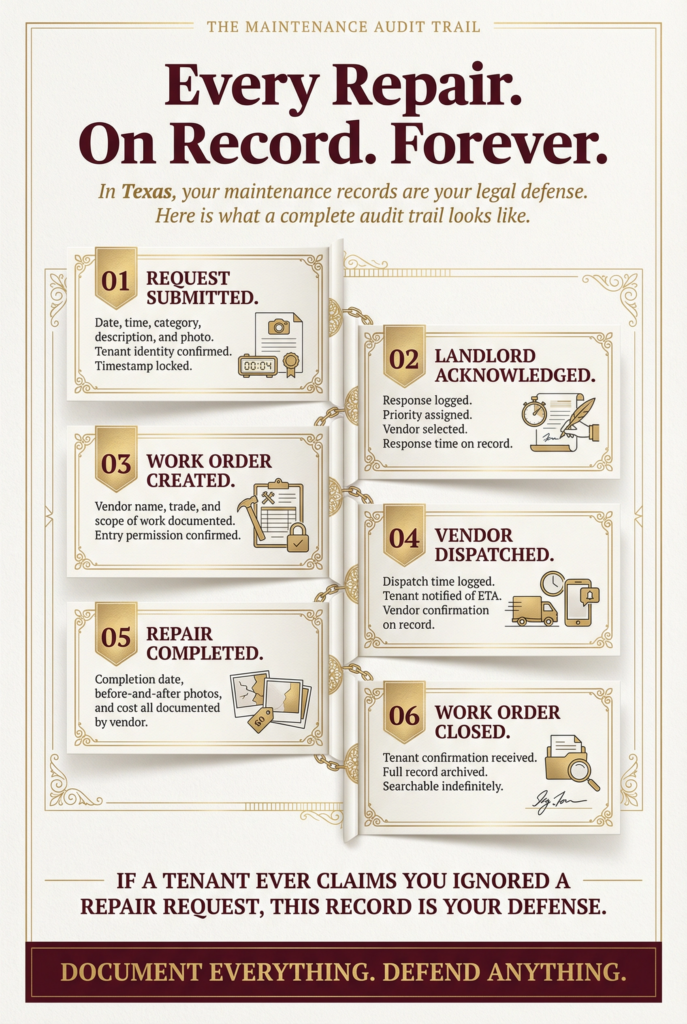
Beyond efficiency, the most significant advantage of a maintenance tracking app is the creation of an irrefutable digital audit trail.
Every action taken within the platform is time-stamped. The system records exactly when the tenant submitted the request, when you assigned it to the vendor, when the vendor scheduled the appointment, and when the work was marked complete.
If a tenant ever claims you ignored a request or failed to act promptly, you do not have to rely on your memory or dig through your phone records. You simply export the work order history. This documentation is invaluable for protecting your business against liability claims and demonstrating professional competence in the event of a dispute.
By forcing structure onto the request process, automating vendor coordination, and generating a permanent audit trail, maintenance tracking apps transform one of the most stressful aspects of property management into a smooth, scalable operation.