This Content Is Only For Subscribers
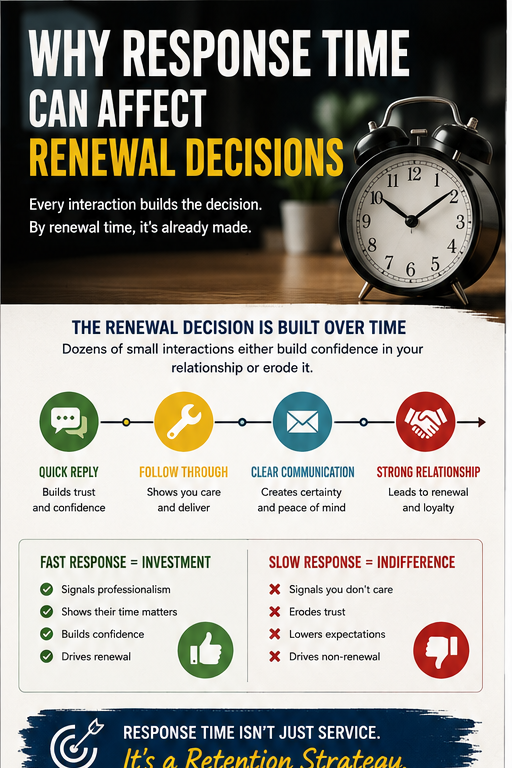
A tenant’s decision to renew their lease is rarely made at the moment the renewal notice arrives. It is made incrementally, over the entire course of the tenancy, through dozens of small interactions that either build confidence in the landlord or erode it. By the time a tenant receives a formal renewal offer, the decision has often already been made. The renewal notice is simply the moment they communicate it.
Of all the factors that shape that incremental decision, response time is among the most powerful. Not because tenants are impatient, but because response time is the most visible, most consistent signal of how much a landlord values the relationship. A landlord who responds within hours signals investment and professionalism. A landlord who takes days to respond signals indifference. And indifference, compounded over twelve months, is one of the most reliable predictors of non-renewal.
What Response Time Actually Communicates
When a tenant sends a message and waits two days for a reply, they are not just experiencing an inconvenience. They are receiving information about the nature of the relationship. The delayed response tells them that their concern was not a priority. It tells them that the landlord’s time is more valuable than theirs. It tells them that the communication dynamic they can expect for the remainder of the tenancy is one where they wait.
This information accumulates. The first delayed response is an annoyance. The second is a pattern. By the third, the tenant has adjusted their expectations downward and begun to mentally devalue the tenancy. They are no longer a resident who feels secure in their housing. They are a customer who has received consistently poor service and is quietly evaluating their options.
The investor who understands this dynamic does not wait for a formal complaint to identify the problem. They build a response time standard into their operational infrastructure and hold themselves to it. A 24-hour acknowledgment policy for all non-emergency communications is not a customer service nicety. It is a retention tool with a direct, measurable impact on renewal rates.
The Maintenance Request as a Renewal Test
The maintenance request is the single most important communication event in the landlord-tenant relationship, and it is the moment where response time has the greatest influence on renewal decisions. When a tenant submits a repair request, they are not just reporting a problem. They are testing the relationship.
If the response is prompt, professional, and followed by a clear timeline for resolution, the tenant receives confirmation that the landlord is engaged and reliable. Their confidence in the tenancy increases. If the response is slow, vague, or absent, the tenant receives the opposite signal. Their confidence decreases, and they begin to evaluate the cost of moving against the cost of staying in a property managed by someone who does not respond.
In the Texas rental market, where summer heat makes HVAC responsiveness a genuine quality-of-life issue, the stakes of this test are especially high. A tenant who submits an air conditioning request in July and receives a prompt acknowledgment and a vendor appointment within 24 hours will remember that experience at renewal time. A tenant who waits three days in a house that reaches 85 degrees indoors will also remember it. The difference between those two outcomes is almost entirely a function of response time.
The Compounding Effect on Renewal Negotiations
Response time does not just influence whether a tenant renews. It influences the terms on which they are willing to renew. A tenant who has experienced consistently fast, professional communication throughout the tenancy enters the renewal conversation with goodwill. They are more likely to accept a rent increase, more likely to sign a longer lease term, and less likely to negotiate aggressively on minor terms.
A tenant who has experienced slow, inconsistent communication enters the renewal conversation with a deficit. They are more likely to push back on price, more likely to request concessions, and more likely to use the renewal as leverage to extract accommodations they feel they have earned by tolerating poor service. The investor who has been slow to respond has effectively weakened their own negotiating position.
Building the Standard
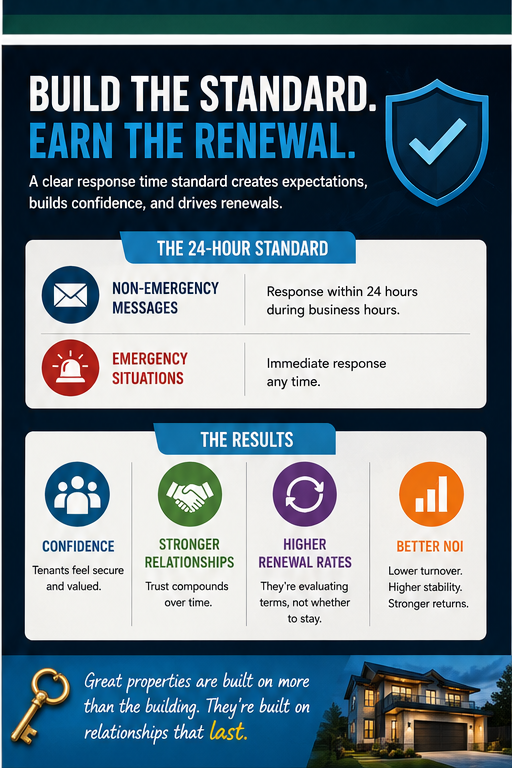
The practical solution is straightforward. Establish a written response time standard and communicate it to every tenant at the start of the tenancy. Non-emergency messages will receive a response within 24 hours during business hours. Emergency situations will receive an immediate response at any time. This standard sets expectations, creates accountability, and gives the tenant a framework for evaluating the relationship.
When you consistently meet that standard, the tenant’s confidence in the tenancy compounds over time. When the renewal arrives, they are not evaluating whether to stay. They are evaluating the terms on which they want to stay. That is the position every investor should be working toward, and response time is one of the most direct paths to getting there.