

This Content Is Only For Subscribers
Peak leasing season is a double-edged sword. On one hand, your vacancies are filling up, and your cash flow is looking strong. On the other hand, your attention is split a hundred different ways. Between coordinating contractors, running background checks, and handling multiple move-ins, it is incredibly easy to let your rent collection processes slide.
When you are exhausted from a long day of property walkthroughs in the Texas heat, the last thing you want to do is chase down a tenant who is three days late on rent. It’s tempting to think, “I’ll deal with it next week when things slow down.”
But here is the hard truth: if you let late payments slide during peak season, you are training your tenants that your deadlines are optional. You are sacrificing long-term stability for short-term convenience. Here is how to handle late payments efficiently, even when you are swamped.
Automate the Reminders
If you are manually texting or emailing tenants to remind them rent is due, you are wasting valuable time. You need a property management software that handles this for you.
Set up an automated communication sequence:
•Three Days Before: “Just a friendly reminder, rent is due on the 1st.”
•The 1st (Due Date): “Rent is due today.”
•The 3rd (Grace Period Ends): “Your rent is currently past due. Please pay by 5:00 PM today to avoid a late fee.”
•The 4th (Late Fee Applied): “A late fee has been applied to your account. Please log in to pay your balance.”
Automating these reminders ensures consistent communication without having to remember to send a single text message. More importantly, it removes the personal emotion from the transaction. It’s not you nagging them; it’s just the system doing its job.
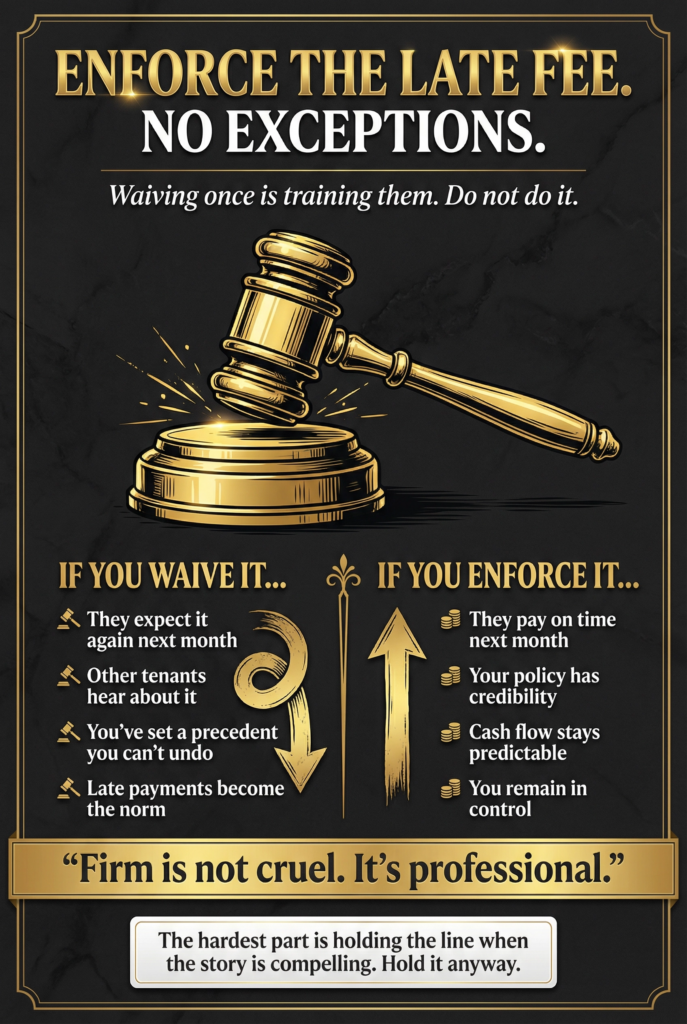
Enforce the Late Fee (No Exceptions)
This is the hardest part for many landlords, especially when a tenant has a compelling story. “My paycheck was delayed,” or “I had an unexpected car repair.” During peak season, when you just want the problem to go away, it is incredibly tempting to say, “Don’t worry about the late fee this time, just pay the rent.”
Do not do it.
If your lease states that a $50 late fee is applied on the 4th of the month, you must apply that fee on the 4th of the month, every single time. If you waive it once, you have established a precedent. The tenant now knows that your deadlines are flexible, and they will likely push the boundary again next month.
Enforcing the late fee is not about being cruel; it is about being professional and consistent. It trains your tenants to prioritize their rent payment over other discretionary expenses.
The “Pay or Quit” Notice
If the 5th of the month rolls around and you still haven’t received rent or communication from the tenant, it is time to escalate. In Texas, the first formal step in the eviction process is the Notice to Vacate (often called a “Pay or Quit” notice).
Do not wait until the 15th of the month to send this notice because you are “too busy” with move-ins. You must protect your legal rights and start the clock immediately.
Have a standardized Notice to Vacate template ready to go. If rent isn’t paid by the 5th, post the notice on the inside of their front door (as required by Texas law) or send it via certified mail.
Sending this notice does not mean you want to evict them. Often, receiving a formal legal document is the wake-up call a tenant needs to realize you are serious and promptly pay their balance. But if they don’t pay, you have already started the necessary legal timeline.
Establish a Payment Plan Policy
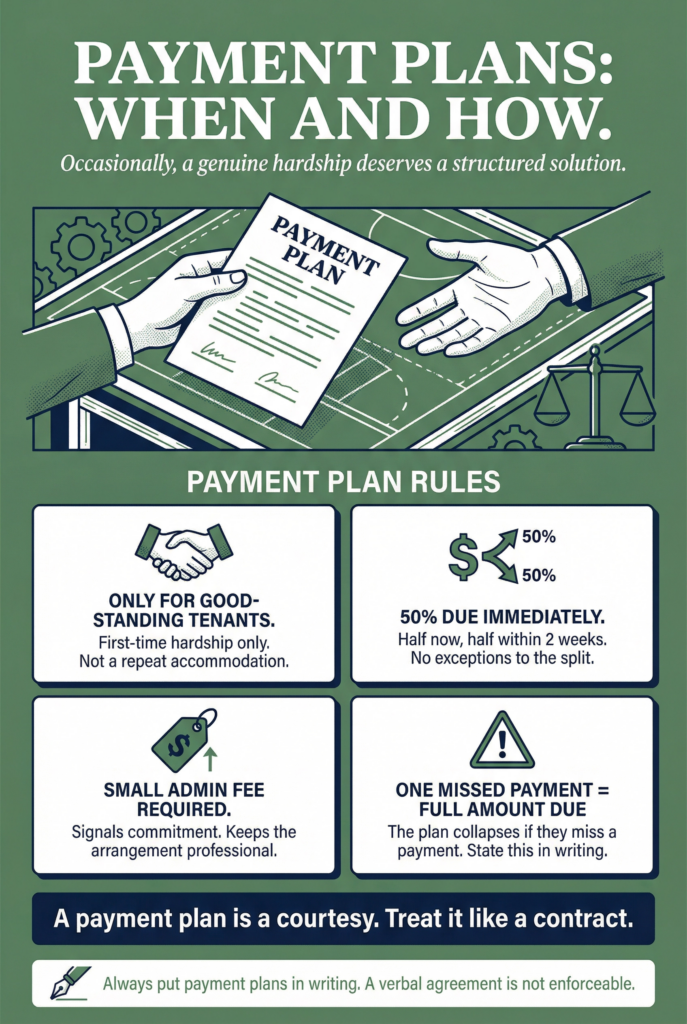
Occasionally, a genuinely good tenant will hit a legitimate financial roadblock. If a tenant communicates with you proactively before rent is late, you might consider offering a payment plan.
However, you must have a standardized policy for this. Do not make up terms on the fly.
A solid payment plan policy might look like this:
•The tenant must pay 50% of the rent on the 1st.
•The remaining 50% (plus a small administrative fee) must be paid by the 15th.
•This option is only available once per lease term.
This provides flexibility for a tenant in need while still ensuring you receive the full balance within the month.
Stay the Course
Handling late payments during peak season requires discipline. You have to rely on your automated systems and stick to your established policies, even when you are exhausted. By enforcing your deadlines consistently from day one, you build a culture of respect and prompt payment that will pay dividends long after the summer rush has ended.


