

This Content Is Only For Subscribers
If you were to audit your time during the peak summer leasing season, you would likely find that the majority of your hours are not spent actively managing properties, but rather managing communication. You are answering the same leasing questions, sending the same move-in instructions, and chasing the same late rent payments, over and over again.
This repetitive communication is the hidden tax on a landlord’s time. When you are manually typing out the same email to five different applicants, you are acting as an administrator, not an investor. To scale your operations and reclaim your time during the busy months, you must leverage technology to automate the predictable interactions.
The Power of the Auto-Responder
The simplest and most immediate upgrade you can make to your communication workflow is the implementation of auto-responders.
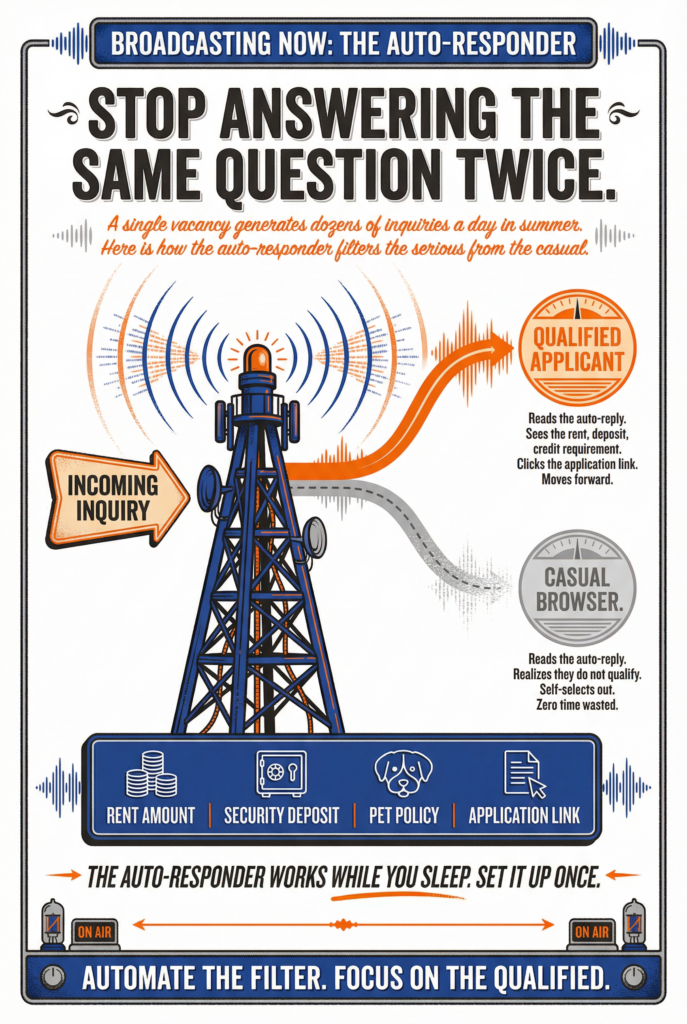
During the summer, a single vacancy can generate dozens of inquiries a day. If you attempt to answer each one manually, you will drown. Instead, set up an auto-responder on your leasing email address or through your property management software. When a prospective tenant inquires about a listing, they should immediately receive a pre-written email that provides the critical information: the rent amount, the security deposit, the pet policy, the minimum credit score requirement, and a link to the online application.
This automated filter instantly separates the serious applicants from the casual browsers. The highly qualified applicants will click the link and apply; the unqualified applicants will self-select out of the process, saving you the time of a phone call or a showing.
Templating the Turnover Process
The turnover process is a highly predictable sequence of events, which makes it the perfect candidate for automation. You should never write a “Welcome Home” email from scratch.
Modern property management platforms allow you to build communication templates that are triggered by specific events in the leasing lifecycle.
•The Approval Email: When you click “Approve” on an application, the system automatically sends an email congratulating the tenant, outlining the next steps, and providing a link to the digital lease.
•The Move-In Packet: Three days before the lease start date, an automated email goes out containing the move-in instructions, utility transfer information, trash pickup days, and the lockbox code for the keys.
•The Move-Out Instructions: Thirty days before a lease expires, an automated email details the cleaning expectations, the key return process, and the timeline for the security deposit refund as mandated by Texas law.
By templating these interactions, you ensure that every tenant receives consistent, accurate information exactly when they need it, without requiring you to remember to hit send.
Automating Rent Reminders and Late Notices
Chasing rent is the most emotionally draining communication a landlord engages in. It is also entirely unnecessary to do manually.
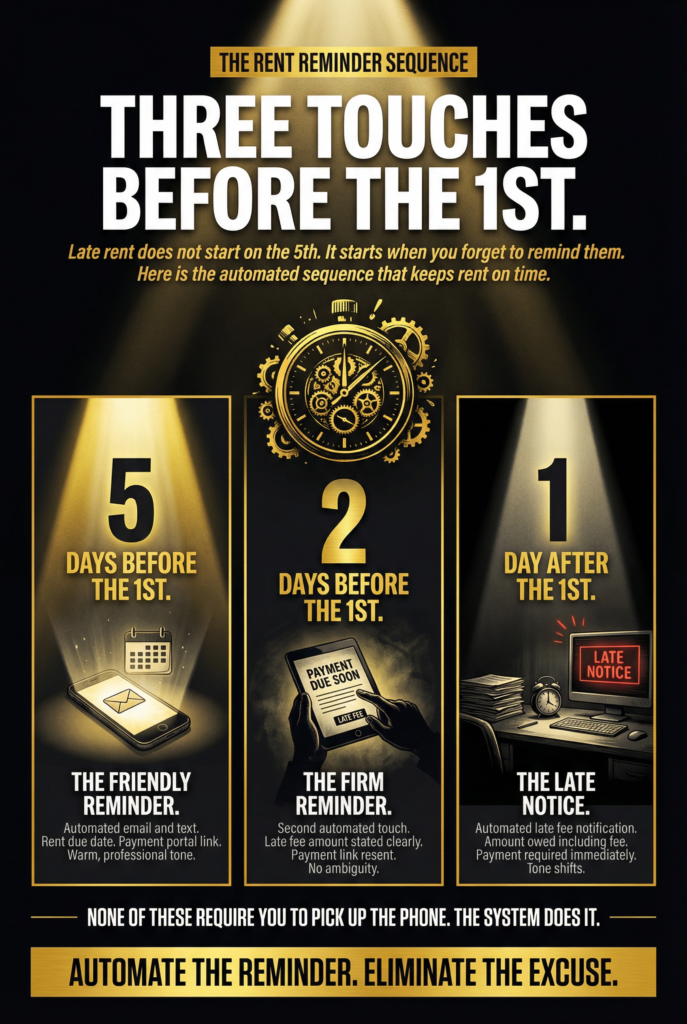
If you are using a digital rent collection platform, you should utilize its automated reminder features. Set the system to send a polite, automated text message or email three days before rent is due.
If the 4th of the month arrives and the rent is still unpaid, the system should automatically generate and send the late fee notification. By removing yourself from the manual enforcement of these rules, you preserve the landlord-tenant relationship. The computer is the bad guy enforcing the lease, not you.
Centralizing the Inbox
Finally, automation is only effective if your communication is centralized. If you are receiving leasing inquiries via email, maintenance requests via text message, and rent questions via Facebook Messenger, you are operating in chaos.
You must force all tenant communication into a single, searchable digital inbox. This can be a dedicated business email address, a Google Voice number, or the communication portal within your property management software. When all interactions live in one place, you can easily search for past conversations and maintain a legally defensible record of every interaction.
The Return on Investment
Implementing these automated communication systems requires an upfront investment of your time. Writing the templates and configuring the triggers takes effort. However, the return on that investment is immediate.
When the July leasing rush hits, the automated systems will run silently in the background. Your phone will stop ringing with basic questions, your late rent notices will be dispatched without your involvement, and your tenants will feel well-informed. You will have successfully outsourced the administrative burden to software, allowing you to focus on the strategic decisions that actually grow your portfolio.


