

This Content Is Only For Subscribers
Most landlords find out what tenants really think in one of two ways:
- When something goes wrong
- When the tenant moves out
By then, it’s usually too late to fix the problem or save the relationship.
Digital surveys give you a chance to hear from tenants before they’re frustrated enough to leave. And the good news is, you don’t need a giant portfolio or fancy software to use them. Even a single Texas rental home can benefit from a short, well-timed survey.
Let’s walk through why digital surveys are worth your time, what to ask, which tools to use, and how to avoid making it awkward.
Why Bother With Surveys at All?
You might think, If tenants have an issue, they’ll tell me. Not always.
Many tenants:
- Don’t want to “bother” you with small complaints
- Assume “it’s just how rentals are”
- Worry that speaking up might make them look difficult
- Don’t realize their small annoyance is a big fixable issue for you
Surveys create a low-pressure way for tenants to share what’s working and what isn’t. That helps you:
- Catch minor issues before they become major repairs
- Spot patterns across properties (for example: slow maintenance response, confusing lease rules)
- Learn what keeps tenants happy enough to renew
- Show tenants you actually care what they think
And when you act on feedback—even small things—you increase the odds of longer stays and fewer surprise move-outs.
When to Send Digital Surveys
Timing matters more than frequency. You don’t want to spam tenants, but you do want feedback at key points.
Good moments to send a short survey:
- 30–60 days after move-in
“How did the move-in process feel? Any surprises with the house?” - After a maintenance request closes
“Was the repair handled quickly and professionally?” - Mid-lease check-in
“Is there anything about the property or communication that could be better?” - Right after renewal (or non-renewal)
“What made you decide to stay?” or “Anything we could have done differently?”
You don’t need all of these. Even one or two touchpoints per year can teach you a lot.
What to Ask (And What Not to Ask)
The best surveys are short and focused. Think 5–10 questions, mostly multiple-choice with a few open-ended spots.
Examples of useful questions:
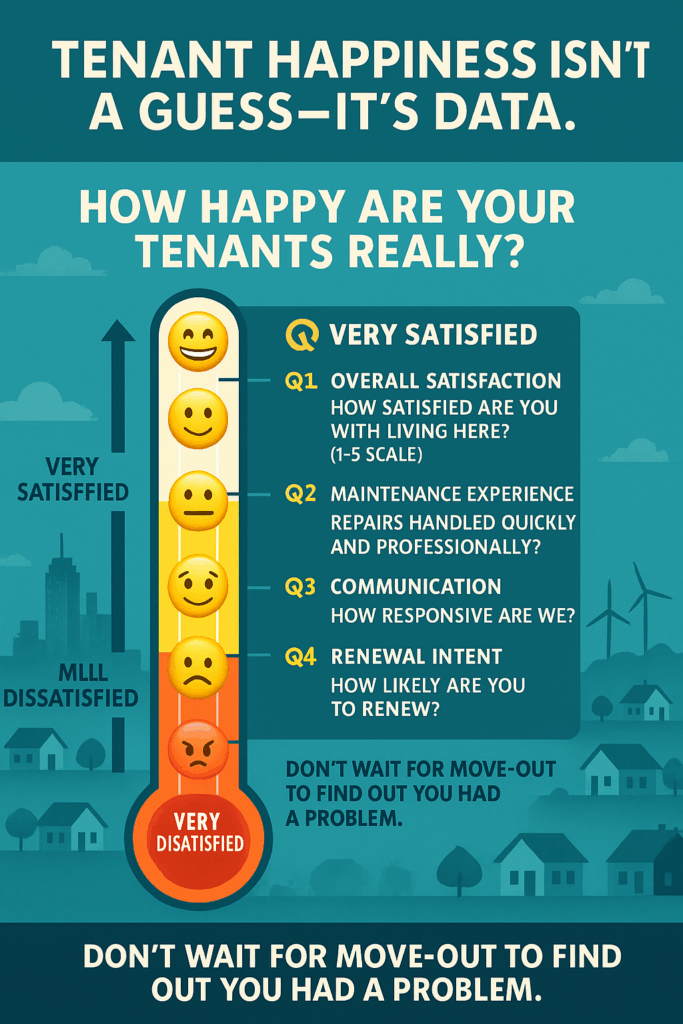
- “Overall, how satisfied are you with living at this property?”
(Scale: Very satisfied → Very dissatisfied) - “How would you rate communication?”
(Very responsive, somewhat responsive, slow, very slow) - “If you’ve had maintenance issues, how satisfied were you with how they were handled?”
(Very satisfied → Very dissatisfied, plus optional comment box) - “Is there anything small we could improve that would make living here better?”
(Open-ended) - “How likely are you to renew your lease when the time comes?”
(Very likely → Very unlikely)
Avoid:
- Overly personal questions
- Anything that could be seen as discriminatory
- Long “essay” questions that feel like homework
You’re looking for patterns, not detailed essays.
Which Tools to Use (Without Overthinking It)
You don’t need custom software. A few simple options:
- Survey platforms (like Google Forms, Typeform, etc.)
- Free or inexpensive
- Easy to share via link or email
- Automatically compile responses
- Built-in survey tools in property management software
- Some platforms let you send satisfaction surveys right from the tenant portal
- Responses can be tied to specific work orders or properties
- Email with simple questions
- Not as structured, but better than nothing
- You can still ask, “On a scale of 1–5, how satisfied are you with X?”
Whichever tool you pick, make sure it works smoothly on a phone. Most tenants will open it on mobile first.
How to Encourage Honest Responses
Tenants will be more open if they feel safe and know their time is respected.
Help that along by:
- Keeping surveys short (2–5 minutes max)
- Saying up front how you’ll use the feedback (“to improve maintenance and communication”)
- Clarifying that honest feedback won’t affect their standing as a tenant
- Occasionally sharing small wins: “Based on feedback, we now [changed vendors / adjusted response times / improved move-in instructions].”
You can also offer a small thank-you, like a gift card drawing. Not required—but it can boost participation.
Final Thought: Feedback Only Matters If You Use It
Sending surveys is the easy part.
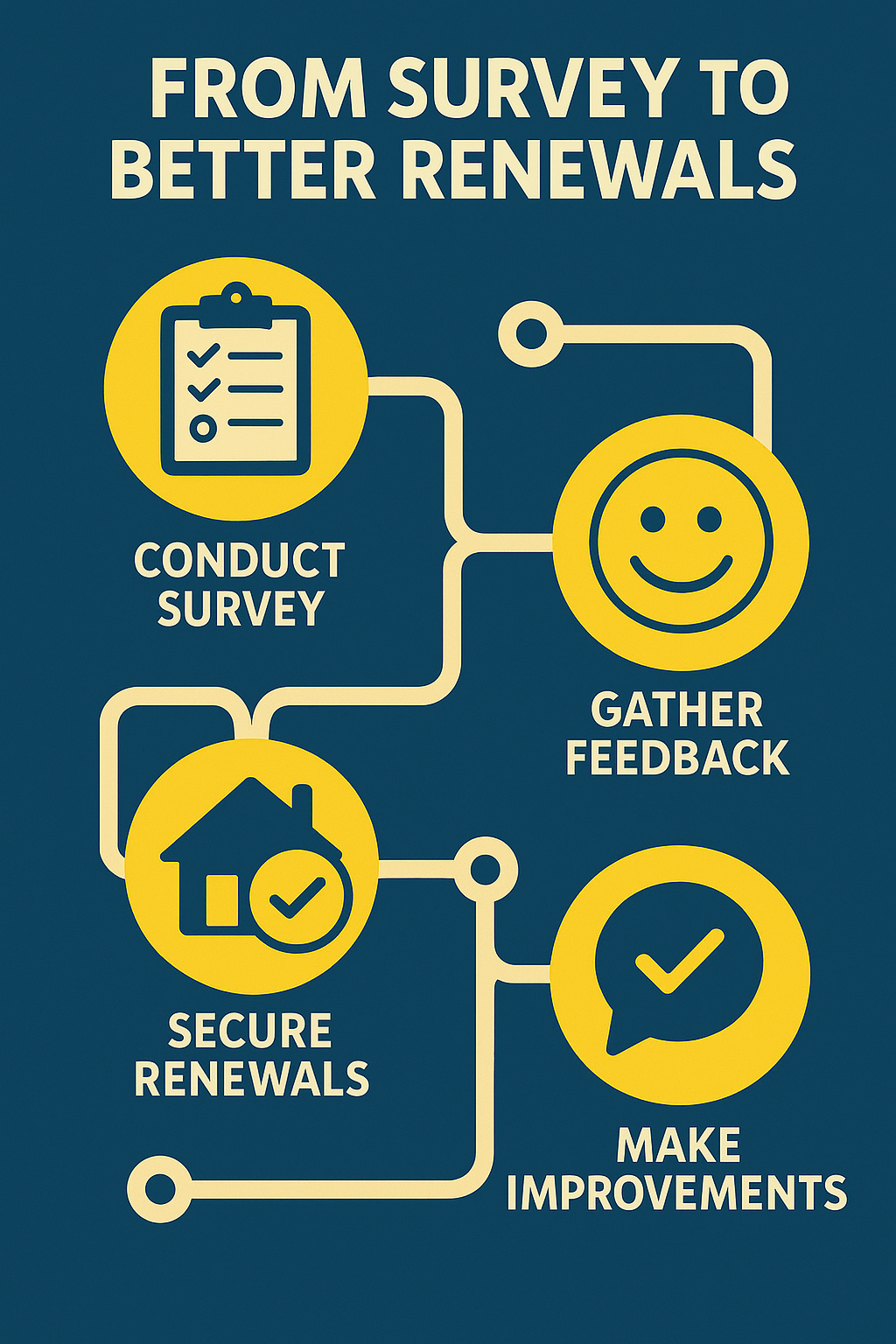
The real value comes when you:
- Review responses regularly
- Look for patterns instead of fixating on one bad comment
- Make at least a few visible changes based on what you learn
When tenants see their feedback leads to action—faster repairs, clearer communication, better move-in instructions—they’re more likely to stick around. And that’s ultimately what you’re after: fewer vacancies, better relationships, and a rental business that keeps improving year after year.


