

This Content Is Only For Subscribers
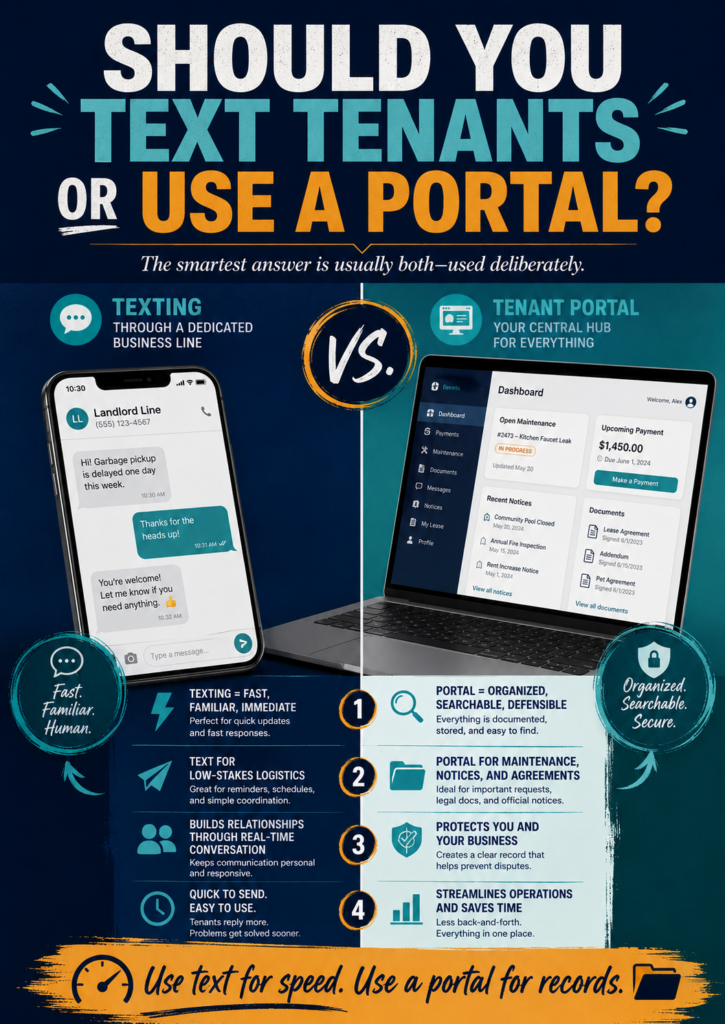
It is one of the most common questions small landlords wrestle with when they start thinking about their communication setup. Texting is fast, familiar, and every tenant already knows how to do it. A portal requires the tenant to download an app or log into a website, and there is always a learning curve. So why not just keep texting? The answer depends entirely on what you are trying to accomplish, and the honest truth is that the right answer is usually both, used deliberately and for the right purposes.
The mistake most landlords make is not choosing one over the other. It is using both randomly, without any system, so that critical information ends up scattered across two channels with no clear record of what was said where.
What Texting Does Well
Texting is genuinely excellent for a narrow set of communication scenarios. It is fast, it has near-universal open rates, and it creates a sense of immediacy that email and portal messages often do not. For time-sensitive, low-stakes communication, texting through a dedicated business line is often the most practical tool available.
If you need to confirm that a vendor is on their way to the property, a quick text to the tenant is the right call. If you need to let a tenant know you are running five minutes late to a scheduled walkthrough, a text is appropriate. If you are sending a brief reminder about a scheduled pest control visit that was already formally communicated through email, a follow-up text is a reasonable reinforcement.
The critical distinction is that texting works well for communication that is confirmatory or logistical in nature. It is not the right channel for anything that creates, modifies, or documents a legal obligation. A text message saying “I’ll waive the late fee this month” is a legally significant statement that has no business living in a thread alongside photos of your weekend.
What a Portal Does Well
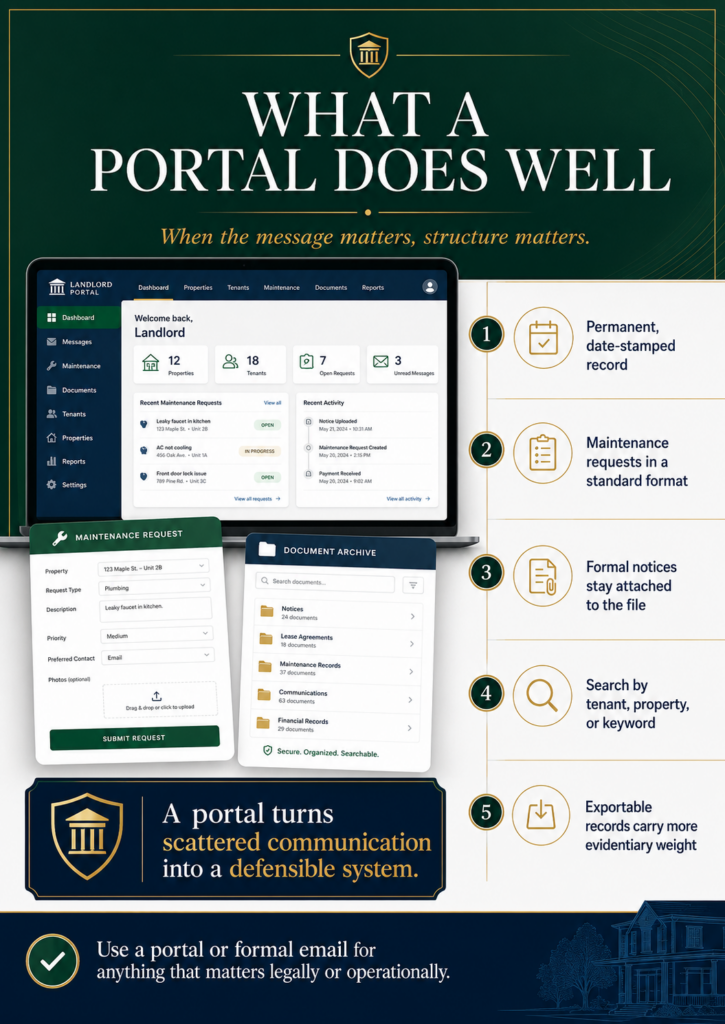
A tenant portal, whether it is the built-in messaging feature of a property management platform or simply a dedicated email address, excels at everything texting does poorly. It creates a permanent, searchable, date-stamped record. It forces both parties to be deliberate about what they are communicating. It keeps all substantive communication attached to the tenant’s specific file and the property’s specific record.
Maintenance requests should always go through a portal or a structured intake form, never through a text message. A text message describing a repair issue is almost always missing critical information: the exact location of the problem, a photograph, the tenant’s permission to enter, and a clear description of when the issue started. A portal form captures all of this in a standardized format every single time.
Formal notices, lease-related communications, and any message that documents an agreement or a policy should always go through a channel that produces a clear, exportable record. If you ever need to produce communication records in a Texas Justice of the Peace court, a portal message or a formal email thread carries significantly more evidentiary weight than a screenshot of a personal text conversation.
The Framework That Makes Both Work
The most effective approach for a small landlord is to establish a clear, written policy that defines exactly which channel is used for which type of communication. This policy should be included in your tenant welcome message and referenced in your lease addendum so that tenants understand the system from day one.
A practical framework looks like this: texting through your dedicated business line is reserved for time-sensitive logistical updates only. All maintenance requests, formal notices, payment questions, and any communication that documents an agreement must go through your designated portal or email channel. Emergency situations are the only exception to this rule, and your welcome message should define exactly what constitutes an emergency.
When a tenant texts you a maintenance request, your response should be immediate and consistent: “Thanks for letting me know. Please submit that through the maintenance form so I can get it properly logged and assigned. Here is the link.” You are not being difficult. You are enforcing a system that protects both of you.
The Bottom Line
Texting and portals are not competing tools. They are complementary ones, and the landlords who use both effectively are the ones who have taken the time to define the purpose of each channel in advance. Text for speed and convenience on low-stakes logistics. Use a portal or email for anything that matters legally or operationally. Enforce the distinction consistently, and your communication records will be organized, searchable, and defensible from the first day of every tenancy.


